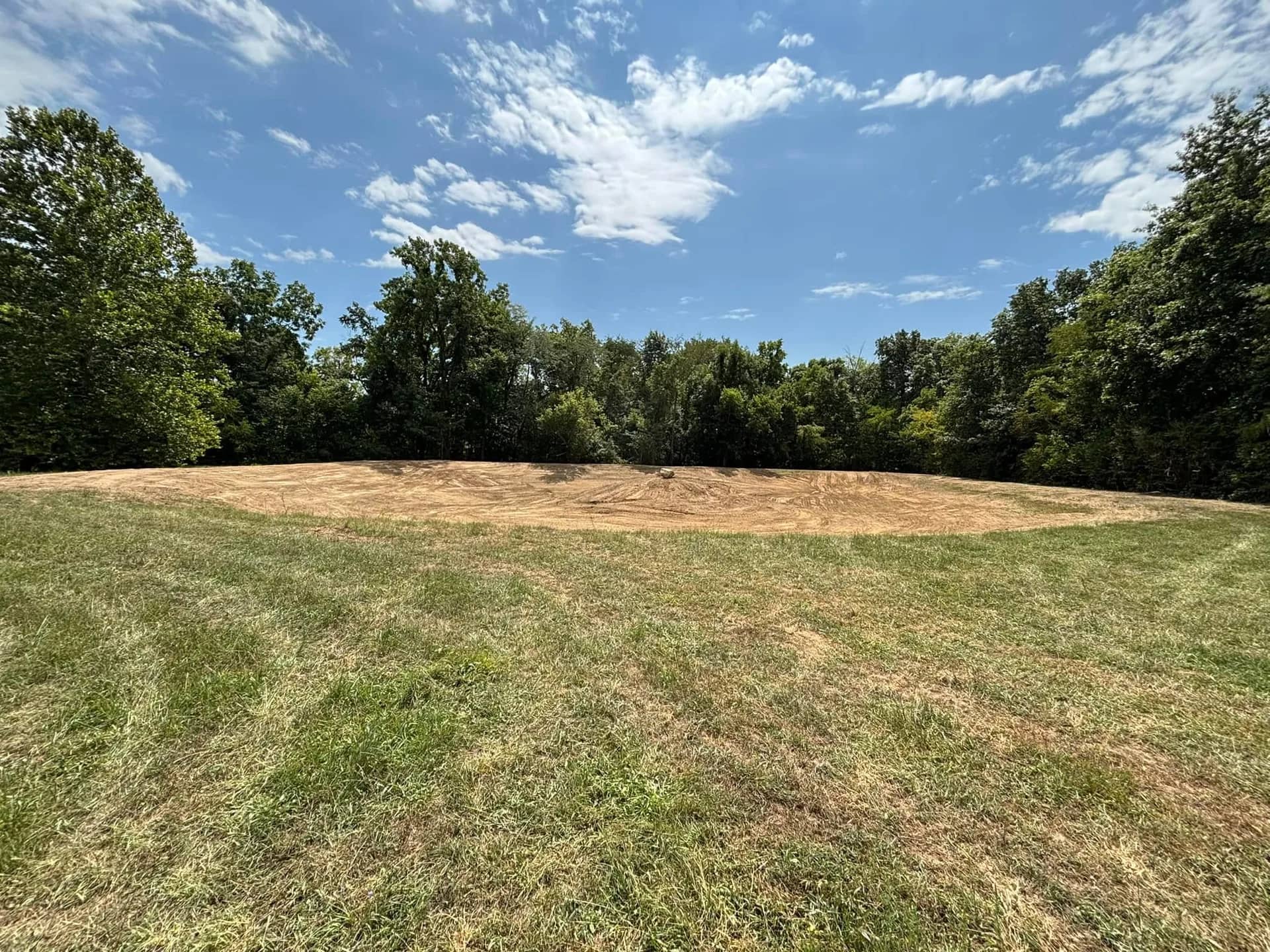
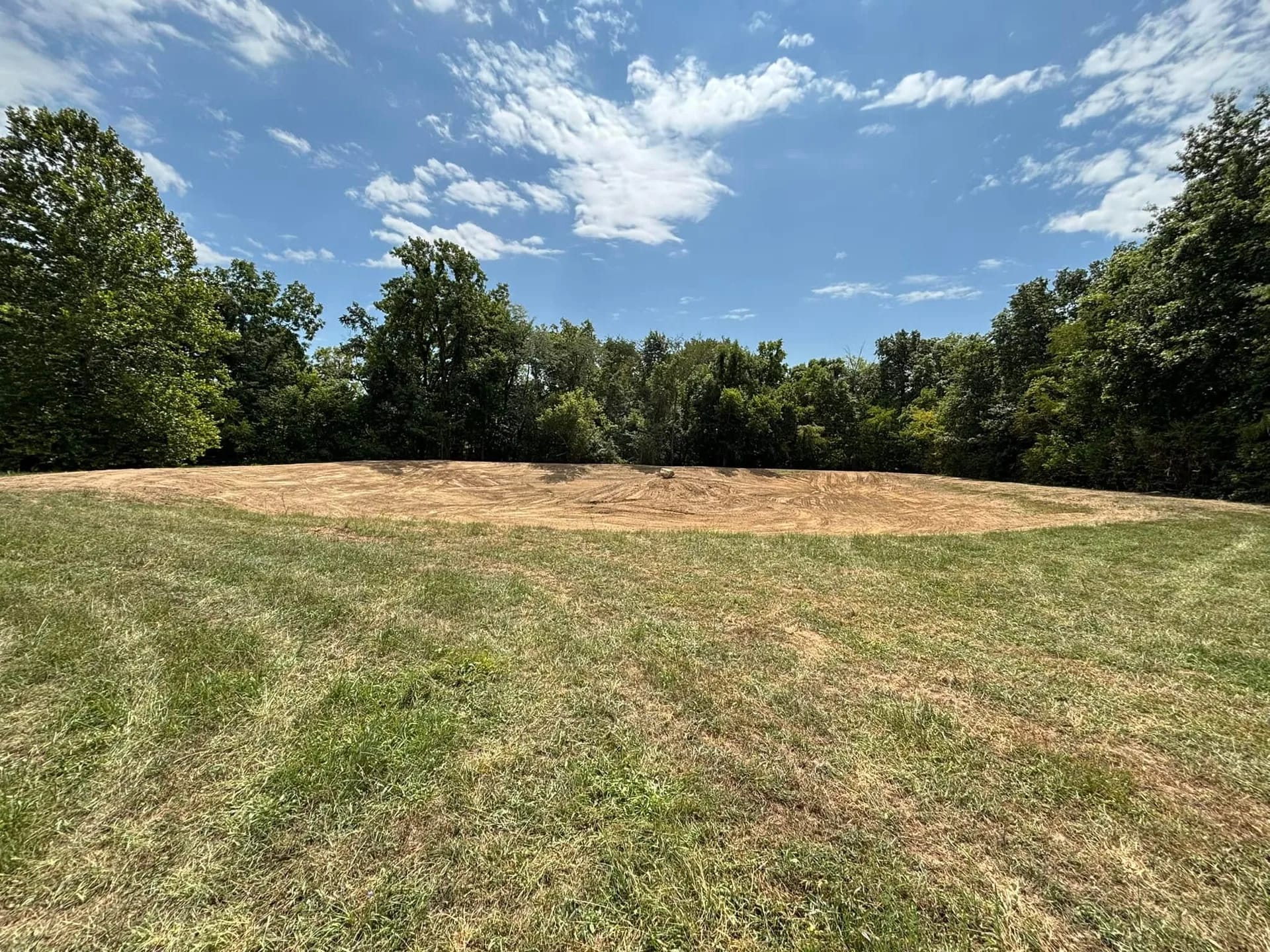
Land and sites
Basement Excavation in Rosedale, IN
House plans approved and the builder lined up? Now the hole has to be dug to the stakes, on schedule, with room to set forms. That's the first big day of a new home on acreage.
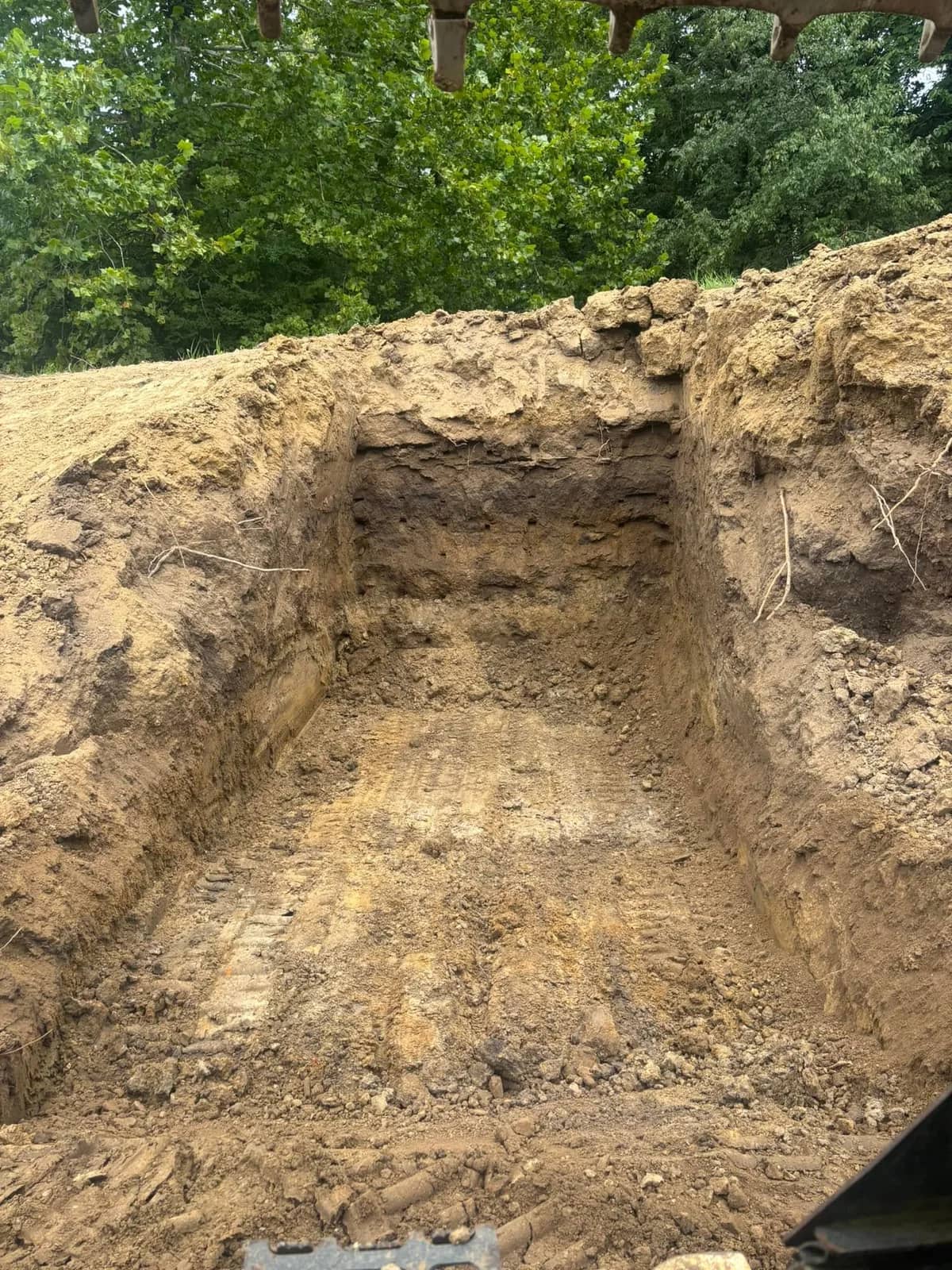
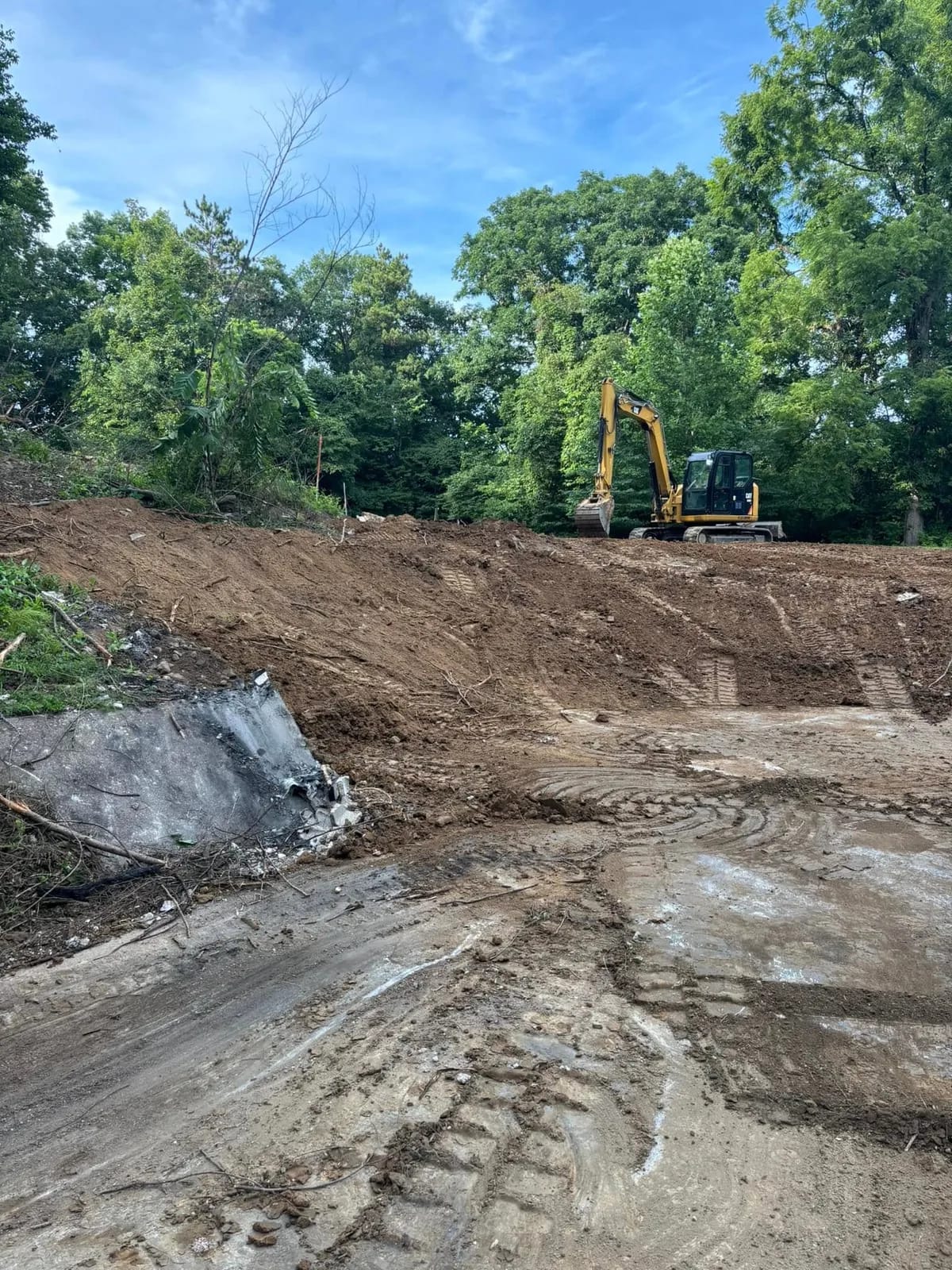
Basement excavation is where a rural home stops being a drawing and becomes a hole in the ground, and the way that hole is dug decides how smoothly the rest of the build goes. K&H Excavating is an excavator-and-dozer outfit based in Rosedale, and foundation excavation for homes on acreage across west central Indiana is part of K&H's wider excavation work. Kory Stone digs to your builder's stakes and depth and leaves working room at the walls for forms and drain tile. He keeps spoil back from the edge and piles topsoil apart from subsoil, so the backfill and final grade go easier. Whether the lot sits on glacial clay near Rosedale or on limestone south toward Bloomington, he looks at what's under it before the first full bucket. Call or text Kory at (765) 548-3704 to set up a site visit.
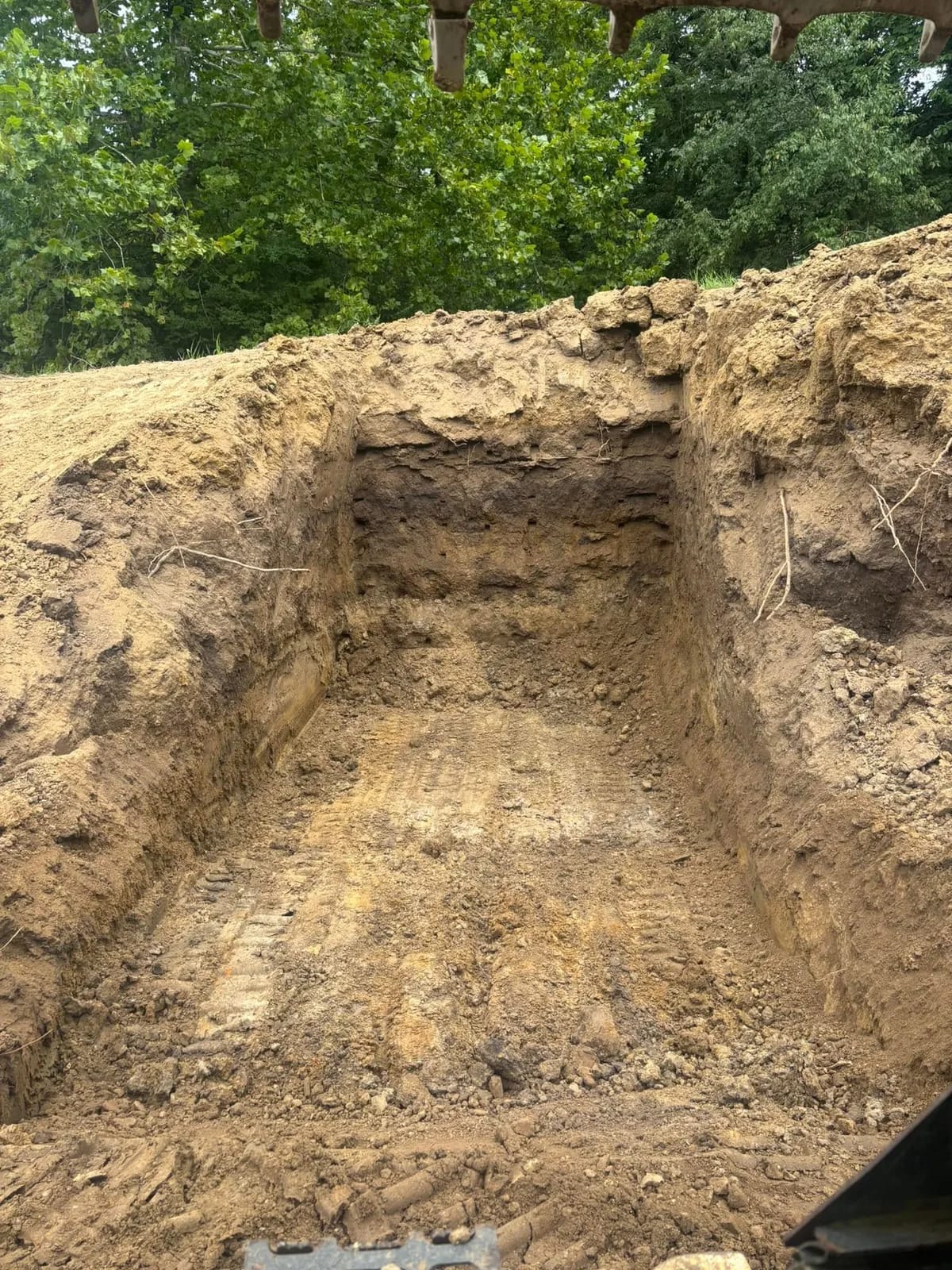
When to call
Signs It's Time to Start Digging a Basement
A basement dig sets the pace for everything after it. The footings can't be poured, the wall forms can't go up, and the framer can't start until the hole is right. Book it late and you may end up digging in April or May, the wettest months of the year here, when a fresh hole collects water and clay sticks to everything. Lining up the dig while your plans are still in permitting keeps the summer building season open.
- Your house plans and building permit are in progress, and the builder has asked who's digging.
- The corners are staked and an elevation is set for the bottom of the footings.
- You're building on rural acreage and want someone used to field lanes, gates, and soft ground.
- A house sale or move-out date means the new build has to stay on schedule.
- The homesite is wooded, and clearing has to come before the dig.
- You want a walkout, and the hillside has to be cut to match the floor level.
What's included
What Our Basement Excavation Includes
Basement excavation at K&H means a hole dug to the builder's plan, with room to work safely and the dirt sorted for later.
Layout, Depth, and Working Room
Kory digs to the corner stakes and footing elevation your builder or surveyor sets. The hole runs wider than the foundation so forms can be set, walls waterproofed, and drain tile laid. OSHA's guidance on residential basement digs calls for the space between the excavation face and the forms to be as wide as practicable and at least 2 feet (OSHA 1995 interpretation). If your builder wants more room than that, Kory digs to their number. Footing depth below frost is set by your builder and the local building department.
Sloped or Benched Walls
Anyone who steps into an excavation 5 feet or deeper has to be protected from a cave-in; OSHA's 1995 memo relaxes this only for basement digs that meet a strict list of conditions. Unless a competent person classifies the soil or a shield or shoring system is used, OSHA's default is walls laid back no steeper than 1.5 horizontal to 1 vertical, about 34 degrees, or cut in benches. In a hole 8 feet deep, a 1.5:1 slope reaches 12 feet back from the bottom edge, so the top of the dig runs far larger than the house. Kory plans the shape around how your footing and wall contractors will work in it.
Spoil Set Back, Topsoil and Subsoil Apart
Dirt piled at the lip of a basement hole loads the wall and can roll back in. OSHA requires spoil and equipment at least 2 feet from the edge, and its 1995 basement guidance keeps soil loads back at least as far as the hole is deep. Kory strips the topsoil first and stockpiles it apart from the subsoil that comes out below. The subsoil goes back as backfill once your builder says the walls are ready, and the topsoil goes on last for grass.
Water in the Hole
Groundwater and rain both find a fresh basement hole. OSHA bars work in an excavation with standing water unless precautions like pumping are in place. Kory digs a sump at a low corner so water collects in one spot and can be pumped out. He'll tell you a few feet down whether the site is making water. After a heavy rain, the walls get a fresh inspection before anyone goes in.
Local ground
The Foundation Problems We See Most in West Central Indiana
Bloomington sits beyond the reach of the glaciers, on terra rossa clay over limestone; IGWS maps more than a hundred sinkhole areas in Monroe County alone. INDOT's karst guidance warns that water soaking into this ground can open voids and start sinkholes. Monroe is the only Indiana county with a karst ordinance, so check with its planning office before digging near a sink. Kory watches for depressions, soft spots, and rock as the dig goes down.
North and east of Rosedale, dense glacial till can hold a steep face through a dry week. After a soaking rain, the same wall can sheet off without warning. That's why OSHA requires a competent person to inspect excavations daily and after storms, and why its default protective slope is 1.5:1 (OSHA 1926.652).
Rosedale itself sits on sand-and-gravel outwash less than a mile from Big Raccoon Creek, and the creek bottoms across the area are alluvium. Sandy layers pass water more readily than till, so a basement dug in or near a valley may need the sump running from day one. Talk through drain tile and grading that moves water away from the house during building site preparation.
IDNR maps 564 surface-mine areas in Clay County and 166 in Vigo, and IDNR says testing and engineering studies should be done before building on mine spoil. If a lot sits on reclaimed mine ground, get the soils checked by an engineer before a basement goes in.
Why K&H
Why Rural Homebuilders Choose K&H for Foundation Digging
Foundation digging is a schedule job as much as a dirt job. Here's what K&H brings to yours.
Your builder deals with one person from the site walk to the backfill. Kory runs the excavator on your basement, so the stakes, the depth, and the working room are checked by the person who agreed to them.
Kory walks the lot, looks at the stakes and the slope, and prices the dig at no charge. You can line his number up against your builder's other bids before you commit.
Footing schedules sometimes change at 7 p.m. Kory answers calls and texts Monday through Saturday, 8 a.m. to 6 p.m., and replies to texts after hours, so a change doesn't sit until morning.
Before he digs, Kory asks who's forming the footings, when the pour is set, and where the concrete trucks will back in. Then he shapes the access and leaves the spoil where it won't block them. Kory's family farms in Parke County, so he's used to working around gates, lanes, and soft ground. The Indiana Professional Licensing Agency lists no board for excavating contractors, so the paper to request from anyone before a dig is a certificate of insurance. Meet Kory and see how K&H works.
How it works
How a K&H Basement Dig Works
Step 1 — Walk the Lot With Kory and Your Builder
Kory meets you, and your builder if possible, at the homesite. He looks at the stakes, the slope, the soil, and where a hole this size can drain, and he asks about the footing schedule. A written estimate follows the visit.
Step 2 — Locates, Layout, and Access
Indiana law requires the 811 locate request at least two full working days ahead, and Kory files it. He sets offset stakes so the corners can be found again once the dirt is moving. Then he picks where the topsoil pile, the subsoil pile, and the concrete-truck path will go.
Step 3 — Strip, Dig, and Slope
The topsoil comes off first. Then the excavator opens the hole to the footing elevation, checking depth as it goes, and lays the walls back or benches them. Spoil goes in its own pile, set back from the edge. You or your builder can text Kory anytime during the dig to check where it stands.
Step 4 — Water, a Clean Bottom, and the Hand-Off
The sump is dug at a low corner, the bottom is cleaned up to grade, and the hole is handed to your footing contractor. If rain hits before they arrive, Kory checks the walls and pumps the hole before anyone steps in.
Step 5 — Backfill, Rough Grade, and the Final Walk-Around with Kory
When your builder says the walls are ready, the subsoil goes back against the foundation and the ground is shaped to shed water away from the house. Saved topsoil goes on top. Then you walk the site with Kory: the grade around the walls, the spoil that's left, and anything you want shaped before the machines leave.
How we quote
How Much Does Basement Excavation Cost in West Central Indiana?
Kory prices each basement after he's walked the lot and seen the plans, because the cost follows the volume of dirt and how hard it is to dig. No two homesites dig the same, so the number comes from your lot, not a chart.
Here's how the volume builds, as arithmetic rather than a quote. Take a 28-by-48-foot basement with 2 feet of working room on each side, which makes a 32-by-52-foot bottom. Dug 8 feet deep with vertical walls, that's 13,312 cubic feet, or about 493 cubic yards. Lay the walls back at 1.5:1 and the hole grows to roughly 850 cubic yards.
Foundation excavation cost moves with these factors:
K&H doesn't do septic or utility trenching, or driveways. Kory takes cash, check, or card, and you can ask him about other payment options when he prices the dig.
What changes the cost of excavation for a foundation
- Footprint and depth, and whether it's a full basement or a walkout cut into a hillside.
- How the walls are protected. Sloping moves more dirt than benching.
- Soil and rock. Limestone near Bloomington or a hard layer can slow the dig.
- Water. A site that makes water needs pumping time.
- Where the spoil goes. Keeping it for backfill and yard grading costs less than hauling it off.
- Distance from Rosedale and how easily the machines get to the homesite.
Quoted separately
- Clearing a wooded homesite (land clearing services)
- Rough grading beyond the house footprint (building site preparation)
- Footings, walls, waterproofing, and drain tile, which come from your builder
Related work
Often Paired With Basement Excavation
Building Site Preparation
The basement is one hole in a bigger site that has to be cleared, stripped, and rough-graded so water runs away from the house. That work usually comes right before the dig. See building site preparation for rural homes.
General Excavation
A basement turns up hundreds of yards of subsoil, more than the backfill needs. Instead of hauling it off, it can fill a low yard or build up a shop site. See general excavation for cut, fill, and hauling.
Land Clearing Services
A wooded homesite needs trees pulled with their stumps and roots before the dig, so no roots end up in the backfill against your walls. See land clearing services with an excavator.
More in Excavation: Excavation · Site Excavation
Where we work
Basement Excavation Across the Wabash Valley and West Central Indiana
K&H digs out of Rosedale in southern Parke County, within about 50 miles as everyday work and out to about 75 miles for the right job, into eastern Illinois. For Bloomington homesites, the equipment trailer picks up IN-46 on Terre Haute's east side and follows it east through Spencer, into the limestone country of Monroe and Owen counties, where sinkhole areas cover about 6 to 7% of the ground. Lafayette is US-41 north to IN-47, past Turkey Run State Park to Crawfordsville, then US-231 north. Indianapolis-area builds go by I-70 east from Terre Haute or US-36 through Danville. Hendricks, Montgomery, and Tippecanoe counties sit on the flat Wisconsin-age till plain, with soil that digs very differently from Bloomington's red clay.
Closer to home, Parke, Vigo, Clay, Putnam, and Vermillion counties make up the 50-mile core. Searching for basement excavation near Bloomington or a foundation dig in Terre Haute? We serve Rosedale, Terre Haute, Bloomington, Lafayette, and Indianapolis. See all of K&H's excavation services.
Building outside these towns? Call or text Kory at (765) 548-3704 to see if your homesite is in range.
Questions
Basement Excavation FAQ
What's the cost to dig a basement?
Basement excavation cost depends on the footprint, the depth, how the walls are sloped or benched, the soil, and whether the spoil stays on site. Rock, water, and long hauls push it up. Free on-site estimates mean you'll have a firm number before the builder sets the footing date.
How long does digging a basement take?
That depends on the size, the soil, and whether the hole makes water, so Kory lays out a realistic schedule once he's seen the lot. The machine work starts once the locates are clear. Rain can stop work and fill the hole, especially in April and May. Remember the 811 wait too: at least two full working days after the request.
How much room do you leave around the foundation?
At least 2 feet between the excavation face and the forms, per OSHA's guidance on residential basement digs. If your builder wants more room for waterproofing and drain tile, Kory digs to their number. On top of that, the walls are laid back or benched for safety, so the hole at ground level is much wider than the house.
Who handles the 811 call and the stakes?
Kory places the Indiana 811 request at least two full working days before digging. Your builder or surveyor sets the corner stakes and the footing elevation, and Kory adds offset stakes so the corners survive the dig. Tell Kory about anything buried that's yours, not the utility's, such as a well line or power run to a shed.
What happens if the hole hits water or rock?
Water gets a sump at the low corner and a pump, and no one works in a hole with standing water. If a site keeps making water, your builder may change the drain tile or sump plan for the house. Rock is most likely toward Bloomington, where limestone sits close to the surface, and it changes the price and pace of the dig, so it's worth talking through on the site walk.
Do you backfill after the walls are poured?
That's the plan when the job is set up that way. Backfill waits until your builder says the walls are ready to take the load. Then the subsoil goes back in and the ground is shaped to drain away from the house, with the saved topsoil spread on top.
How do I choose someone for foundation digging?
Ask who will run the machine, how much working room they leave, how they slope the walls, and where the spoil goes. Ask whether they answer when the footing schedule changes at night. At K&H, Kory is on every job himself, and he answers texts after hours.
Ask Kory About My Basement Dig
Still have a question about basement excavation? Call or text Kory at (765) 548-3704.
Call or text
Ask Kory about basement excavation
(765) 548-3704Calls and texts answered Monday to Saturday, 8 a.m. to 6 p.m. Text a few photos of the property and Kory can give you a head start before the site walk.
Get a free estimateFree estimate
Let's Get Your Foundation Hole Dug and Ready for Forms
Send Kory your plans and your builder's timeline. He'll look over the lot and the stakes and price the dig at no cost to you. Reach him through our contact page, or call or text directly.