
Ponds and lakes · Cost guide
Cost to Build a Pond in Rosedale, IN: What Drives the Price
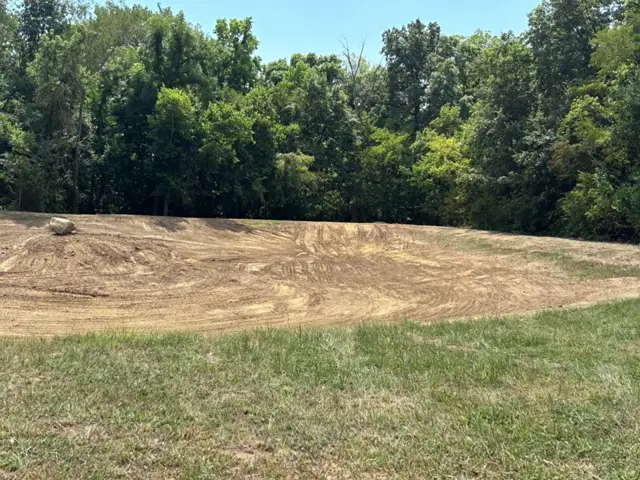
Wondering what a pond on your land will actually cost? The honest answer starts with how many cubic yards of dirt have to move, and this guide shows you how to rough that out before Kory ever pulls up your lane.
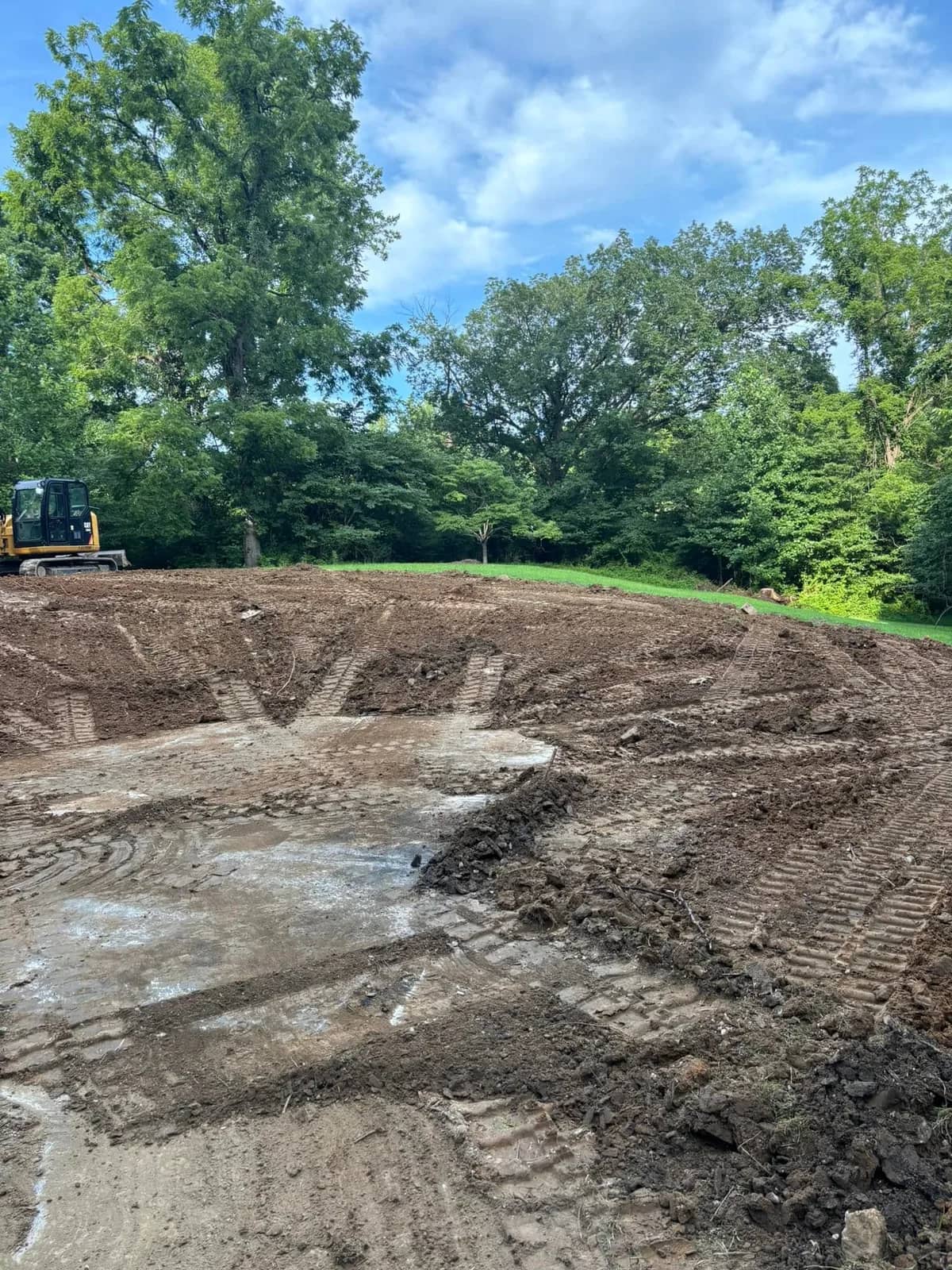
The cost to build a pond in west central Indiana comes down to dirt: how much of it moves, how far it travels, and whether it's the kind that holds water. K&H Excavating is a Rosedale excavating company owned by Kory Stone. Below you'll find the acre-foot math, the conditions that push a price up or down, and the costs that sit outside a dirt-work quote, so you can sketch a budget before anyone visits. This is the money side of our pond building work. For a number on your own ground, call or text Kory at (765) 548-3704 for a free site walk.
When to call
Why Waiting Can Raise the Cost of Making a Pond
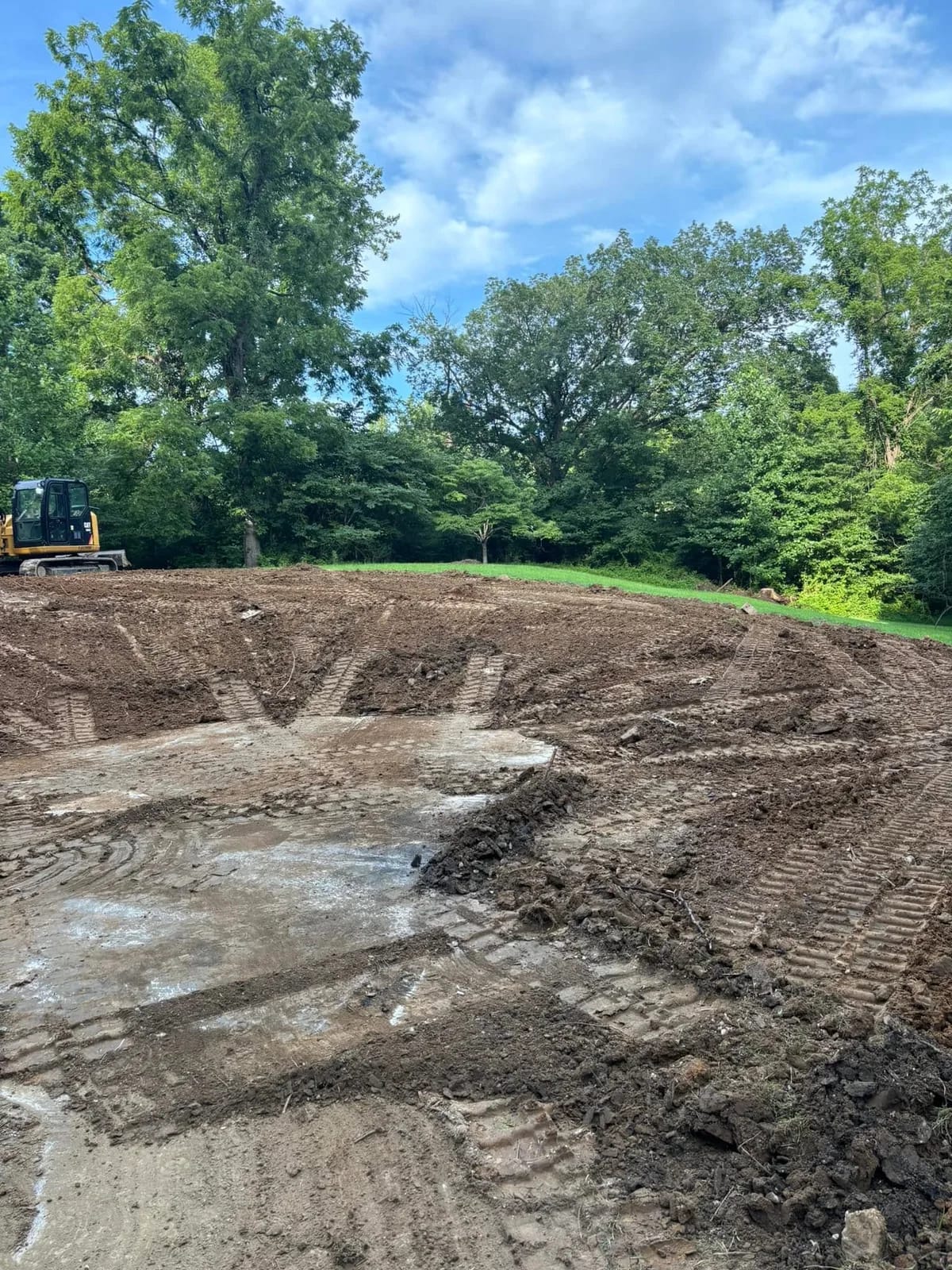
Dirt is cheapest to move when it's dry. Summer and fall ground lets the machines work full days and pack fill properly, while April and May, which each average about 4.7 inches of rain at Terre Haute, bring mud, lost days, and rescheduling. Problems you put off also tend to grow. A gully cutting into a draw needs more fill every spring, and an old pond collects more muck that has to come out before it can be enlarged.
- You're planning for next summer or fall and want a real number before you commit.
- You've seen national averages online and want to know how your ground compares.
- Hauling water to cattle is eating hours every week.
- A wet corner or washing gully keeps costing you crop.
- You're buying acreage, building a house, or settling a family farm and need a pond line in the budget.
What's included
What Your Pond Construction Cost Covers
A K&H pond quote covers the dirt work that makes a pond hold water, from the first test hole to the finished slopes.
Site Walk and Test Holes
Before Kory puts a number on anything, he walks the site and digs test holes with the excavator, at no charge. Oklahoma State Extension suggests a test hole every 50 to 100 feet through the basin, and USDA's pond handbook notes three or four borings per acre can be enough where soils are uniform. Those holes decide the biggest swing in price: whether the clay to seal the pond is already under your feet.
Machine Time on the Basin and Dam
Most of a pond's price is excavator and dozer hours. The excavator cuts the basin and any core trench; the dozer spreads and packs dam fill in thin lifts. Thin lifts take longer than shoving dirt into a pile, and they're what keeps a dam in place.
Pipe, Spillway, and Finished Slopes
An embankment pond needs a principal spillway pipe through the dam and an emergency spillway around it. The pipe, fittings, and any drain valve are materials on the quote. Ask Kory on the site walk how getting grass on the dam fits into your budget.
Spoil and Cleanup
Every pond makes spoil. Spreading it on your ground is the low-cost option; loading it onto K&H's own trucks and hauling it away costs more per yard. Topsoil comes off first and is stockpiled for the finished slopes.
Local ground
The Site Conditions That Push Pond Prices Up in West Central Indiana
If test holes hit a permeable seam, USDA's pond handbook calls for a compacted seal at least 12 inches thick, laid in 6- to 8-inch layers. Borrowing clay from elsewhere on the farm, or trucking it in, is one of the largest add-ons a pond can have.
Most of Monroe County lies in the unglaciated part of the state, and sinkhole areas cover nearly 7 percent of it on state geological survey maps. USDA's handbook says a seal in cavernous limestone may need a compacted blanket 2 to 3 feet thick, which means far more material and machine time.
Roughly 10 percent of Clay County, 7 percent of Vigo, and more than 11 percent of Sullivan were surface-mined for coal. IDNR describes that spoil as much looser than original ground, so these sites need more testing and sometimes a different location.
Alabama Extension warns never to bury trees, stumps, or roots beneath a dam, so wooded sites need land clearing services before the dig. That's priced as its own scope.
IDEM counts ponds as construction, not farming, so a pond project that disturbs an acre or more needs Construction Stormwater General Permit coverage, with a stormwater plan and a filing fee; check IDEM's construction stormwater permitting page for the current fee and terms. If you already have a pond, compare this against pond excavation and enlargement.
Why K&H
Why Landowners Price Their Ponds With K&H Excavating
A pond price is only as good as the look at the ground behind it.
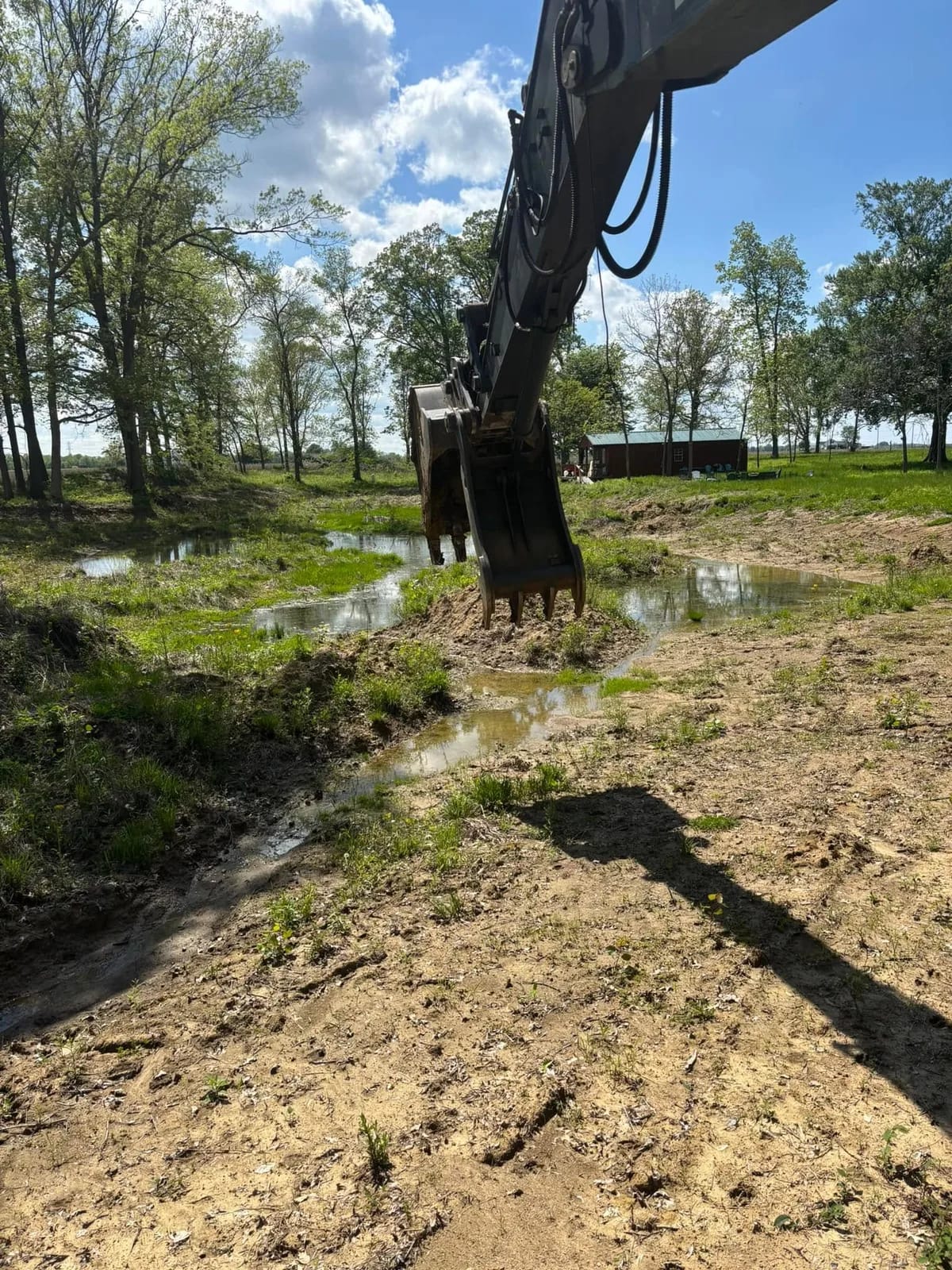
Kory doesn't price ponds off a satellite photo. He walks your ground, digs test holes, and checks the watershed, and none of that costs you anything.
The person who prices your pond is the person who runs the machines on it, so nothing gets lost between the estimate and the dig.
Hours are Monday through Saturday, 8 a.m. to 6 p.m., but a text with your acreage and a couple of photos at 9 p.m. still gets an answer.
When dirt has to leave, it goes out on K&H's trucks, so hauling is quoted by the same person doing the digging. Read Kory's story and how K&H works.
How it works
How Our Pond Pricing Works
Step 1 — Send Kory the Basics
Call or text your location, rough acreage, and what you want the pond for, with a photo or two if you have them. Kory will tell you whether the idea fits the land.
Step 2 — Site Walk and Test Holes With Kory
Kory walks the draw or low spot, traces where the water comes from, and digs test holes to see what the pond would sit in. He'll flag anything that adds cost, like timber or a floodway.
Step 3 — Your Written Estimate
You get a written number covering the basin, dam, pipe, spillway, and spoil handling, along with what's quoted separately.
Step 4 — Schedule and Build
Most ponds are built in summer and fall, when dry ground keeps machine days productive. The Indiana 811 locate goes in two or more full working days before the dig, and questions during the dig go straight to Kory by call or text. If the ground turns up a surprise, like a sand seam, you hear about it from him directly.
Step 5 — The Final Walk-Around with Kory
Kory takes you around the finished dam, spillway, and shoreline and goes over the final bill, which you can settle by cash, check, or card.
How we quote
How Much Does It Cost to Build a Pond in West Central Indiana?
K&H prices each pond after the site walk, once Kory has seen the ground. The quickest way to understand that price is to work out how much dirt your pond involves.
Start With Acre-Feet
An acre-foot is the volume that would cover 1 acre to a depth of 1 foot, or 43,560 cubic feet (U.S. Geological Survey). Dirt is measured and moved by the cubic yard, which is 27 cubic feet. So the arithmetic is 43,560 ÷ 27, or about 1,613 cubic yards per acre-foot. To estimate your pond, multiply surface acres by average depth (not the deepest spot) to get acre-feet, then multiply by 1,613.
Worked Examples
These are arithmetic, not quotes. Watershed figures use Purdue Extension's Indiana rule of three to five acres of drainage per acre-foot.
- 1 acre averaging 8 feet: 8 acre-feet, about 12,900 cubic yards of storage, fed by roughly 24 to 40 acres.
- 1 acre averaging 10 feet: 10 acre-feet, about 16,100 cubic yards, fed by roughly 30 to 50 acres.
- 2 acres averaging 8 feet: 16 acre-feet, about 25,800 cubic yards, fed by roughly 48 to 80 acres.
- 5 acres averaging 8 feet: 40 acre-feet, about 64,500 cubic yards, fed by roughly 120 to 200 acres.
Storage Isn't the Same as Dirt Moved
On a dug-out pond, nearly all of that storage is cut out of the ground, so pond excavation cost tracks the full water volume, plus loading and hauling the spoil. On an embankment pond, much of the water sits above the original ground behind the dam, so the dirt that moves is mainly the core trench, the dam fill, and some basin shaping. That's why a pond dammed across a natural draw can hold more water per yard moved than one dug on flat ground. See farm pond construction for how those dams are built.
No Set Figure Until the Site Walk
This guide gives no per-yard rate and no set figure for 2- or 5-acre ponds, because access, soil, and spoil change the real cost of every yard.
Accepted payment: cash, check, and credit card. Payment questions are easy to raise when Kory goes over your estimate.
What changes the price
- Volume: surface acres times average depth, converted to cubic yards.
- Dam or dug-out: a dam means a core trench and compacted lifts; a dug-out means more total digging and more spoil.
- Clay supply: clay on site costs least; a borrowed or hauled-in blanket costs most.
- Access and clearing: wet bottoms, timber, and long walks from the gate add machine hours.
- Spoil: spread on your land or hauled off on K&H's trucks, and how far.
- Dam size: past 20 feet tall, 100 acre-feet, or a square mile of drainage, IDNR jurisdiction brings a permit and an Indiana-registered engineer's design.
Quoted separately
- Tree and stump removal from the pond site (land clearing)
- Muck removal from an old pond ahead of an enlargement (pond sediment removal)
- Permit fees, stormwater plans, and engineering, when required
- Fencing, docks, aeration, and fish stocking, which aren't part of the dirt-work price
Related work
Often Paired With a Pond Cost Estimate
Farm Pond Construction
If the price points toward damming a draw, the dam itself is where the money goes: trench, lifts, pipe, and spillway. See how K&H builds farm pond dams.
Pond Excavation & Enlargement
Enlarging an existing pond can be the cheaper path when the old basin holds water and the watershed can fill more. See pond excavation and enlargement.
Land Clearing Services
A wooded pond site has to be cleared and grubbed before the machines dig, and that's a separate line on your budget. See land clearing services with stumps pulled.
More in Pond Building: Pond Building · Farm Pond Construction · Pond Excavation & Enlargement
Where we work
Pond Construction Cost Across the Wabash Valley and West Central Indiana
Distance is part of the price. From Rosedale in southern Parke County, everyday pond work runs out about 50 miles, and bigger jobs go as far as about 75, eastern Illinois included. Close in, Terre Haute is about 16 miles down US-41, Rockville about 14 miles up Coxville Road and US-41, and Brazil about 16 miles by county roads to IN-59. Farther out, Indianapolis is about 73 miles east on US-36 through Danville, Lafayette about 75 miles by US-41 north to I-74 and IN-25, and Bloomington about 65 to 70 miles by IN-59 and IN-46 through Spencer.
Ground cost follows geography too. Clay-rich glacial till across Parke, Putnam, and Montgomery counties often means sealing clay is already on site. Karst around Bloomington and the mined ground of Clay, Vigo, and Sullivan counties are where pond budgets most often stretch.
Pricing a pond near Terre Haute or Bloomington? Find local details for Rosedale, Terre Haute, Bloomington, Lafayette, and Indianapolis. See all of K&H's excavation services.
Not sure your land is in range? Call or text Kory at (765) 548-3704.
Questions
Pond Construction Cost Guide FAQ
What does a 1 acre pond cost?
The cost to build a 1 acre pond with K&H depends mostly on depth, soil, and whether it's dammed or dug. By arithmetic, a 1-acre pond averaging 8 feet deep stores about 12,900 cubic yards.
Is the cost to dig a pond different from building one with a dam?
Yes. The cost to dig a pond on flat ground tracks the whole water volume, because all of it comes out of the hole and the spoil has to go somewhere. A dam across a draw holds water above the original ground, so less dirt moves for the same storage. Which one your land suits depends on the slope and the watershed.
How does farm pond cost compare with a fishing pond?
A stock pond's money goes mostly into the dam, the pipe, and a cattle entry point. A fishing pond adds shaping: Purdue recommends 8 to 12 feet of depth over most of the pond and 3:1 slopes around most of the shoreline, which means more careful excavator work.
What does a 2 acre pond cost, and what about a 5 acre pond?
Kory prices ponds that size one at a time after a site walk, since the ground matters even more at that scale. By arithmetic, a 2-acre pond averaging 8 feet deep stores about 25,800 cubic yards and a 5-acre pond about 64,500, and Purdue's rule puts their watersheds at roughly 48 to 80 and 120 to 200 acres. Bigger ponds also mean bigger dams and spillways, and a dam that crosses IDNR's thresholds adds engineering and permit costs.
Are there permit costs on top of the dirt work?
Sometimes. A pond that disturbs an acre or more needs IDEM stormwater permit coverage, which carries a filing fee plus a stormwater plan. Jurisdictional dams need an IDNR permit and an engineer's design. Kory flags the likely ones during the site walk, and the landowner files them as the permit holder.
Why won't you quote a pond over the phone?
Because the soil decides the price, and nobody can see it from a phone. That's why every job starts with a free on-site estimate, and Kory runs every job himself, so the walk-through comes from the person doing the work. You can still get a ballpark first, since Kory answers texts after hours.
Does the season change what a pond costs?
It can change how many days the job takes. Mississippi State Extension notes summer usually offers the best weather and soil for heavy equipment, and dry ground compacts with fewer lost days. Spring rain stretches schedules.
Ask Kory for My Pond Price
Still have a question about the cost to build a pond? Call or text Kory at (765) 548-3704.
Call or text
Ask Kory about pond building costs
(765) 548-3704Calls and texts answered Monday to Saturday, 8 a.m. to 6 p.m. Text a few photos of the property and Kory can give you a head start before the site walk.
Get a free estimateFree estimate
Let's Put a Real Number on Your Pond
Text Kory your acreage and a photo, or set up a site walk, and he'll dig the test holes and give you a written price you can plan around. Or send the details through our contact page.