Ponds and lakes
Lake Sediment Removal in Rosedale, IN
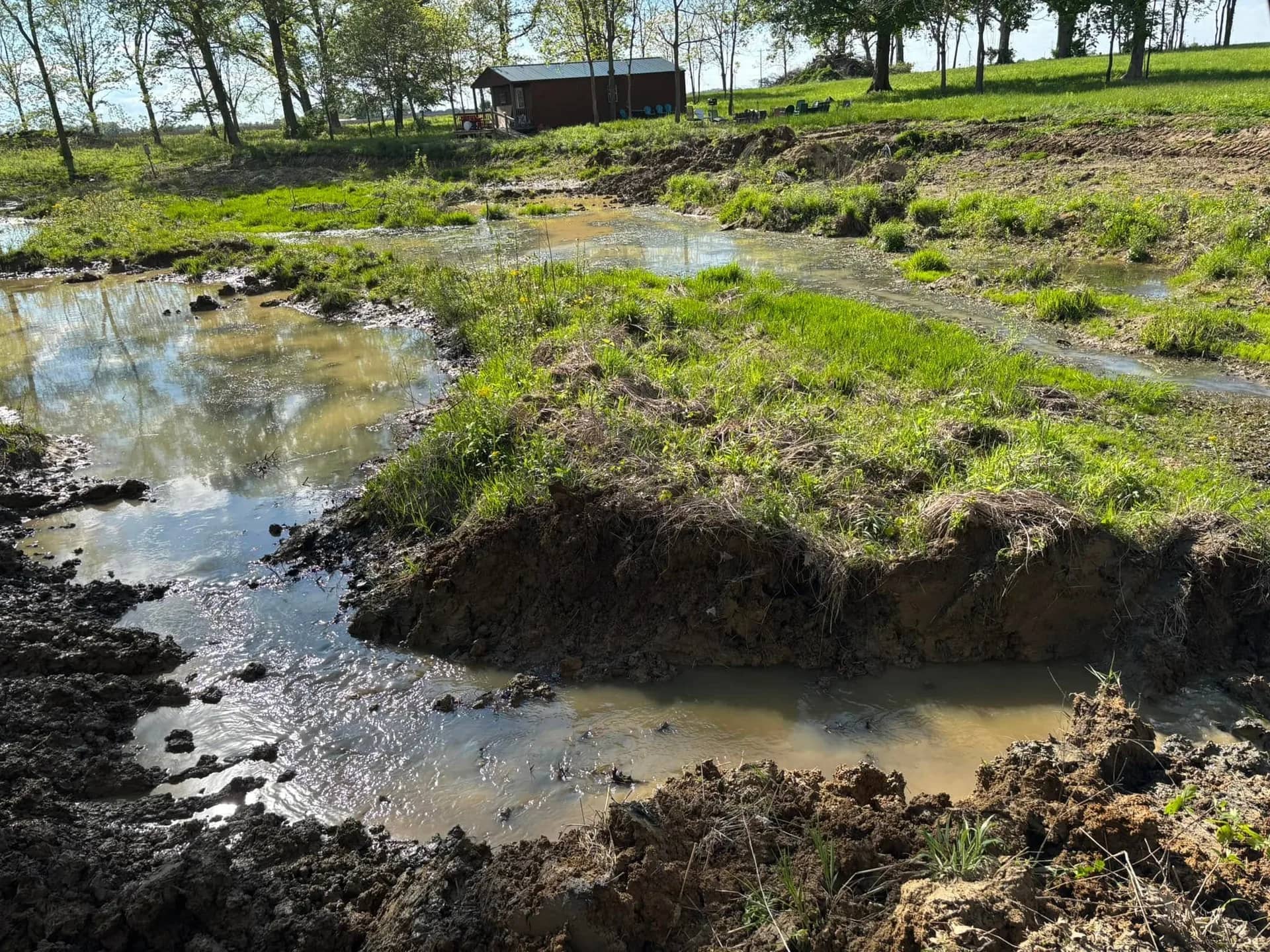
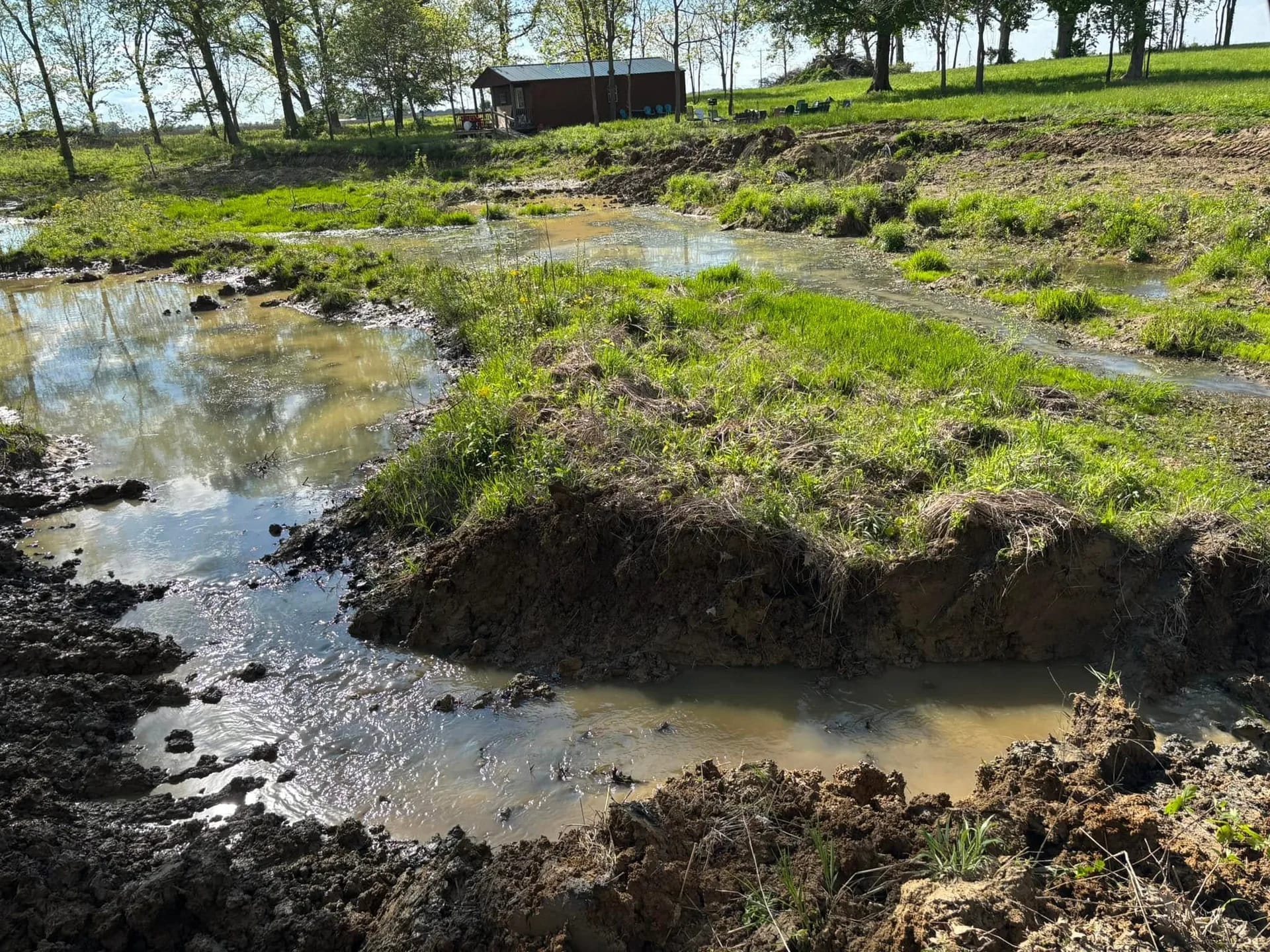
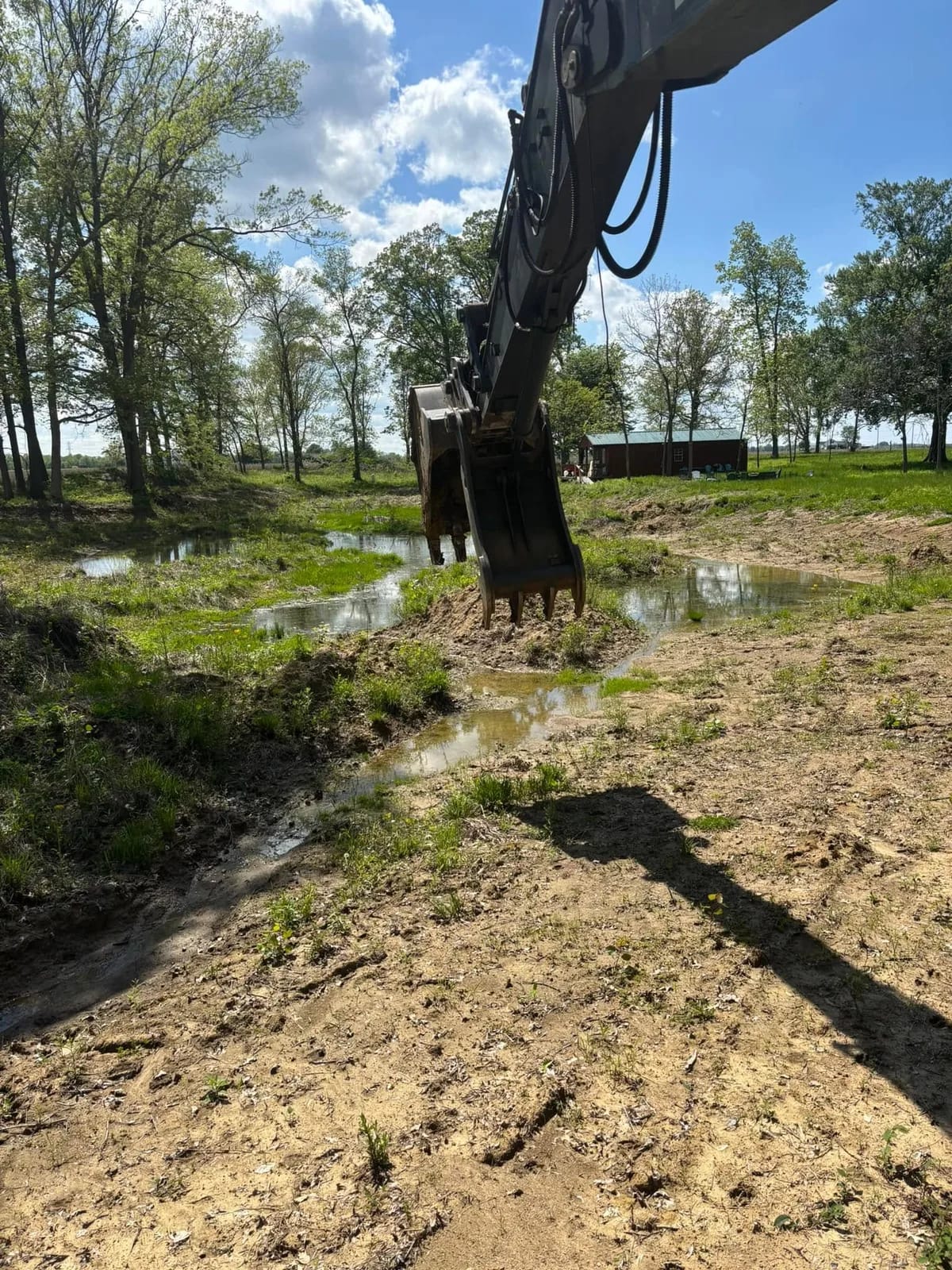
A mudflat at the creek mouth, a beach gone soft underfoot, a ramp that drops your trailer into muck: lake sediment piles up in a few predictable places, and those are the places K&H digs out.
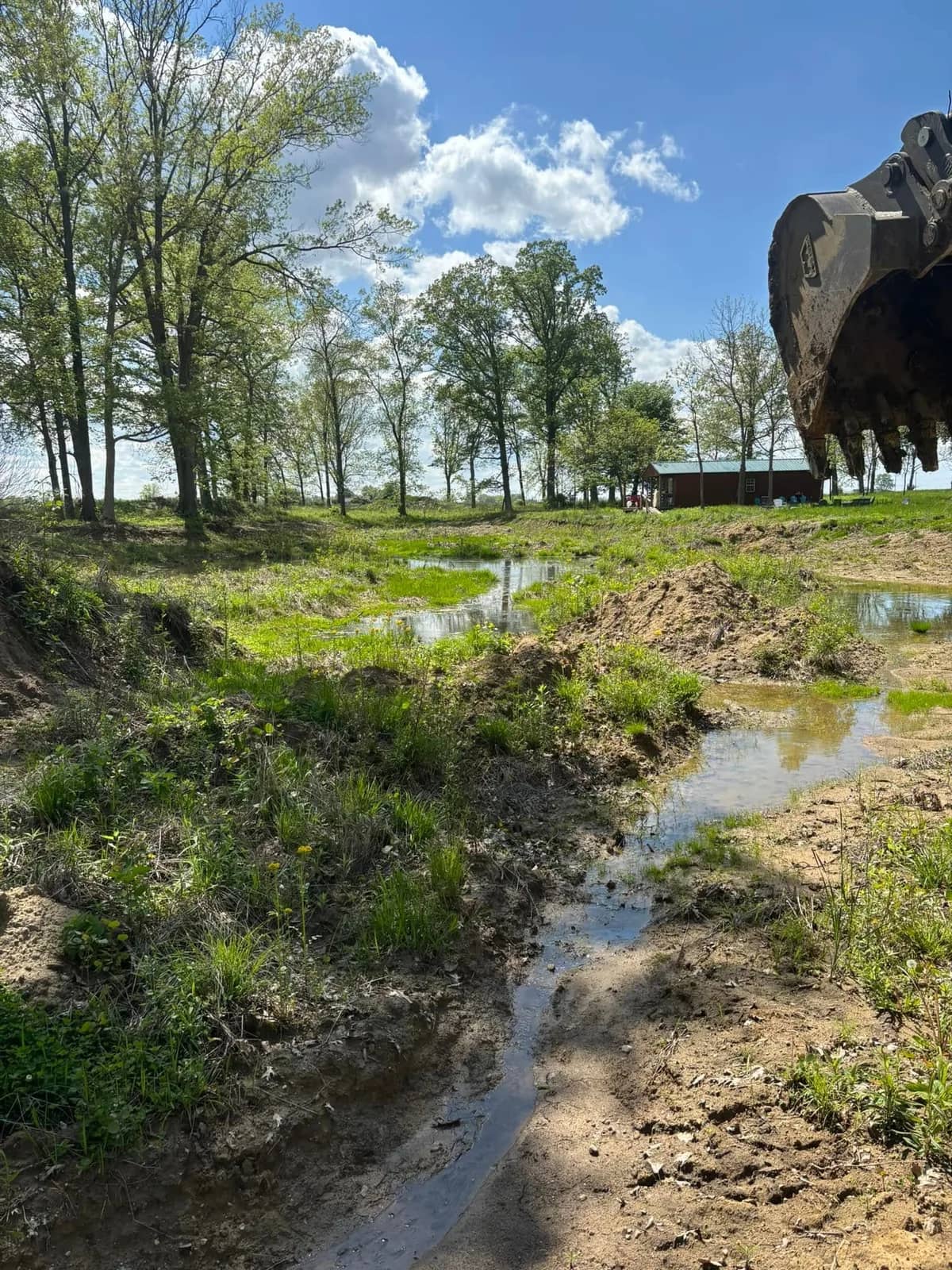
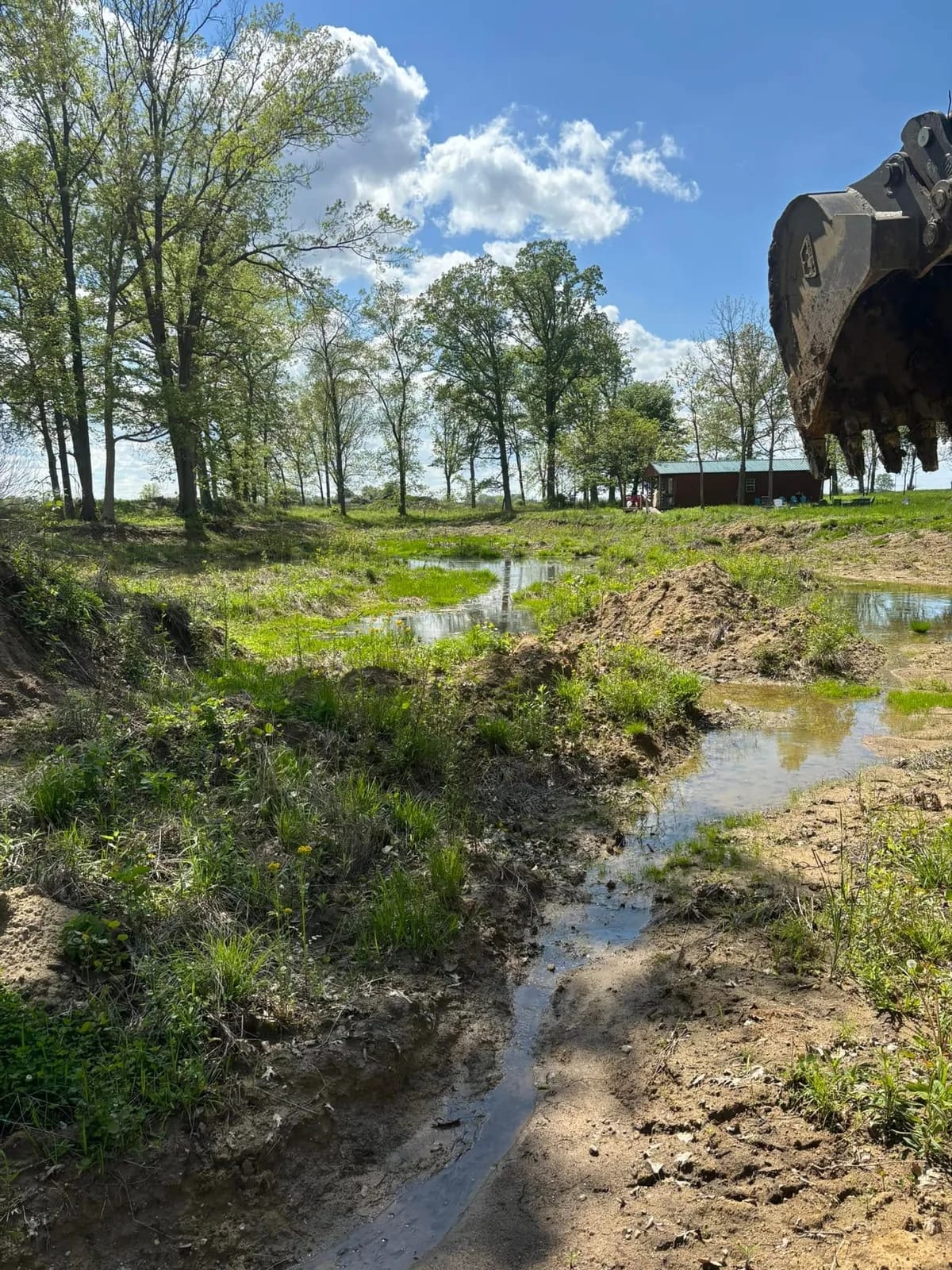
K&H Excavating provides lake sediment removal for lake owners, associations, and lake managers who need specific trouble spots dug back to usable depth: coves and inlet deltas, swimming beaches, boat ramps, and channels. K&H is a Rosedale excavating company run by Kory Stone out of Parke County, where Big Raccoon Creek drains a county with nearly 130,000 acres of cropland. Silt moves into every lake the same way. It rides in on the inlets and drops where the water slows, while leaf and weed muck builds in sheltered coves. Kory digs those spots out with excavators, moves the material to an upland spoil site, and leaves the shoreline stable. This page covers spot work. For whole-lake projects, start with our lake dredging overview. Call or text Kory at (765) 548-3704.
When to call
Signs It's Time for Lake Silt Removal at Your Coves and Inlets
A delta doesn't stay put. Each storm pushes the fan of silt a little farther from the inlet, and once the water over it drops below about 4 feet, rooted plants take hold (Purdue Extension notes that 4 feet or more of water stops rooted plant growth). The plants slow the water further, so the next load of silt settles even faster. Iowa State researchers found flood-control ponds there filling with sediment 25% faster than their designers expected, with gullies in wooded land the main source.
- A sandbar or mudflat has formed where a creek, ditch, or tile outlet enters the lake.
- Swimmers sink to their ankles at the beach, or the sand has vanished under a layer of silt.
- The ramp ends in muck, and trailers bottom out before the boat floats.
- A cove that used to hold bass is solid cattails and duckweed by July.
- Docks that floated in May sit on the bottom by August.
- You're listing a lakefront home or opening a new common area, and the water out front needs to float a boat again.
- A drawdown for dam or outlet repair is coming, and it's a chance to dig while the bottom is exposed.
What's included
What Our Lake Sediment Removal Includes
Lake sediment removal is spot work: digging the silt and muck out of the specific areas where it has collected, down to a target depth, and placing it somewhere it can't wash back in.
Inlet Deltas at the Creek Mouth
The delta is where a creek drops its load, coarse sand and grit near the mouth and finer silt farther out. Kory digs the fan back to the original channel and, where the owner wants it, leaves a deeper pocket at the inlet so the next loads settle where an excavator can reach them easily. Lake Santee in southeast Indiana took the idea further with a one-acre retention pond at its creek inlet. The inlet is also where Kory checks for bank erosion feeding the delta.
Muck in Coves and Channels
Muck isn't the same as silt. University of Florida extension describes muck as sediment with a large share of organic matter, typically 20% to more than 80%, while silt by itself has no organic component. Muck comes from leaves, algae, and dead weeds, and it's soupy, holds water, and weighs a lot wet. The same source says dredging is the only approach that guarantees muck removal, and there's little scientific evidence behind bacterial muck products. For lake muck removal, Kory digs to firm bottom and lets the material drain before it moves far.
Beaches and Boat Ramps
At a swimming beach, the goal is firm bottom you can walk on. Kory skims the silt off, digs back to the old sand or clay, and shapes a gentle slope. IDNR lists underwater beaches alongside dredging as regulated work on a public freshwater lake, so new beach sand below the waterline may need its own permit. At a ramp, the excavator clears the apron and the drop-off at the toe so trailers stop bottoming out. Concrete ramp repair is quoted separately.
Spoil Sites and Dewatering
Every yard that comes out needs a home. Clemson Extension says dredged sediment must go to upland areas and recommends double silt fencing around stockpiles and seeding bare soil within two weeks. Kentucky's environment cabinet adds that the material should sit outside the floodplain. Kory finds the spoil site before digging starts, on the owner's or a member's land, and goes over with you how the material will be handled once it dries.
Local ground
The Sediment Problems We See Most in West Central Indiana
Spring is the wettest season here, with more than 12 inches falling March through May at Terre Haute on average. Indiana Geological and Water Survey mapping shows wind-blown silt deposits covering about 44% of Vigo County and 35% of Clay County. Silt that fine settles wherever the water goes still, and coves are where it goes still.
IDNR's Lake and River Enhancement program wants the sediment's source, and prevention of more of it, addressed before dredging begins (LARE sediment removal policy). If the silt pond above your lake is full, the cove you just cleaned starts refilling with the next storm. A silt pond maintenance plan keeps the upstream basins working.
Purdue's aquatics guidance traces dark organic muck to leaf litter, algae, and plants, and says the simplest fix for a badly filled basin is to dig it out and start over. Aeration helps over time but won't remove what's already there.
Many lakes in this area sit in creek valleys along Big Raccoon Creek, Sugar Creek, and their tributaries, so the closest flat ground is often floodplain. IDNR requires a permit for deposits in the floodway of a stream draining a square mile or more, even where the floodway isn't mapped. Kory looks for upland ground first, even if the haul is longer. Larger jobs that need haul roads and staging are covered on our lake dredging services page.
Why K&H
Why Lake Associations Choose K&H for Lake Muck Removal and Silt Work
Spot work comes down to judgment: which areas are worth digging, how deep, and where the spoil goes.
The person who points to the delta on the walk-through is the one running the job when it comes out. Nothing gets lost between the estimate and the dig, including which dock to stay clear of.
Kory walks or boats the trouble spots and takes depth readings, and the estimate is free. A one-cove job gets the same look as a five-cove job.
Lake managers and board members often work day jobs. Send Kory a photo of the inlet after a storm at 9 p.m. and you'll get an answer; calls are taken Monday through Saturday, 8 a.m. to 6 p.m.
Kory comes from a Parke County cattle-and-hay family, so he knows what a plowed field or an eroding ditch bank sends downstream. Before he digs a delta, he'll point out where the silt is coming from and what would slow it. Learn about Kory and how K&H works.
How it works
How Our Lake Sediment Removal Works
Step 1 — Point Out the Trouble Spots With Kory
Kory walks or boats each problem area with you, looking at the inlet feeding each delta, the trees shading each mucky cove, and the ground around each beach and ramp. Once he's taken readings, you get the estimate in writing.
Step 2 — Measure Each Spot and Pick the Spoil Site
Kory measures water depth and soft-sediment depth across each area to estimate cubic yards, then picks an upland spoil site within reach. He flags the permits that likely apply, and the lake owner or association files them.
Step 3 — Prep the Shoreline
K&H places the Indiana 811 locate request at least two full working days before digging, sets silt fence around the spoil area, and lays stone or mats where machines cross lawns or soft bank. Before the first bucket, Kory works out with you which docks or lifts need to come out of the way.
Step 4 — Dig Each Area to Target Depth
The excavator works from the bank or a firm pad, digging each spot to the agreed depth and loading spoil for the short trip upland. Muck gets time to drain before it moves. Text Kory whenever you want to know where things stand.
Step 5 — The Final Walk-Around with Kory
You check each cove, beach, and ramp with Kory, look over the spoil site, and see the bare ground seeded. You'll know how much came out of each spot and what to watch at the inlet over the next few storms.
How we quote
How Much Does Lake Sediment Removal Cost in West Central Indiana?
Each area is priced after Kory measures it, because the cubic yards in that cove and the distance to the spoil site set most of the cost. Simple arithmetic sizes a job: an acre-foot is 43,560 cubic feet, and dividing by 27 gives roughly 1,613 cubic yards per acre covered a foot deep. A 2-acre cove holding 2 feet of silt is about 6,450 cubic yards. A quarter-acre inlet delta 3 feet deep is about 1,210. That math only sizes the job; your quote comes from Kory's own readings.
If your association qualifies for LARE money, IDNR cost-shares sites with a direct stream inlet at 80% LARE and 20% sponsor, and channels without a stream inlet at 65% and 35%. Only non-profits and local government units can apply, and a contractor who prepares the application can't bid the work. K&H takes cash, check, and credit card. Ask Kory about payment options when he quotes the job.
What changes the price
- Volume in each area, from the soundings.
- Muck versus firm silt. Wet organic muck takes longer to dig and needs drying time.
- Distance from the shoreline to the upland spoil site.
- Reach. Spots within reach of the bank cost less than spots that need a longer machine or a barge.
- Water level, and whether a drawdown is already planned.
- Access over lawns, seawalls, or soft bank.
Quoted separately
- Whole-lake or multi-week projects (see lake dredging services)
- Beach sand, riprap, and concrete ramp repair
- Engineering, surveys, and permit applications
Related work
Often Paired With Lake Sediment Removal
Clearing coves and inlet deltas is the visible half of the job. These keep the work from coming undone.
Lake Dredging Services
When the trouble spots add up to most of the shoreline, the job moves from spot work to a planned project with haul roads, staging, and weeks on site. See how K&H runs a full lake dredging job.
Pond Silt Removal
The small ponds and basins above a lake fill first. Digging out the delta at their inlets is a much smaller job, and it keeps more silt from ever reaching the lake. See pond silt removal at inlets and basins.
Silt Pond Maintenance Plans
For associations and lake staff, a plan can be built around regular inspections and cleanouts of the basins that feed your lake, with terms Kory sets for each site. See silt pond maintenance plans for lakes.
More in Lake Dredging: Lake Dredging · Lake Dredging Services
Where we work
Lake Sediment Removal Across the Wabash Valley and West Central Indiana
From Rosedale in southern Parke County, K&H handles cove and inlet work within about 50 miles, and up to about 75 for larger jobs, into eastern Illinois. Parke, Vermillion, Vigo, Clay, and Putnam counties make up most of the work. US-41 runs north from the Rosedale area to Rockville and past Turkey Run State Park, where IN-47 heads northeast along the Sugar Creek country toward Crawfordsville. Farther up US-41, I-74 leads east to Lafayette. US-36 crosses the Wabash at Montezuma to the west and heads the other way past Raccoon Lake into Putnam and Hendricks counties, and IN-163 crosses the river at Clinton toward the Illinois line.
The Wisconsin glacial limit passes within about 2 miles of Rosedale. North of it, Montgomery, Tippecanoe, and Hendricks counties sit mostly on flat till plain, and their lakes take in fine field silt. South of Rosedale, many lakes in Clay and Vigo counties are old strip pits with steep banks, where reach from shore sets the limits. Around Bloomington, the ground is limestone with sinkholes, so spoil sites get extra attention.
Looking for lake silt removal near Lafayette or Terre Haute? We serve Rosedale, Terre Haute, Bloomington, Lafayette, and Indianapolis. See all of K&H's excavation services.
Want to know if your lake is in range? Call or text Kory at (765) 548-3704.
Questions
Lake Sediment Removal FAQ
What's the difference between lake silt removal and lake muck removal?
Silt is mineral soil washed in from fields, ditches, and banks, and it usually settles as a firm-ish delta near the inlets. Muck is mostly organic, from leaves, algae, and dead plants, and it collects in sheltered coves. University of Florida extension puts muck at roughly 20% to more than 80% organic matter. Both come out with an excavator, but muck holds more water and needs drying time before it moves far.
Can you remove sediment without draining the lake?
Often, yes. Anything within reach of firm ground can come out with the lake at normal level, and Kentucky's environment cabinet recommends equipment that can lift material out from the bank. A drawdown helps on wide, shallow areas, because the bottom drains and firms up first. Kory will tell you on the walk which areas can be done wet.
How deep should a cove or beach be after removal?
It depends on what the spot is for. Purdue Extension notes that 4 feet or more of water stops rooted plant growth, which is a useful target for coves that keep weeding in. Beaches get a gradual slope to firm bottom, and ramp aprons need enough water to float a boat off a trailer. Permits on public freshwater lakes can also limit how deep you can go.
Where does the sediment go?
To upland ground outside the floodplain, usually on the owner's or a member's land. Clemson Extension recommends double silt fence around stockpiled dredge material and seeding bare soil within two weeks. Once it dries, the spoil can often be spread to fill low spots.
Do we need a permit to dig out a beach or boat ramp?
On a public freshwater lake, IDNR's Lakes Preservation Act permit covers dredging and underwater beaches, so yes, most likely. Privately owned strip-pit lakes are excluded from that Act, but Corps of Engineers, IDEM, and floodway rules can still apply. Kory flags likely permits on the walk-through, and the lake owner or association applies.
Will the inlet just fill back in?
Eventually, unless the source slows down, which is why LARE asks sponsors to address it before dredging. Cleaning the silt ponds above the inlet, stabilizing eroding banks, and leaving a deeper settling pocket at the creek mouth all stretch the time between cleanouts.
How quickly can you come look at our lake?
Texts answered after hours means you can send photos tonight and hear back, and Owner Kory on every job means he's the one who comes out. Free on-site estimates cost you nothing but a walk along the shore. Kory sets up site visits Monday through Saturday, between 8 and 6.
Ask Kory About My Cove or Inlet
Still have a question about lake sediment removal? Call or text Kory at (765) 548-3704.
Call or text
Ask Kory about lake sediment removal
(765) 548-3704Calls and texts answered Monday to Saturday, 8 a.m. to 6 p.m. Text a few photos of the property and Kory can give you a head start before the site walk.
Get a free estimateFree estimate
Let's Get Your Beach, Ramp, and Coves Usable Again
Send Kory the spots that bother you most, or a few photos. He'll walk them with you, measure what's there, and tell you what it takes to dig each one out and keep it clean. Reach him through our contact page, or call or text directly.