
Ponds and lakes
Pond Excavation and Enlargement in Rosedale, IN
Pond too shallow, too small, or still just a low spot in the field? Whether you're cutting a new dug-out or making an old pond bigger and deeper, the job comes down to three things: how the water is handled, how the slopes are cut, and where all that dirt ends up.
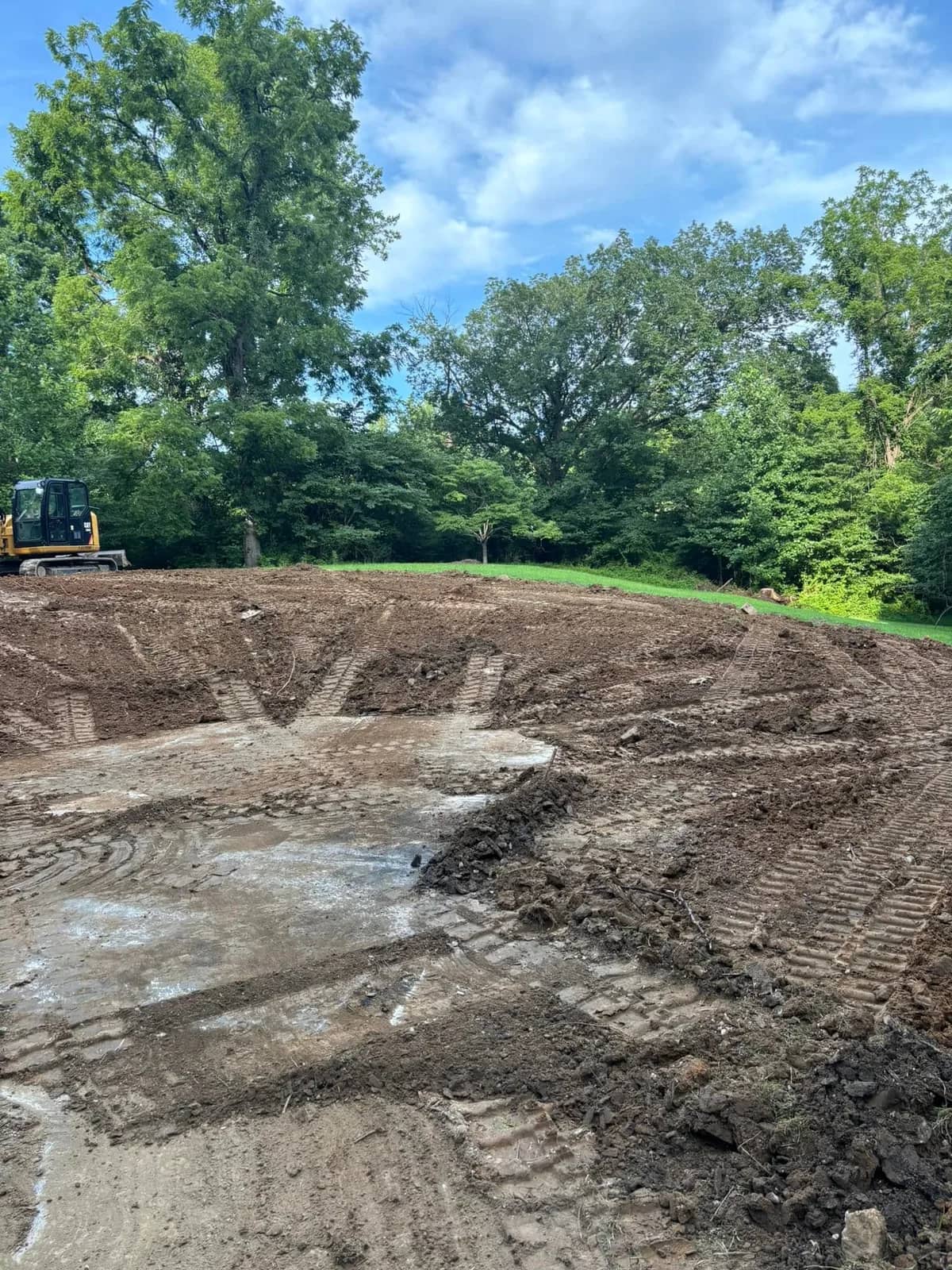
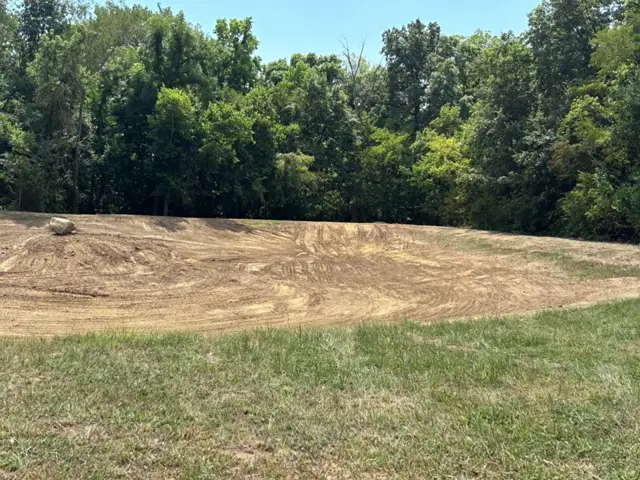
Pond excavation at K&H Excavating covers two kinds of work: digging new excavated ponds, where the basin is cut below the ground instead of held back by a dam, and enlarging or deepening ponds you already have. K&H is a Rosedale excavating company owned and run by Kory Stone in Parke County. On this kind of job nearly every yard of storage comes out of the hole, so where the spoil goes gets settled before the first bucket. Excavators dig and load, dozers shape the slopes and spread the dirt, and K&H's own trucks haul off what can't stay. This page is the dig-and-enlarge side of our pond building work. Call or text Kory at (765) 548-3704 to have him look over your pond, or the spot where you want one.
When to call
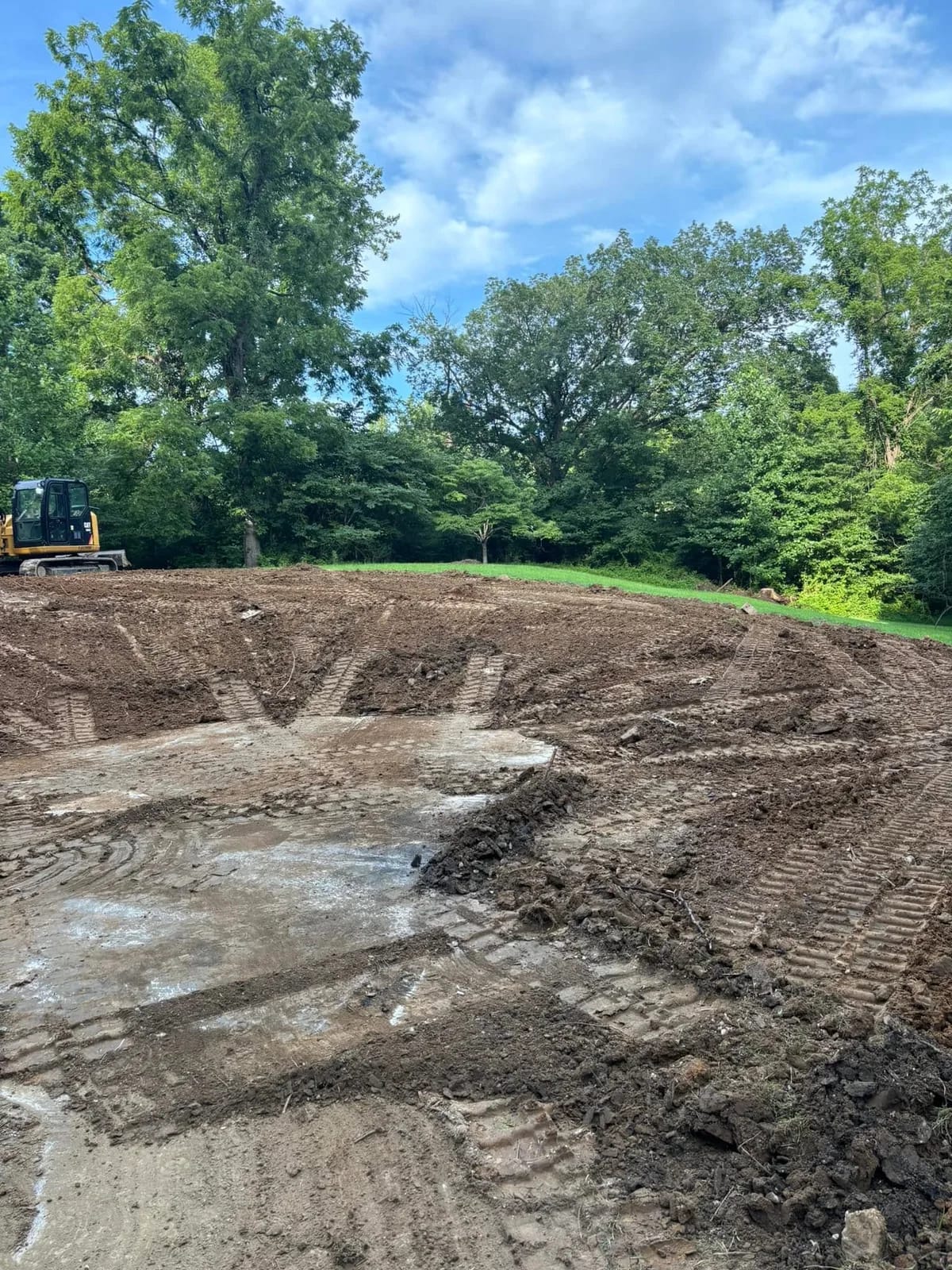
Signs It's Time to Dig a New Pond or Enlarge an Old One
A shallow pond only gets shallower. Purdue Extension notes that sediment reduces pond depth over time, and once the water is under about 4 feet, rooted weeds can grow across the bottom. Every year you wait adds more soft material that has to come out before any new depth can be cut. Fall is the natural window: IDNR's fish-management booklet suggests draining a pond in fall and letting spring runoff refill it, so a pond dug or enlarged after harvest has the wet months ahead to refill it. Digging a pond in a wet spring means fighting mud the whole way.
- Cattails and weeds have spread from the edges across most of the pond.
- By late August the pond has pulled back to a ring of cracked mud.
- Fish died over winter. IDNR warns that ponds with less than 5 feet of water risk winter fish loss.
- A silt fan at the inlet has turned one end into marsh (see pond sediment removal).
- Your ground is flat, there's no draw to dam, and you still want water.
- You're building a house on the property or getting it ready to sell, and a bigger, cleaner pond is part of the plan.
What's included
What Our Pond Excavation Includes
Pond excavation means removing soil to create or expand the basin itself, as opposed to building a dam that holds water above the original ground.
Digging a New Excavated Pond
Purdue's ID-410-W recommends at least 0.15 acre of surface for an excavated pond, a smaller minimum than for a dam-built one. Dug-outs suit flatter ground where runoff or a high water table can fill a hole. Because almost all the storage is cut out rather than dammed, the dirt pile is roughly the size of the water. By simple arithmetic, a 1-acre dug-out averaging 8 feet deep is 8 acre-feet, or about 12,900 cubic yards in place before it swells in the truck. Kory plans the spoil site before he starts digging.
Pond Enlargement Starts With a Drawdown
Pond enlargement goes better dry. Kory lowers the water through the existing drain or by pumping, and Clemson Extension notes that drawing a pond down lets the bottom sediment dewater on its own before removal. Soft organic muck comes out first and gets stacked by itself, because it won't compact and it doesn't belong in a slope or a dam. Only then does the excavator cut the new depth into firm ground. If you want to keep your fish, decide on that before the drawdown begins.
Cutting Slopes That Stay Put
NRCS Practice Standard 378 caps excavated side slopes at 1:1, but that's the steepest allowed, not the target. For a pond that stays clear, Purdue wants at least 75 percent of the shoreline graded at 3:1 down to 3 feet of water, then deeper water beyond that, plus 2 extra feet set aside for future sediment. Deepening next to an existing dam means keeping the cut back from the dam's inside toe, so the new hole doesn't undermine the old fill.
Spoil Placed Where It Helps
Spoil on a pond job is a resource or a problem. Kentucky's pond maintenance guidance says to place removed material upland, outside the floodplain, and Clemson recommends double silt fence around stockpiles and seeding bare ground within two weeks. Kory can spread spoil to raise a low field corner, shape a berm or windbreak mound, or haul it off on K&H's own trucks. Topsoil is kept separate so it can go back on top.
Local ground
The Pond Excavation Problems We See Most in West Central Indiana
Purdue puts Indiana's need at three to five acres of drainage per acre-foot stored. Double the volume of a pond and you double the watershed it needs, or you end up with a bigger hole that's half full by August. Kory checks the drainage area before he quotes extra depth.
An old pond may hold only because a clay layer sits under it, and digging deeper can cut right through into sand or gravel, which Purdue says don't hold water. Rosedale's own town site is mapped as glacial outwash and the valleys south and west as creek alluvium, so test holes go below the planned new bottom. If a permeable seam does turn up, USDA's pond handbook calls for a compacted clay blanket at least 12 inches thick.
A bare dirt pile beside a pond in April, the wettest month of the year here alongside May, ends up back in the water. Clemson Extension's dredging guidance covers silt fence, upland placement, and fast seeding for spoil piles.
Roughly a tenth of Clay County and 7 percent of Vigo County were surface-mined for coal, and IDNR describes mine spoil as much looser than the original ground. Enlarging a pond on reclaimed land takes test holes and caution before anyone promises it will hold. If your site needs a dam rather than more digging, see farm pond construction.
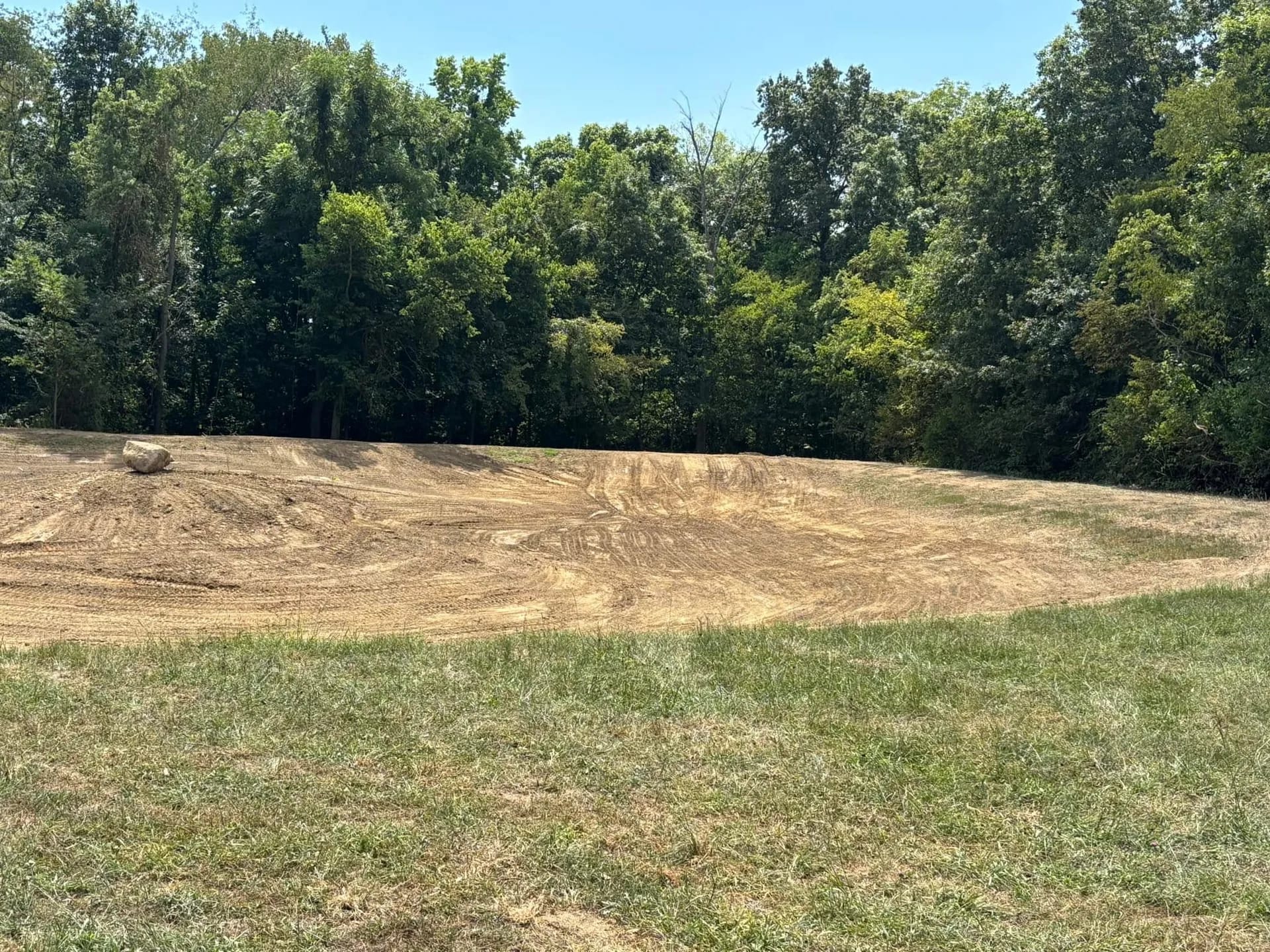
Why K&H
Why Landowners Choose K&H Excavating as Their Pond Excavation Contractors
Making a pond bigger without cutting through its seal, weakening its dam, or burying a field in loose dirt takes judgment more than horsepower.
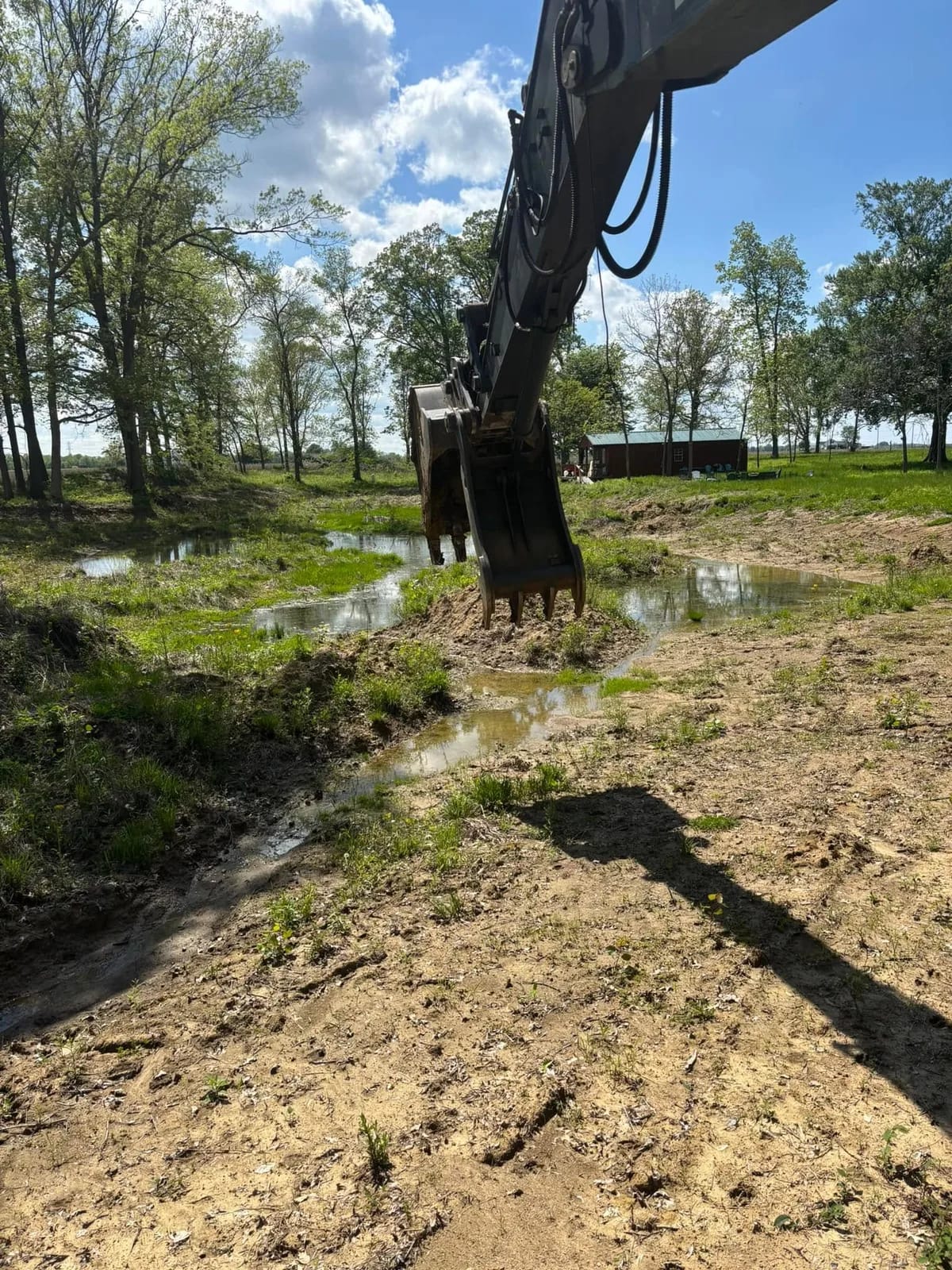
Kory reads the old shoreline, decides how far the cut can go, and runs the excavator himself. If the bucket turns up a sand seam, the person who quoted your job is the one who sees it.
An enlargement means digging below the old bottom, loading wet material, and moving thousands of yards of spoil. K&H uses excavators to dig and load and dozers to shape the edges and spread the dirt.
Office hours are Monday through Saturday, 8 a.m. to 6 p.m., but you can text Kory a photo of your pond on a Sunday night and hear back.
Spoil gets a plan before the drawdown starts, and what can't stay on your ground leaves on K&H's own trucks. See how Kory runs K&H, and why.
How it works
How Our Pond Excavation Works
Step 1 — Look Over the Pond With Kory
Kory walks the shoreline, the inlet, the overflow, and any drain, and asks what you want the pond to do: hold more water, fish better, or just look better from the house. After the walk, Kory follows up with a written estimate.
Step 2 — Test Holes, Layout, and Locates
Test holes go in below the planned new bottom to make sure the deeper cut stays in clay. Kory stakes the new water line, the deep zone, and the spoil areas, and the Indiana 811 locate goes in two or more full working days ahead of the dig. If spoil would land in a floodway or the work touches a stream, Kory will already have told you on the walk-through that a permit is probably needed. The landowner files it as the permit holder.
Step 3 — Draw Down and Let It Dry
On an enlargement, the water comes down and the bottom gets time to firm up so machines can work it. New dug-outs skip this step and go straight to topsoil stripping.
Step 4 — Muck Out, Then Dig
The excavator lifts the soft muck out and stacks it apart from the clean dirt, then cuts the new depth into firm ground. The dozer shapes 3:1 edges and spreads spoil where you agreed it would go. Questions as the basin takes shape? A text to Kory reaches the person in the excavator.
Step 5 — The Final Walk-Around with Kory
You and Kory walk the new shoreline, the deep zone, the inlet and outlet, and the spoil areas, which get their saved topsoil back before he leaves. The pond refills with fall and winter rain.
How we quote
How Much Will Your Pond Excavation Run in West Central Indiana?
Kory prices excavation and enlargement after the walk-through and test holes, because the number depends on how many cubic yards move and where they go. An enlargement is priced on its own yardage, so ask him where yours is likely to land. For the acre-foot math, read our cost to build a pond guide.
Payment is by cash, check, or card. Kory can talk through payment when he hands you the quote.
What changes the price
- Cubic yards removed. Every acre-foot of new storage is about 1,613 cubic yards by arithmetic (43,560 cubic feet divided by 27).
- Muck. Soft organic material has to be dried, handled, and placed separately from clean spoil.
- Water. Draining through an existing valve is cheaper than pumping a pond down.
- Spoil. Spreading it on your ground costs less than loading and hauling it off.
- Ground conditions. Wet bottoms, timber on the bank, and narrow access slow the machines.
- A clay blanket, if test holes find sand or gravel under the new bottom.
Quoted separately
- Removing trees and stumps from the shoreline or spoil area (land clearing)
- Cleaning out a silt fan at the inlet (pond silt removal)
- Clay brought in from off site, if the test holes call for it
- Restocking fish once the pond refills
Related work
Often Paired With Pond Excavation
As a pond digging company, K&H often finds the excavation leads straight into one of these.
Pond Sediment Removal
A pond that's half filled with muck needs a full cleanout before new depth can be cut, and sometimes the cleanout alone gets you the pond back. How long it takes depends on how much muck is in there. See pond sediment removal for filled-in ponds.
Farm Pond Construction
If the ground slopes too much for a dug-out, or you want more water than digging alone can give, a dam across the low side is the answer. See farm pond construction with a keyed-in dam.
General Excavation
Spoil from a pond job can fill a low spot, raise a wet field corner, or shape a berm. Kory can move and grade that dirt while the machines are on site. See general excavation and dirt work.
More in Pond Building: Pond Building · Farm Pond Construction · Pond Construction Cost Guide
Where we work
Pond Excavation Across the Wabash Valley and West Central Indiana
Most excavation jobs fall within about 50 miles of Rosedale, and larger ones can run out to about 75 miles, far enough to reach eastern Illinois. Rosedale Road drops south to Fruitridge Avenue and Terre Haute's east side, about 10 miles to the US-40 corridor, and I-70 runs east from there past Brazil toward Indianapolis. IN-163 crosses the Wabash at Clinton and heads west toward the Illinois line. For Bloomington, IN-59 runs south from Brazil to IN-46, and IN-46 runs east through Spencer. Lafayette is up US-41 to IN-47, through Crawfordsville, then north on US-231.
Soil on those routes changes quickly. Creek bottoms along Big Raccoon Creek and the Wabash carry alluvium and outwash that can run sandy, Clay County has no mapped sinkhole areas but plenty of old mine ground, and Indiana Geological and Water Survey maps show sinkhole areas over 6 to 7 percent of Owen and Monroe counties.
Searching for pond excavation in Terre Haute, or pond excavation contractors near Indianapolis? K&H's home markets are Rosedale, Terre Haute, Bloomington, Lafayette, and Indianapolis. Or browse all of K&H's excavation services.
Want to know if your pond is in range? Call or text Kory at (765) 548-3704.
Questions
Pond Excavation & Enlargement FAQ
How much bigger can you make my existing pond?
Expanding an existing pond is limited by four things: the watershed that has to fill it, the dam if there is one, your property lines, and room for the spoil. Purdue's three-to-five-acres-per-acre-foot rule tells you how much extra storage the drainage can support. Kory measures all four on the walk-through and gives you a realistic new size, not just a bigger number.
Is digging a 1 acre pond a big job?
It's a real job but a common one. A 1-acre dug-out averaging 8 feet deep works out to about 12,900 cubic yards of dirt by arithmetic, and all of it needs a place to go. A dam-built pond of the same size moves much less dirt, because the dam holds back water above the original ground. Machine time depends on soil, access, and weather, and Kory can lay out a realistic schedule once he's walked the site.
What should I know before digging a large pond?
Digging a large pond brings in rules that small ponds avoid. A dam that stores more than 100 acre-feet, stands more than 20 feet tall, or drains more than a square mile falls under IDNR jurisdiction and needs a permit and a design from an Indiana-registered engineer. Any pond of an acre or more has already disturbed an acre of ground, which triggers IDEM's construction stormwater permit.
Can you dig a pond on a slope?
Yes, but digging a pond on a slope usually means building fill on the downhill side. Once 3 feet or more of water stands against that fill, NRCS treats it as an embankment pond, which calls for a core trench and compacted lifts. Kory will tell you whether your slope suits a dug-out with a low berm or a true dam.
Do you have to drain the pond to enlarge it?
Usually, yes. Working dry lets the bottom firm up and lets Kory see the clay he's cutting into, which is how the new depth stays sealed. Small cleanouts along the bank can sometimes be done with water in, using a long-reach excavator when the job calls for one.
Where does all the dirt go?
It goes upland and out of the floodplain, either spread on your ground or hauled off on K&H's trucks. Placing fill or spoil in the floodway of a stream draining a square mile or more takes an IDNR permit under the Flood Control Act (IDNR regulatory programs), so floodway ground is off the table without one.
Who will be digging my pond, and how do I reach them?
Kory is on every job himself, so the person who measures your pond is the one digging a pond out on your property. It's excavators and dozers, no skid steers, from the drawdown to the last pass of spoil. And Kory answers texts after hours, so you can send photos any evening.
Ask Kory About My Pond
Still have a question about pond excavation? Call or text Kory at (765) 548-3704.
Call or text
Ask Kory about pond excavation & enlargement
(765) 548-3704Calls and texts answered Monday to Saturday, 8 a.m. to 6 p.m. Text a few photos of the property and Kory can give you a head start before the site walk.
Get a free estimateFree estimate
Let's Give Your Pond the Depth It Was Supposed to Have
Send Kory a photo or have him walk the pond with you, and he'll tell you how much bigger and deeper it can go, where the dirt will end up, and what it will cost. You can also reach K&H through the contact page.