Land and sites
Building Demolition in Rosedale, IN
A barn that leans a little farther every winter. A shop nobody has opened since the '90s. A vacant commercial building sitting right where your next project needs to go. Kory takes it down, digs out what's underneath, and hauls it away.
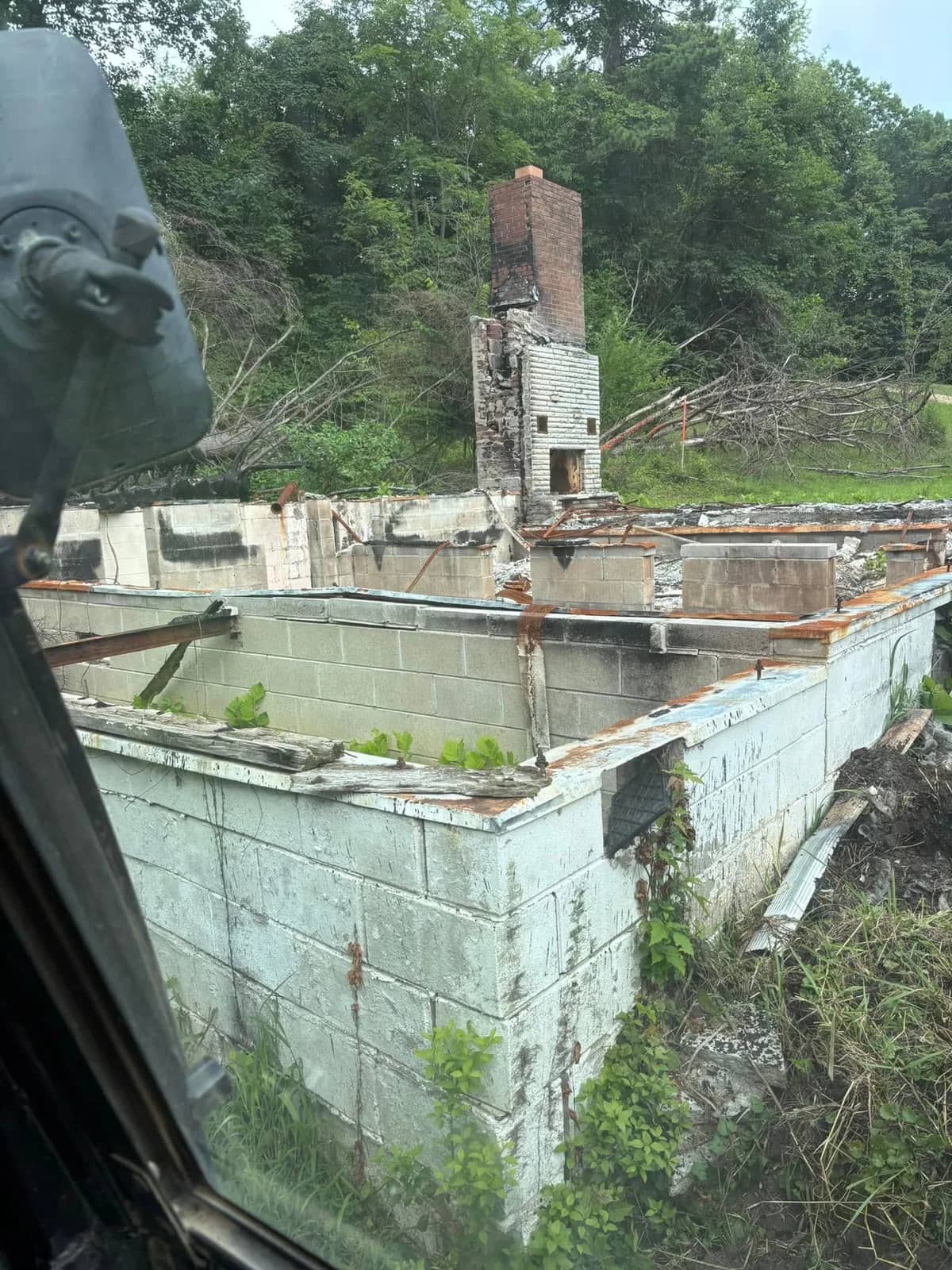
K&H Excavating handles building demolition for farms, landowners, and commercial property owners across west central Indiana. That means barns and machine sheds, outbuildings, shops, commercial buildings, and the slabs and foundations under them. We're a Rosedale excavating company owned by Kory Stone, who farms in Parke County and runs the excavator on his own jobs. K&H does demolition and excavation in one outfit, so the job doesn't end when the walls hit the ground. Kory pulls the footings, breaks out the floor, fills the hole, grades the ground, and hauls the debris away on K&H's trucks. Before any of that, he walks the building with you and lays out the asbestos, notice, and utility steps Indiana requires, so nothing stalls halfway through. Call or text Kory at (765) 548-3704 to set up a walk-through.
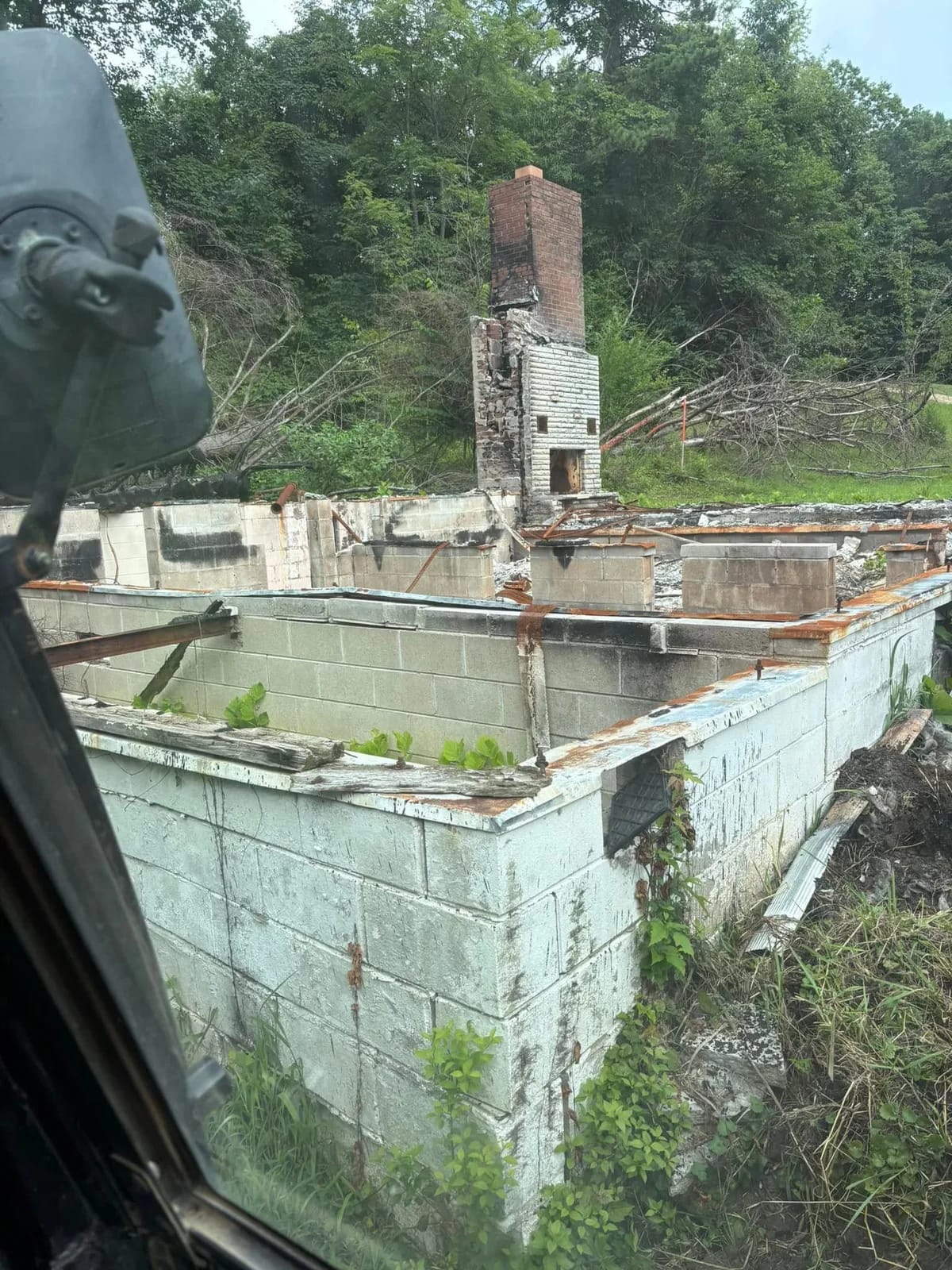
When to call
Signs It's Time to Take the Building Down
An empty building doesn't sit still. Once the roof opens, every rain soaks the framing and every windstorm works the walls further out of square, while you keep paying to insure it. Timing matters too. Indiana makes most demolitions wait at least 10 working days after notice is filed, and winter is Kory's teardown season. Call in the fall and the paperwork is done before the ground freezes.
- The roof is open, or the walls are racked so far you won't let anyone walk inside.
- Your insurance carrier has flagged the building, or won't cover it the way it stands.
- You want a new pole barn, shop, or house in the exact spot the old one occupies.
- The farm is being sold, divided among heirs, or settled, and the buyer or the estate wants the old buildings gone first.
- A vacant commercial building is the reason a lot won't sell or lease.
- A silo, grain bin, or livestock house hasn't been used in years and is starting to come apart.
What's included
What Our Building Demolition Includes
Building demolition at K&H covers the whole teardown: the required checks up front, the structure itself, everything under it, and the cleanup afterward, run by the owner with excavators, a dozer, and dump trucks.
Asbestos and Notice Before the First Swing
Indiana requires an asbestos inspection by an Indiana-licensed asbestos inspector before demolition, with one exemption: noncommercial homes with four or fewer dwelling units. For everything else, including commercial buildings and homes being converted for business use, the property owner files IDEM's demolition notification (State Form 44593). Work can't start until at least 10 working days after it's postmarked or delivered. K&H doesn't inspect for or remove asbestos. On the walk-through, Kory tells you what your building is likely to need and when to book the inspector, then builds the 10-day wait into the schedule.
Survey, Shutoffs, and Locates
Federal demolition rules (OSHA Subpart T) require a competent person to survey the structure before work begins. Every electric, gas, water, sewer, and other service line has to be shut off, capped, or otherwise controlled (OSHA 29 CFR 1926.850). Kory looks at what holds the building up, which way it will want to go, and what's close by: a house, a power drop, a fence you want saved. Indiana 811 covers demolition as well as digging, so Kory places the locate request at least two full working days before the machine moves in.
Teardown, Then the Footings Come Out
Kory brings a building down with an excavator, pulling the roof and upper framing in toward the footprint so it lands where it's planned to land. When the job calls for one, a thumb or grapple on the excavator strips roof sheets, sorts steel from wood, and loads trucks without hand-picking. Once the walls are down, the excavator digs the footings and breaks up the floor. That's the slow part of concrete building demolition, and it's where an excavator earns its keep. Slabs, block walls, and foundations get their own page: concrete demolition and removal.
Haul-Off, Backfill, and a Graded Site
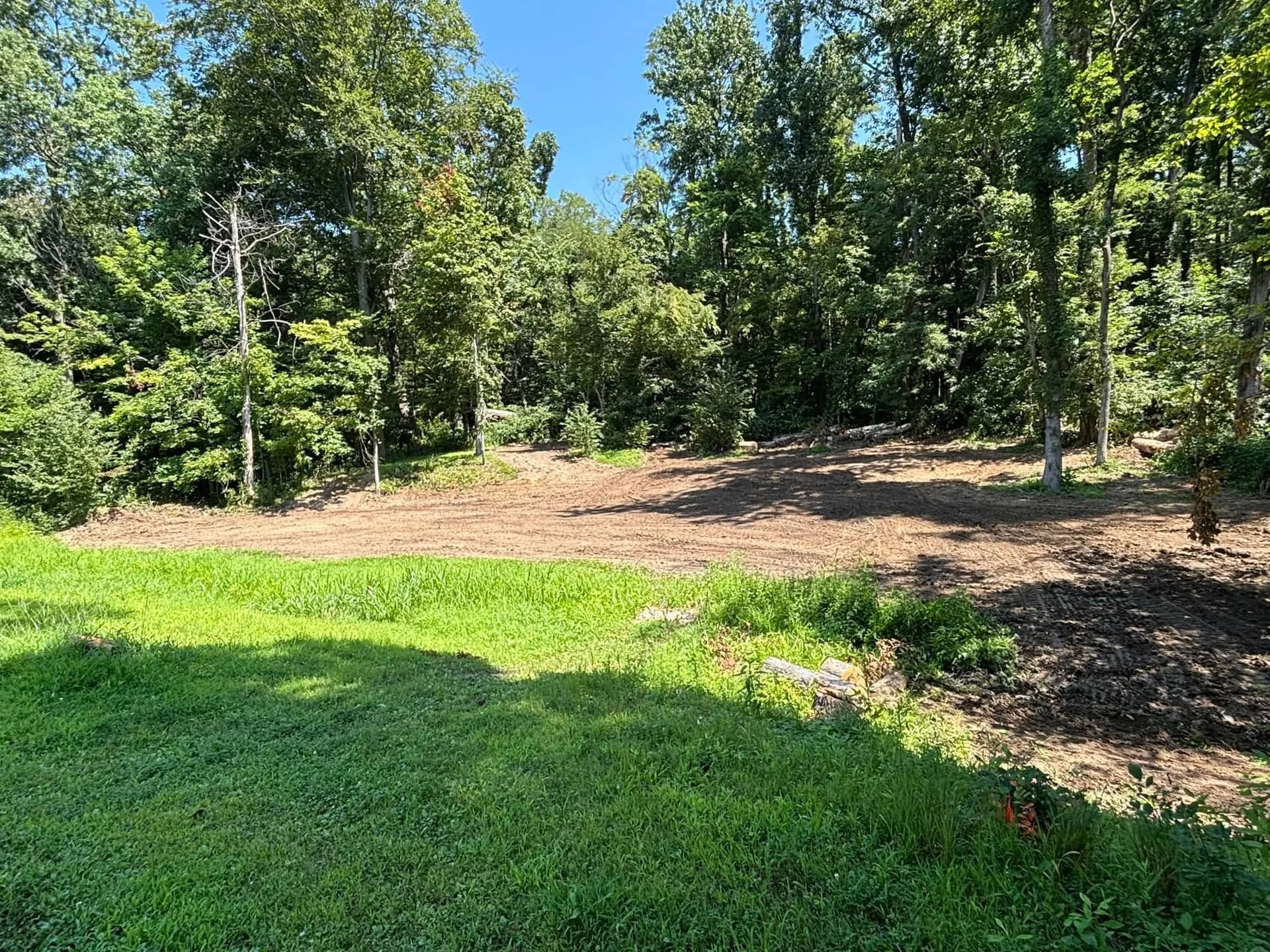
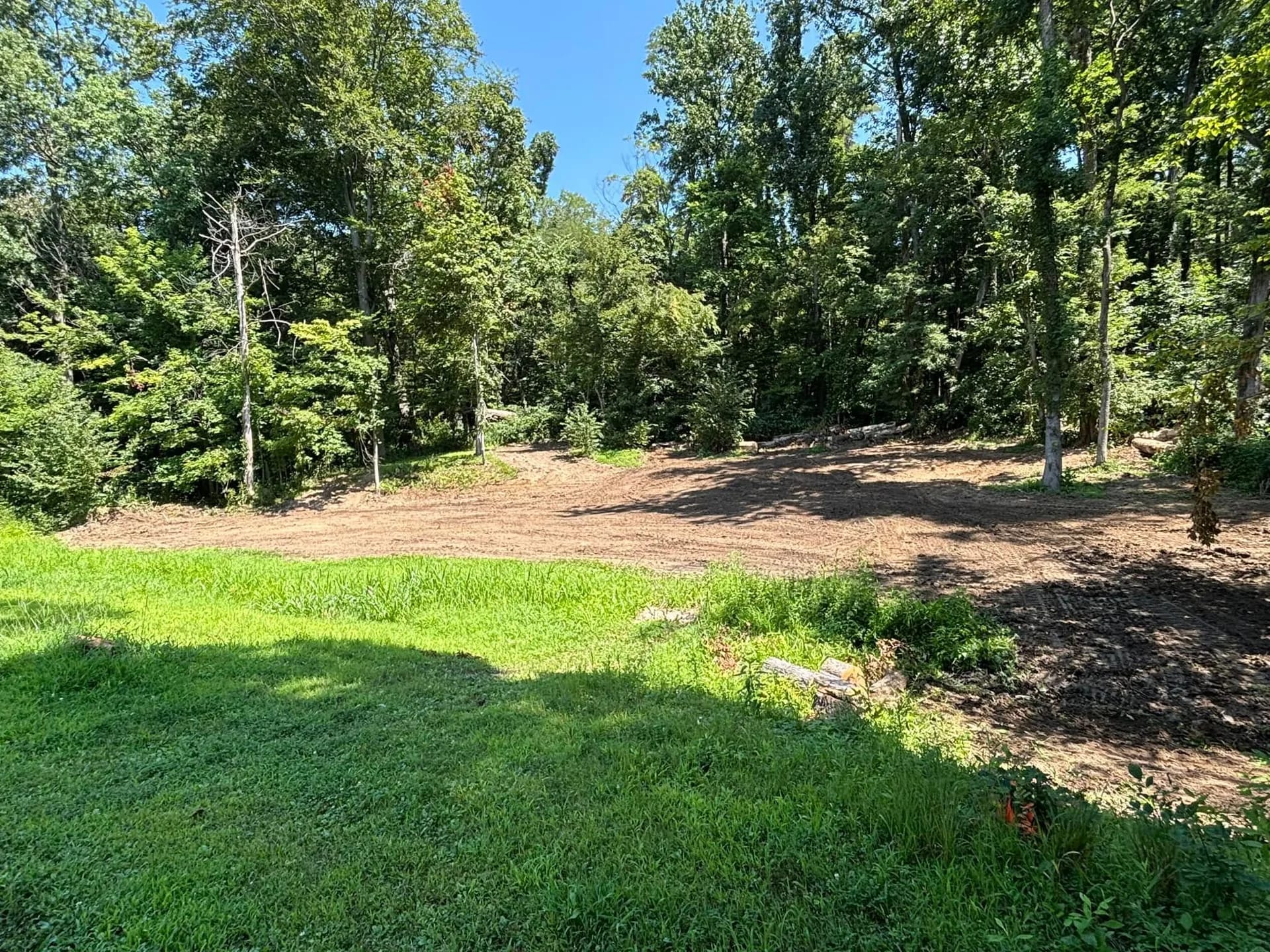
Debris leaves on K&H's own trucks. Loads are sorted so steel and metal roofing can go to scrap and concrete can be recycled where that's practical. Basements, pits, and footing trenches are filled and compacted, then the dozer grades the site so water runs off and you can mow it, farm it, or build on it. Gates get closed behind every load, and ruts in the field drive get smoothed before Kory leaves.
Local ground
The Demolition Problems We See Most in West Central Indiana
Parke County has 646 farms averaging 271 acres (USDA 2022 Census of Agriculture), and plenty still have a timber barn nobody fills anymore. A racked barn doesn't fall predictably, so Kory picks the pull direction before anything moves. Burning it isn't a shortcut. IDEM allows burning the wood from a mostly wooden structure in an unincorporated area only under conditions, including removing all asbestos first and never burning painted or treated wood.
Older farm and commercial buildings can have cement-asbestos siding or roofing, often called transite. Indiana's inspection exemption is narrow. It covers noncommercial homes with four or fewer units and doesn't extend to buildings converted for business or part of larger installations. The notice also carries a $50 fee per structure (IDEM demolition notification requirements). Farm buildings raise their own questions, covered on our commercial and agricultural demolition page.
Kory's best demolition months run January through March. Overnight lows at Terre Haute average below freezing from December through February (NOAA 1991–2020 normals), and frozen ground carries loaded trucks across a hayfield that would rut to the axles in April. April and May are the wettest months of the year here, at about 4.7 inches each.
When a building comes down to grade and the footings and floor stay, the next builder hits concrete and pays to dig it out anyway. On reclaimed strip-mine ground in Clay and Vigo counties, IDNR warns that mine spoil is much looser than native soil, so what goes back into an old basement there deserves extra care. K&H takes sites down to dirt so site preparation can start clean.
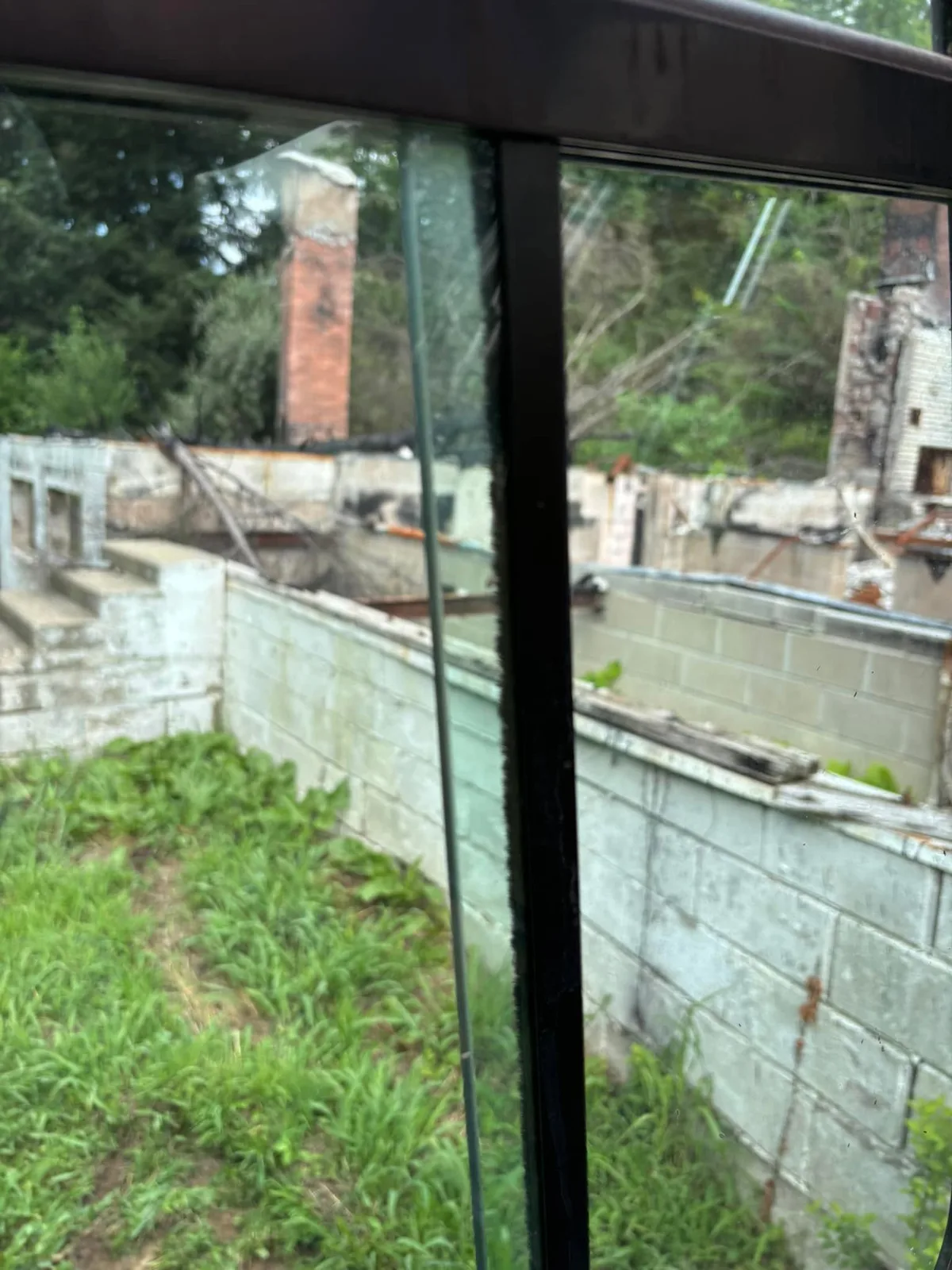
Why K&H
Why Farms and Businesses Choose K&H as Their Demolition Contractor
A demolition contractor is easy to find. One who shows up himself, finishes the dirt work, and takes the mess with him is not.
Kory walks the building, quotes it, runs the excavator, and signs off at the end. The person who saw the problems on the walk-through is the one in the cab when the roof comes down.
K&H runs its own trucks, so haul-off doesn't wait on a hired hauler's schedule and a pile doesn't sit in your yard for two weeks. Loads leave as the teardown goes.
Most of the work in a teardown is below grade. Because K&H is an excavation company first, footings, floors, basements, and backfill are part of the job, not a second contractor.
Kory looks at the building in person before he puts a number on it. Calls and texts come in Monday through Saturday, 8 a.m. to 6 p.m., and texts get answered after hours. Meet Kory and see how K&H works.
How it works
How Our Building Demolition Works
Step 1 — Walk the Building With Kory
Kory meets you at the site and walks the building inside and out: the framing, what's stored in it, what's under the floor, and what has to stay standing nearby. He'll ask what comes next, because a hayfield, a lawn, and a new building pad each finish differently. A written estimate follows once he's seen it all.
Step 2 — Inspection, Notice, and Locates
Unless the building is an exempt noncommercial home with four or fewer units, the owner books an Indiana-licensed asbestos inspector and files the IDEM notification, and the 10-working-day clock starts. During that wait, Kory places the Indiana 811 request, and you call the power and gas companies to schedule disconnects.
Step 3 — Shutoffs and the Teardown
With every service line shut off and capped, Kory walks the structure again and brings it down with the excavator. Metal comes off first where it can, so it stays clean for scrap. He keeps checking the structure as it comes apart, the way OSHA's continuing-inspection rule calls for. Want to know where things stand mid-job? Call or text him.
Step 4 — Footings, Floors, and Haul-Off
The excavator digs out footings and breaks up slabs, and the trucks keep hauling as piles build. Basements and pits get backfilled and compacted, and the dozer grades the site so it drains.
Step 5 — The Final Walk-Around with Kory
You walk the cleared ground with Kory and check the grade, the fence lines, the field drive, and anything you asked him to save. When he leaves, the building, its foundation, and its debris are gone.
How we quote
How Much Does Building Demolition Cost in West Central Indiana?
K&H prices each demolition after Kory walks the building, because two barns with the same footprint can be very different teardowns. He doesn't quote sight unseen, so the number you get reflects your building and what's under it.
K&H takes cash, check, and credit card.
What changes the price
- Size and construction. A wood-frame barn comes apart faster than a masonry or steel-frame commercial building.
- What's under it. Basements, deep footings, thick floors, and rebar add machine time and truckloads.
- Asbestos results. Anything an inspector finds has to be abated before teardown starts.
- Haul distance and disposal fees.
- Access and season. Frozen winter ground is easier on fields and trucks than April mud.
- Backfill. How much fill an old basement or pit needs, and where it comes from.
Quoted separately
- Asbestos inspection and abatement, done by Indiana-licensed inspectors and contractors
- IDEM's notification fee of $50 per structure, invoiced quarterly
- Utility disconnects by the power, gas, and water providers
- A new pad or building site afterward (site preparation for the next building)
Related work
Often Paired With Building Demolition
Taking a building down usually leaves one of these next.
Concrete Demolition
Old floors, feedlot pads, and block foundations are often bigger jobs than the building that sat on them. Kory breaks them up, separates the steel, and hauls it off, usually right after the teardown, while the machines are still on site. See concrete demolition for slabs and foundations.
Commercial & Agricultural Demolition
Silos, grain bins, hog houses, and commercial buildings need more planning than a shed, from fall zones to asbestos rules for farm buildings. See commercial and agricultural demolition.
Site Preparation
Most owners clear an old building to put a new one in its place. While the equipment is already there, Kory can clear and rough-grade the spot, and he'll talk through what the new building needs. See site preparation after demolition.
More in Demolition: Concrete Demolition · Commercial & Agricultural Demolition
Where we work
Building Demolition Across the Wabash Valley and West Central Indiana
K&H is based in Rosedale, in southern Parke County north of Terre Haute, and takes demolition work within about 50 miles as a matter of routine. For larger commercial and farm teardowns, Kory will haul equipment up to about 75 miles, including into eastern Illinois. Most jobs land in Parke, Vigo, Clay, Vermillion, and Putnam counties. US-41 runs south into Terre Haute and north through Rockville toward I-74 and Lafayette. IN-163 crosses the Wabash at Clinton on the way to the Illinois line. North of Rosedale, US-36 heads east past Raccoon Lake and through Danville into Indianapolis, and county roads reach IN-59 at Brazil, where IN-46 runs through Spencer to Bloomington.
That footprint holds two kinds of teardown. Out in the county, it's mostly farm buildings: barns, cribs, silos, and livestock houses. Closer to Terre Haute, Lafayette, and Indianapolis, buildings are more often commercial and lots are tighter, so city permits and neighbors shape the plan. The property owner pulls any permit the city requires, and Kory can flag what the city is likely to want before the job is scheduled.
Need building demolition near Terre Haute or a teardown in Putnam County? We serve Rosedale, Terre Haute, Bloomington, Lafayette, and Indianapolis. See all of K&H's excavation services.
Wondering if your building is in range? Call or text Kory at (765) 548-3704.
Questions
Demolition FAQ
Do I need an asbestos inspection before tearing down a barn or building in Indiana?
For almost everything except a noncommercial home, yes. IDEM requires an inspection by an Indiana-licensed asbestos inspector before demolition. The only exemption is a noncommercial residential building with four or fewer dwelling units. Most demolitions also need IDEM's notification form and a wait of at least 10 working days. Kory will tell you on the walk-through what applies to your building.
How long does building demolition take?
Plan on at least two weeks of lead time for the asbestos inspection and the 10-working-day notice period, plus the Indiana 811 locate. Machine time on site depends on the building's size, what's under it, and the weather. Kory can give you a realistic count of days on site once he's seen the building, and a commercial building usually runs longer than a barn. Frozen winter ground often lets the work run faster than spring mud does.
How much does it cost to tear down a barn or commercial building?
It depends on size, construction, foundations, asbestos results, and how far the debris travels. Kory gives you a written price after seeing the building. Free on-site estimates mean you know the number, and what it includes, before anything comes down.
What do I need to do before demolition day?
Get anything you want to keep out of the building, call the power and gas companies about disconnects, and point out any private water or electric lines you ran yourself. Book any required asbestos inspection early, since the inspection and the 10-working-day notice wait both have to happen before teardown. If you won't be around during the teardown, settle with Kory beforehand how to reach you and which gates stay closed.
What happens to the debris?
Debris hauled on our own trucks means nothing waits on an outside hauler. K&H sorts loads so steel and metal roofing go to scrap, concrete goes to recycling where practical, and the rest goes to a proper disposal site. Indiana's burning rules never allow painted or treated wood, or anything with asbestos, to be burned.
How do I compare demolition firms?
Ask who will run the machine, whether footings and floors are included or left behind, who hauls the debris, and how the site will be left. Ask how they handle the asbestos inspection and IDEM notice. At K&H, the answer to the first question is Kory, on every job. Finally, ask any demolition contractor to show you a site they cleared a season ago.
Do you demolish buildings in winter?
Winter is one of the best times for it. From January through March, frozen ground lets Kory get trucks and machines across fields and yards without tearing them up. File the IDEM paperwork in the fall and you'll be ready when the ground firms up.
Do you take down houses and concrete buildings?
K&H focuses on barns, outbuildings, commercial buildings, and ag structures. If there's a house in the mix, call Kory and talk it through. Concrete building demolition and block-wall work is part of the job, done with the excavator and a hydraulic breaker when the concrete calls for one. A noncommercial home with four or fewer units is exempt from Indiana's asbestos inspection rule, but Kory still checks for anything that shouldn't go in a truck.
Ask Kory About My Building
Still have a question about building demolition? Call or text Kory at (765) 548-3704.
Call or text
Ask Kory about demolition
(765) 548-3704Calls and texts answered Monday to Saturday, 8 a.m. to 6 p.m. Text a few photos of the property and Kory can give you a head start before the site walk.
Get a free estimateFree estimate
Let's Clear the Way for What Comes Next
Tell Kory what's standing and what you want there instead. He'll walk it, explain the inspection and notice steps, and give you a straight price for taking it down to clean ground. Reach him through our contact page, or call or text directly.