Ponds and lakes
Lake Dredging in Rosedale, IN
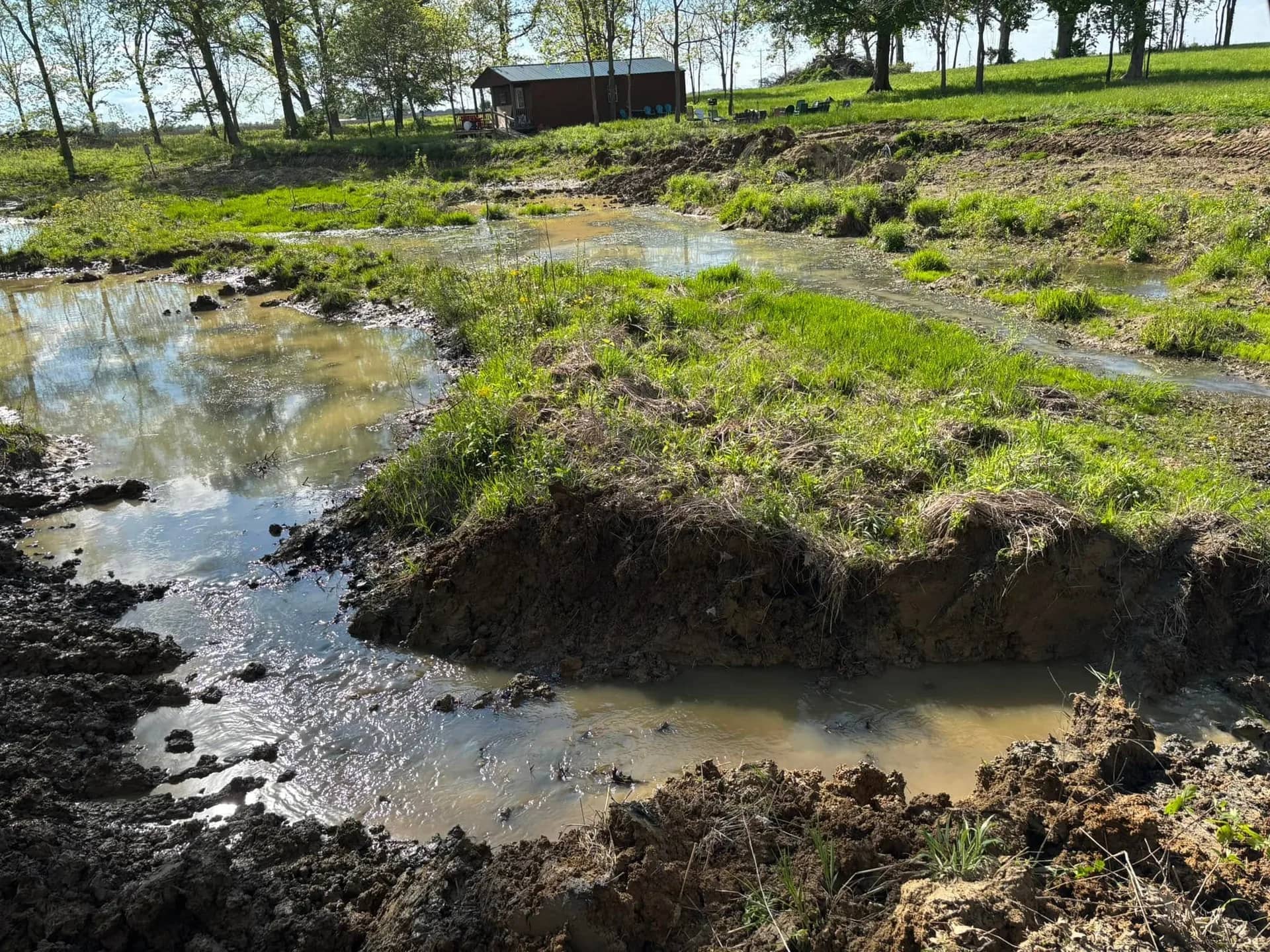
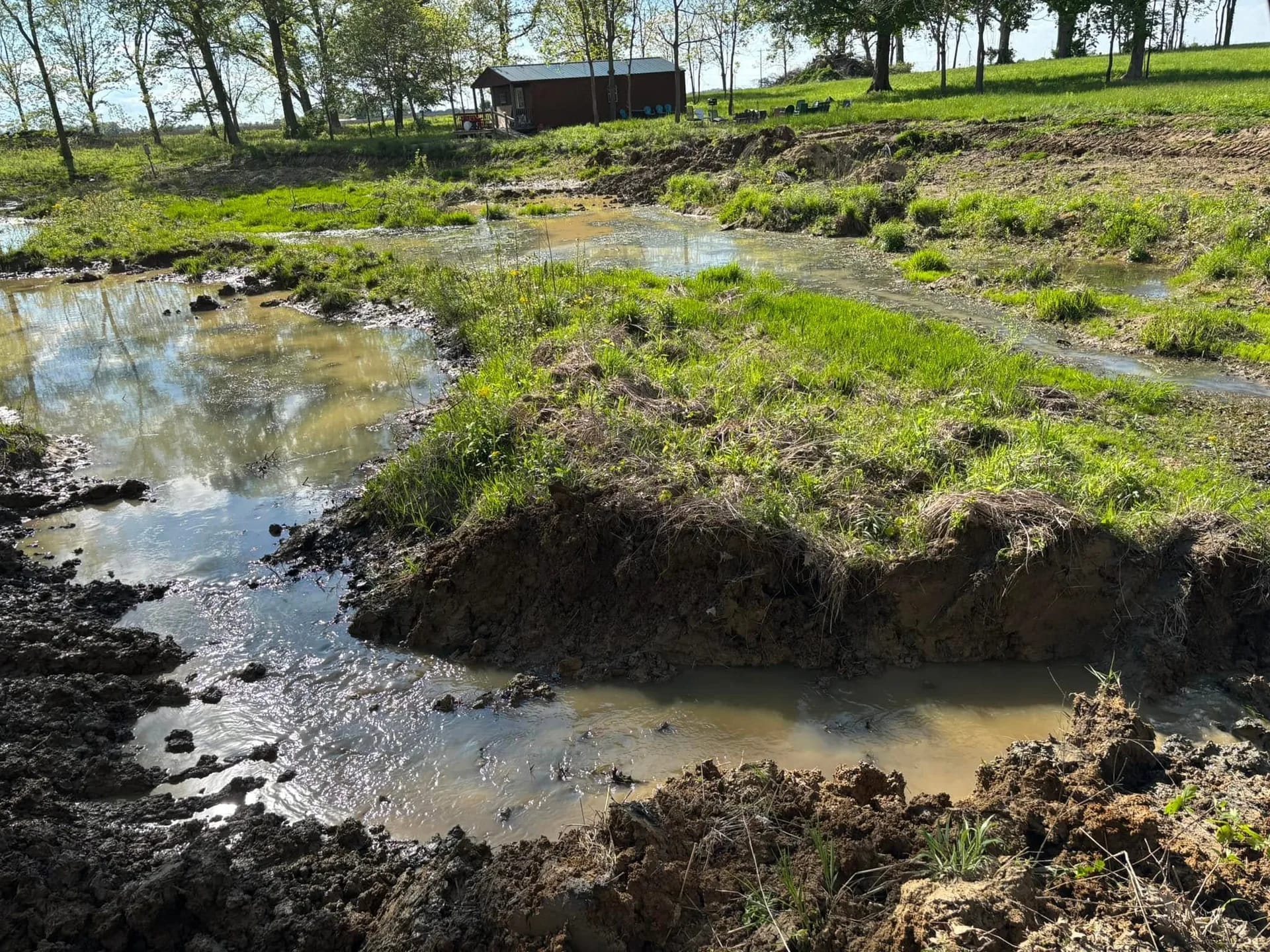
Coves you used to fish from a boat now growing cattails? A boat ramp that ends in mud by August? Lakes fill in from their inlets and edges first, and that's where dredging pays off.
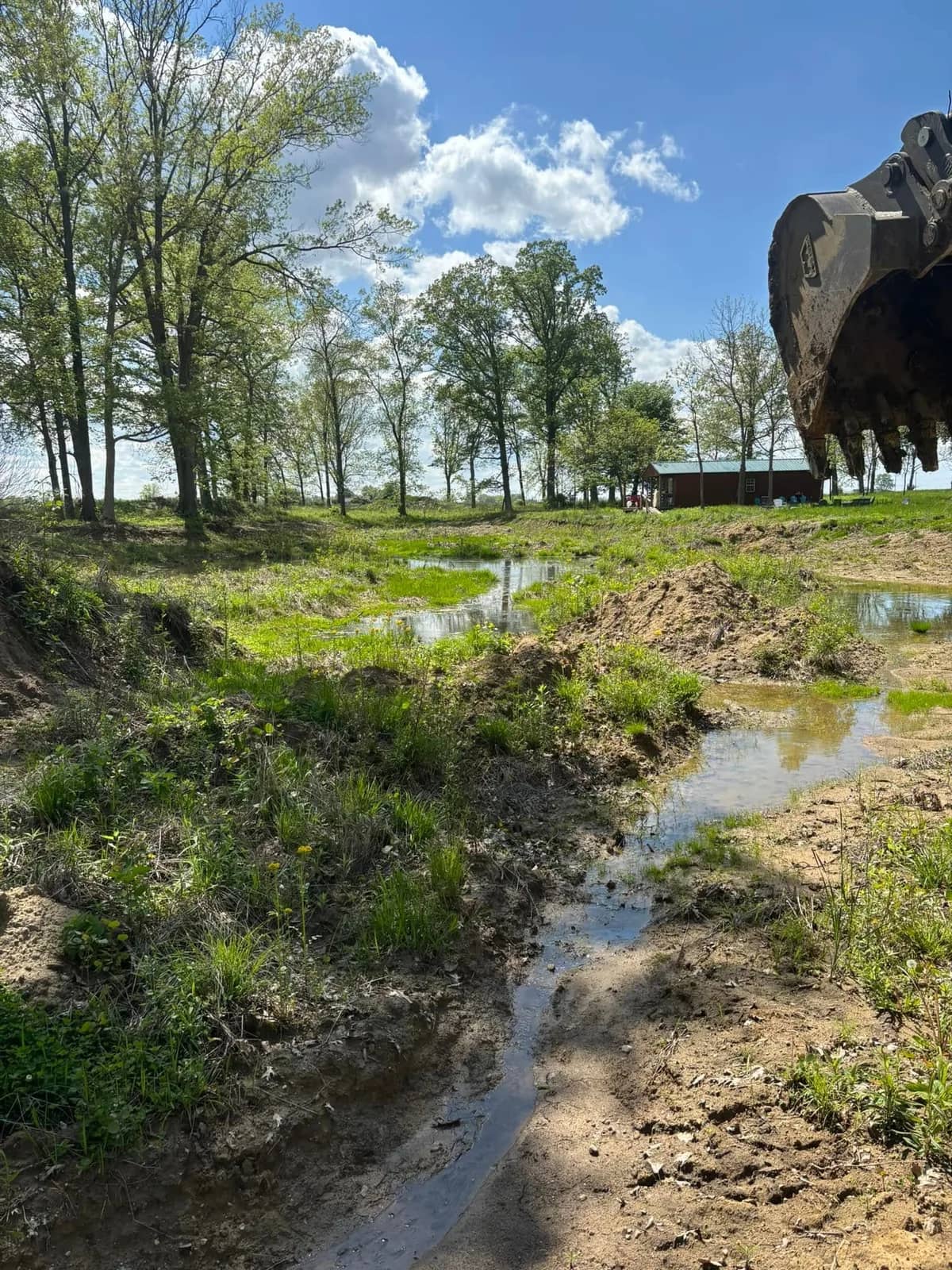
K&H Excavating handles lake dredging across west central Indiana, from private lake dredging for one family to cove work for lake associations and conservancy districts. We're a Rosedale excavating company owned by Kory Stone in Parke County, less than a mile from Big Raccoon Creek, the creek dammed upstream to form Raccoon Lake. Lake work carries more rules than pond work: permits, a water level to plan around, spoil that needs a legal home, and weeks of trucks on your roads. Kory walks the shoreline with your owner, board, or lake manager and lays out a plan before anyone signs. Call or text Kory at (765) 548-3704 to set up a walk.
When to call
Signs It's Time for Lake Dredging
Sediment never stops arriving. Every spring storm washes field soil and leaves down the inlets, and April and May each average about 4.7 inches of rain at Terre Haute. Once a cove gets shallower than 4 feet, rooted weeds move in (Purdue Extension says 4 feet or more stops rooted plant growth) and trap still more silt. Waiting also raises the bill: every extra foot of sediment across an acre is about 1,613 more cubic yards to dig and haul.
- A creek or ditch inlet has built a mudflat you can walk on in late summer.
- Boats scrape bottom in a cove or channel that used to float a pontoon.
- The swimming beach or boat ramp ends in soft muck instead of firm bottom.
- Cattails and lily pads push farther out from the shoreline every year.
- The silt ponds or sediment basins above the lake are full, so new silt goes straight into the lake.
- Your association has a drawdown coming for dam, outlet, or seawall work and wants to dig while the water is down.
What's included
What Our Lake Dredging Includes
Lake dredging at K&H is mechanical: excavators dig sediment off the lake bottom, trucks or dozers move it to an upland spoil site, and the disturbed ground is shaped and seeded.
Soundings and a Shoreline Walk
Kory needs to know how much material sits where before he prices anything. He walks the shoreline, checks every inlet and ditch outfall, and takes depth readings across the problem areas, measuring water depth and how far soft sediment goes before firm bottom. Those readings become a cubic-yard estimate for each cove, which drives the schedule, trucking, and price. An existing depth survey or engineer's plan works too.
Permits Sorted Out Up Front
Most lake jobs touch at least one permit program, and the paperwork often takes longer than the digging. On the walk-through, Kory goes over which ones likely apply to your lake: the Lakes Preservation Act, the Corps of Engineers and IDEM, or an IDNR floodway permit for the spoil site. K&H doesn't hold permits; the lake owner or association applies, often with an engineer, and K&H builds the work plan around the permit's conditions.
Drawdown, Staging, and Access
Some coves can be dug from the bank with the water up. Others go faster with the lake lowered, because a drawdown lets the bottom drain and firm up first, which is the reason Clemson Extension gives for lowering water levels. Kory plans where machines unload, where trucks turn, which lawns and roads need stone or mats to protect them, and where spoil can sit outside the floodplain. On a multi-week job, the staging area stays put and is restored at the end.
Digging, Hauling, and Placing the Spoil
Excavators dig the sediment from shore, with a long-reach machine or a barge brought in when the job calls for one. K&H dredges mechanically with excavators rather than a hydraulic suction dredge. Wet material rides by truck or dozer to an upland site, where it drains, is spread and shaped, and gets seeded. For a day-by-day look at how a job runs, see how K&H runs lake dredging services.
Local ground
The Lake Problems We See Most in West Central Indiana
Indiana's Lakes Preservation Act requires a written IDNR permit before anyone excavates, fills, or otherwise changes the area or depth of a public freshwater lake below its waterline or shoreline, and dredging is named among the regulated activities (IDNR regulatory programs). The rule defines a public freshwater lake as one the public has used with a riparian owner's acquiescence, and IDNR notes that many lakes are considered public even with no public access.
About a tenth of Clay County has been surface-mined for coal, and big shares of Vigo and Sullivan counties have too, so old pit lakes are common south of Rosedale. Indiana's definition of a public freshwater lake excludes a privately owned body of water created by surface coal mining. That takes most private pit lakes out of the Lakes Preservation Act, though not out of Corps or IDEM rules, and steep pit walls make access the hard part.
A creek draining row-crop ground drops its silt where the current slows, right at the lake. Parke County alone has nearly 130,000 acres of cropland. IDNR's Lake and River Enhancement (LARE) program says the source of the sediment should be addressed before dredging starts. That's why Kory also looks upstream at the silt ponds and sediment basins that are supposed to catch it first.
University of Florida extension calls finding cost-effective ways to dispose of dredged sediment the biggest challenge on dredging projects. Wet muck can't go back into the floodplain, so Kory looks for an upland spoil site on the first walk. Smaller spot jobs are covered under lake sediment removal at coves and inlets.
Why K&H
Why Lake Owners and Associations Choose K&H as Their Lake Dredging Contractor
Lake dredging contractors range from hydraulic outfits with long pipelines to excavator operators. K&H is the second kind, built for the cove and inlet work most private lakes here need.
Boards don't want to brief a new foreman every Monday. Kory walks the shoreline, writes the plan, and runs the job, so a question about a resident's dock goes straight to the person who can fix it.
Lake sediment is heavy, wet, and often far from firm ground. K&H brings excavators to dig and load and dozers to spread and shape the spoil, which is the equipment a multi-week lake job needs.
The shoreline walk and the soundings cost you nothing. Kory picks up Monday through Saturday, 8 a.m. to 6 p.m., and replies to texts after hours, which helps when your board meets at night.
Kory comes from a cattle-and-hay farm family in Parke County, and he reads a lake like a field: where the water comes from, what it carries, and where it drops it. Read about Kory and how K&H got started.
How it works
How Our Lake Dredging Works
Step 1 — Walk the Shoreline With Kory
Kory meets your owner, board, or lake manager and walks every problem area: coves, inlets, beach, and ramp. He'll ask what each spot needs to do again, whether that's floating a pontoon or holding fish, because that sets the target depth. You get a written estimate after the soundings.
Step 2 — Readings, Permits, and a Work Plan
Kory sounds the target areas, picks the spoil site, and lays out access. He tells you which permits likely apply so the owner or association can file. If the job needs a drawdown, the plan sets when the lake goes down and refills; IDNR's pond guidance favors draining in fall so spring runoff refills it. Kory places the Indiana 811 locate request at least two full working days before digging on the banks.
Step 3 — Build Access and the Spoil Site
Before the first bucket comes out, K&H lays stone or mats over soft ground and lawns, builds a truck turnaround, and runs silt fence around the spoil area (Clemson Extension says double silt fencing is typical around stockpiled dredge material). Haul roads and truck hours get settled with the owner or board before the first load, so residents can be told ahead of time.
Step 4 — Dig, Haul, and Report Progress
The excavator works each area to target depth, loading trucks or a dozer that carries spoil upland. Kory checks depths as each area is finished, and on a multi-week job your contact can call or text him for an update any day of the week.
Step 5 — The Final Walk-Around with Kory
You walk or boat the finished areas with Kory, check depths, and look over the roads, lawns, and spoil site. Bare ground gets seeded (Clemson recommends within two weeks), the mats come out, and you know what was removed and where it went.
How we quote
How Much Does Lake Dredging Cost in West Central Indiana?
Lake dredging is priced after Kory takes soundings, because cost follows the cubic yards removed and how hard they are to reach and move; Clemson Extension names sediment volume as a principal cost factor. Each lake is quoted on its own, in writing, once the readings are in.
If your association is pursuing LARE cost-share, the sponsor covers the local match, and a contractor who prepares the application can't bid the work. K&H takes cash, check, and credit card, and Kory can talk through payment options when he quotes the job.
What changes the price
- Volume. One foot of sediment over one acre is 43,560 cubic feet, or about 1,613 cubic yards (43,560 ÷ 27).
- Reach. Digging from the bank costs less to set up than an excavator working off a barge.
- Water level. A drawdown can speed the digging but adds weeks of waiting for the bottom to drain.
- Haul distance from each cove to the spoil site, and whether trucks run on association roads.
- Access building: stone, mats, and repairs to lawns or roads afterward.
- Permit conditions, such as work windows or added erosion control.
Quoted separately
- Engineering, depth surveys by others, and permit applications
- Seawall, riprap, or dock repair; aquatic weed treatment; fish restocking
Related work
Often Paired With Lake Dredging
Dredging the lake is half the job. Keeping it from filling back in is the other half.
Silt Pond Maintenance
Clean coves won't stay clean if the basins upstream are full and passing silt through, so Kory looks at the silt ponds that feed a lake as part of planning the dredge. See silt pond maintenance for lakes and associations.
Lake Sediment Removal
Not every lake needs a big project. Sometimes it's one inlet delta, one swimming beach, or a boat ramp that needs digging back, a far smaller job than dredging a whole lake. See targeted sediment removal at coves, inlets, and ramps.
Brush & Underbrush Clearing
The path to a cove often runs through shoreline grown up in bush honeysuckle and autumn olive. Kory clears an access lane with the excavator, roots and all. See shoreline brush and underbrush clearing.
More in Lake Dredging: Lake Sediment Removal · Lake Dredging Services
Where we work
Lake Dredging Across the Wabash Valley and West Central Indiana
K&H works out of Rosedale in southern Parke County and takes lake jobs within about 50 miles, or up to about 75 miles for the right job, including eastern Illinois. Most jobs land in Parke, Putnam, Vigo, Clay, and Vermillion counties. US-36 runs east from Rockville past Raccoon Lake to Bainbridge in Putnam County and on through Danville toward Indianapolis. US-41 heads north past Turkey Run, with IN-47 branching toward Crawfordsville and I-74 leading on to Lafayette. To the south, US-41 reaches Terre Haute in about 16 miles, and county roads to IN-59 at Brazil connect to IN-46 east through Spencer to Bloomington.
The lakes change with the ground. North and east of Rosedale, lakes sit in glacial till and fill with fine silt off farm fields. In Clay and Vigo counties, many are old coal pits with steep walls. Near Bloomington, Lake Monroe, Indiana's largest lake, sits in limestone country the glaciers never reached. IDNR's lake association directory lists conservancy districts and property owners' associations in Parke, Vigo, Putnam, Montgomery, Hendricks, Owen, and Morgan counties, all inside that working radius.
Looking for lake dredging near Terre Haute or Bloomington? We serve Rosedale, Terre Haute, Bloomington, Lafayette, and Indianapolis. See all of K&H's excavation services.
Not sure your lake is in range? Call or text Kory at (765) 548-3704.
Questions
Lake Dredging FAQ
Do we need a permit to dredge our lake?
Probably at least one. On a public freshwater lake, the Lakes Preservation Act requires a written IDNR permit before dredging. IDNR's private pond and lake page says dredging projects almost always require a permit from the DNR Division of Water (IDNR private pond and lake management). Placing dredged or fill material in a lake, stream, or wetland can also require a Section 404 permit from the Corps' Louisville District, which may fit a Nationwide Permit, plus a Section 401 certification from IDEM. Kory tells you on the walk-through which programs likely apply.
Our lake is an old strip pit. Does the Lakes Preservation Act apply?
Indiana's definition of a public freshwater lake excludes a privately owned body of water created by surface coal mining, so private lake dredging on a pit lake generally falls outside that Act. That doesn't mean no permits: Corps and IDEM rules on dredged and fill material can still apply, and so can IDNR floodway rules if the spoil site sits in a floodway.
Do we have to draw the lake down?
Not always. Coves within reach of firm ground can often be dug with the water up, while wide shallow areas go faster once a drawdown lets the bottom drain. On a public freshwater lake, the Lakes Preservation Act bars changing the water level or shoreline by excavating or filling without a written IDNR permit, so ask IDNR about the drawdown when you apply for the dredging. Kory will tell you whether a drawdown saves enough digging time to be worth it.
How long does a lake dredging job take?
Longer than a pond. A single cove or inlet is a short job by lake standards, while a multi-cove project can run for weeks. Permits and drawdown often take longer than the digging, so Kory will give you a realistic timeline on the walk-through, once he's seen the volume, the access, and the water level.
Can LARE grant money help pay for dredging?
Sometimes. IDNR's LARE program cost-shares sediment removal at 80% LARE and 20% sponsor for sites with a direct stream inlet or a navigation channel, and 65% and 35% for channels with no stream inlet. It doesn't take applications from individuals: the sponsor must be a non-profit or local government unit, and lakes with free public access get priority. A contractor who prepares the application can't bid the work.
Do you use a hydraulic dredge?
No. K&H dredges mechanically, digging from the bank, or from a barge when a cove calls for it. The equipment is excavators and dozers — no skid steers — which suits coves, inlets, beaches, and ramps where spoil can be trucked to nearby upland ground. For big open-water areas with long pumping runs, a hydraulic dredging company may fit better, and Kory will say so.
What should our association have ready before calling lake dredging contractors?
A rough map of the problem areas, any past depth surveys, dam and outlet details, and possible spoil sites on association or member land. Owner Kory on every job means the person you hand that folder to is the one who digs, and Free on-site estimates means bringing him out costs nothing.
Ask Kory About My Lake
Still have a question about lake dredging? Call or text Kory at (765) 548-3704.
Call or text
Ask Kory about lake dredging
(765) 548-3704Calls and texts answered Monday to Saturday, 8 a.m. to 6 p.m. Text a few photos of the property and Kory can give you a head start before the site walk.
Get a free estimateFree estimate
Let's Get Your Coves Deep Enough to Use Again
Tell Kory which spots worry you most. He'll walk the shoreline, take readings, and give your owner or board a plan with permits, access, and timing spelled out. Reach him through our contact page, or call or text directly.