
Land and sites
Roots-Out Brush Clearing in Rosedale, IN
Can't walk your own woods anymore? Fence row 20 feet wide, with the wire lost somewhere inside it? Honeysuckle and autumn olive don't quit when you mow them, so K&H pulls them out by the roots.
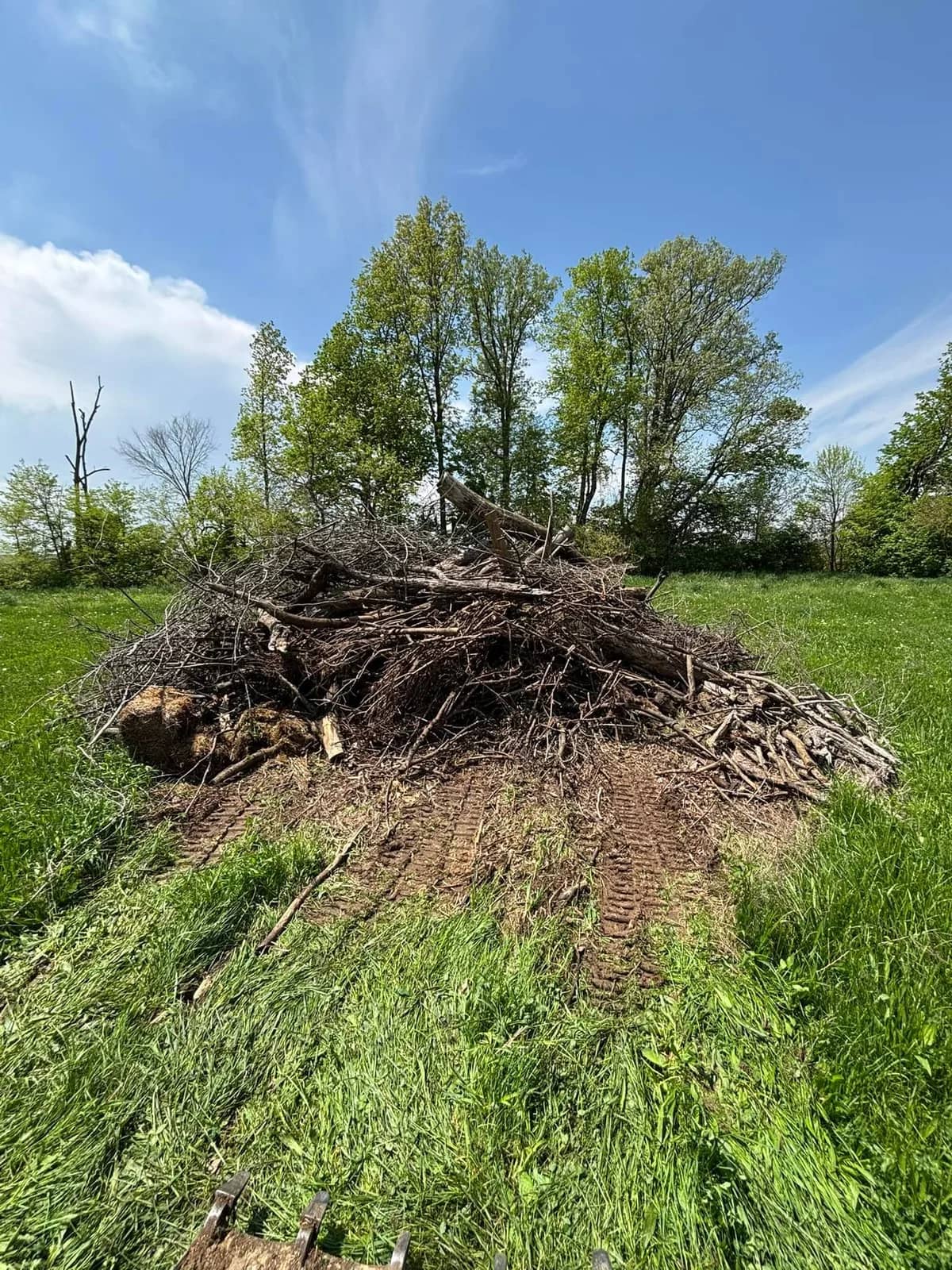
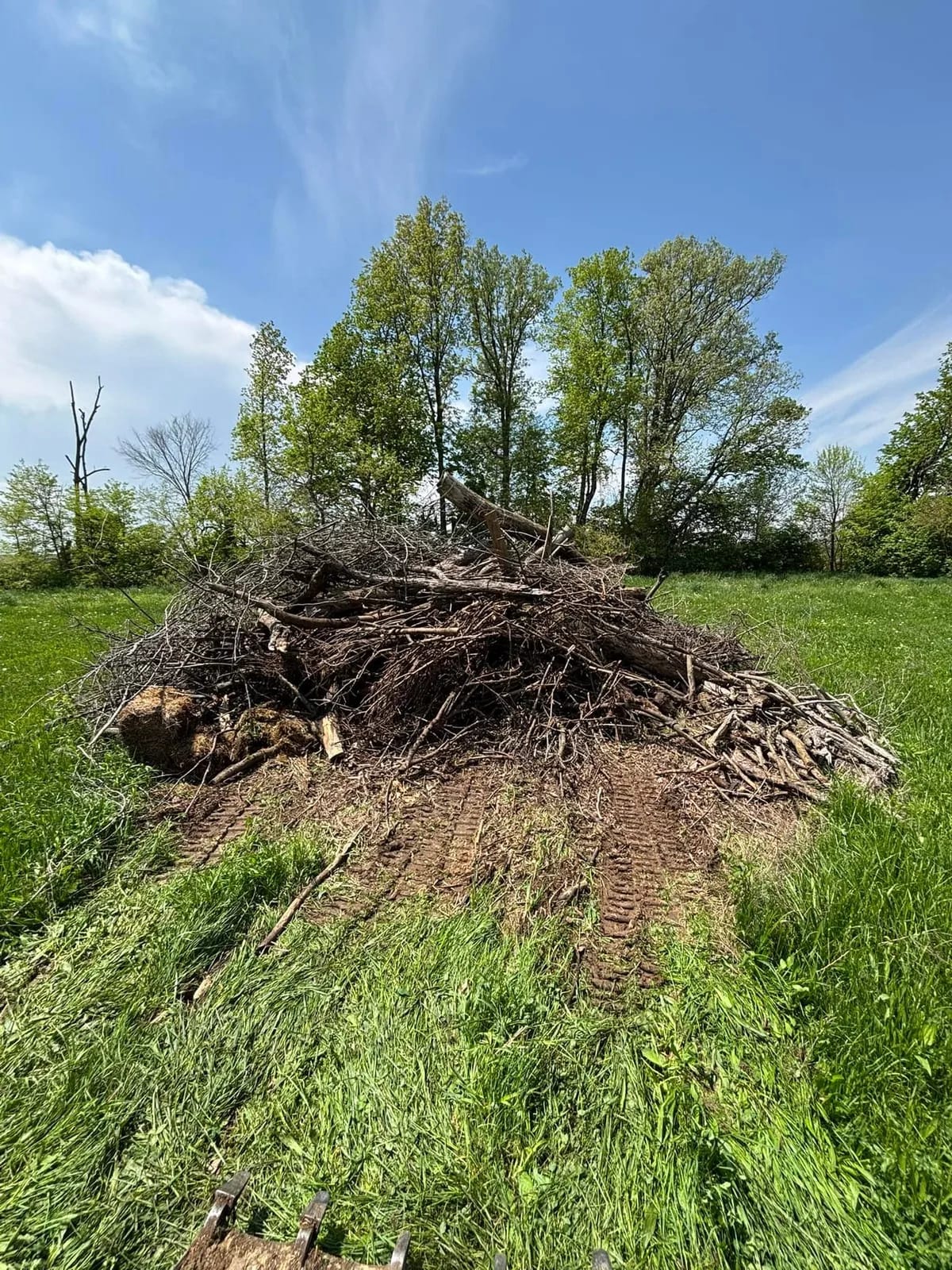
K&H Excavating does brush clearing with an excavator and a dozer, not a brush hog. Kory Stone, who owns K&H and runs the machines, pulls bush honeysuckle, autumn olive, and the small trees mixed in with them out of the ground by the root crown, then piles, burns, or hauls the brush. It's the work for woods where the understory has closed in, fence rows that have grown into hedges, and pasture losing ground to shrubs every summer. K&H is a west central Indiana excavating company based in Rosedale, in Parke County, and brush work is one part of our land clearing work on farms and acreage. To get your woods or fence rows walked, call or text Kory at (765) 548-3704.
When to call
Signs Your Woods or Fence Rows Need Underbrush Clearing
Invasive brush gets worse on its own schedule. Purdue Extension notes that bush honeysuckle is among the first shrubs to leaf out in spring and the last to drop its leaves in fall, so it shades the forest floor for most of the year and holds back the native seedlings that would become the next generation of timber. Birds carry its berries to new ground. Autumn olive can produce up to 80 pounds of fruit in a single season and grows in poor soil. Every year you wait, there's more seed in the ground and bigger stems to pull.
- You can't walk 50 feet into your woods, or see more than 20.
- The fence rows have spread into the field, and you can't get to the wire to fix it.
- Autumn olive clumps are spreading across the pasture and shading out the grass.
- You've brush-hogged the same patch for years and it keeps coming back thicker.
- Deer trails, stand sites, and shooting lanes are swallowed every summer.
- You're putting in new fence and need the old row cleared down to dirt first.
- You're selling or buying land and want buyers to see the timber, not the thicket.
What's included
What Our Brush Clearing Services Include
Our brush clearing services cover clearing brush and small trees out from under and around the timber you want to keep, with roots coming out wherever the machine can reach them.
Shrubs Pulled by the Root Crown
Purdue describes bush honeysuckle as usually multi-stemmed, which is why cutting it means treating every stem. Kory takes a different route. The excavator digs in at the base of the clump and lifts out the whole root crown, so every stem on that plant comes out at once. Purdue also notes that some small plants are suckers that won't uproot easily. Those get noted for follow-up rather than chased with the bucket.
Clearing Underbrush in Woods Without Wrecking Them
Before work starts, you and Kory flag the trees that stay. The excavator works from a few access lanes and reaches in, lifting brush out instead of shoving it through the timber, so bark on the keepers doesn't get skinned. Kory prefers to work woods on frozen ground in winter, when the machines leave less of a mark on the forest floor. The goal is open woods you can walk through and see into, with the canopy left standing.
Fence Rows Taken Back to the Wire
Fence rows usually fill in on both sides of the wire. If the fence stays, Kory reaches across it and pulls brush from each side, working around posts and leaning trees. If the fence is coming out, the whole row can come down to dirt with the excavator and dozer, ready for a new fence or more field. Settle on the walk-through who pulls the old wire and posts before the machines go in.
Overgrown Pasture Opened Back Up
Scattered clumps of autumn olive and saplings in an open pasture are dozer work. Kory pushes them out with the roots, windrows the brush away from the fence and the woods, and smooths the ground behind so you can mow and reseed. Pastures with the odd shade tree worth keeping get those trees flagged on the walk-through.
Local ground
The Brush Problems We See Most in West Central Indiana
Purdue's autumn olive fact sheet warns that mowing or cutting the plant "can cause vigorous resprouting," and that even repeated cutting is usually ineffective without treating the stumps or resprouts with herbicide (Purdue/IPSAWG Autumn Olive fact sheet). Pulling the root crown takes out most of what would sprout. Purdue's guidance doesn't cover mechanical root removal, though, so plan on a follow-up. Walk the cleared ground the next growing season, and treat any sprouts or seedlings early.
Purdue notes that birds spread the berries of both honeysuckle and autumn olive, so seed lands wherever birds perch and feed, and a neighbor's thicket can reseed your cleared ground. That's another reason the first-year walk matters.
Indiana's Terrestrial Plant Rule (312 IAC 18-3-25) lists 44 invasive plants, including bush honeysuckles and autumn olive, and makes it illegal to sell, gift, barter, exchange, distribute, transport, or introduce them in the state (IDNR terrestrial invasive plants). It doesn't require landowners to remove them. Because the rule covers transport, check with IDNR before berry-laden brush is hauled off the farm.
Purdue's pond guidance says to remove all woody vegetation within 25 feet of a dam or spillway, because tree roots weaken them. If the pond has gone shallow while the banks grew up, pond dredging can follow the brush work.

Why K&H
Why Landowners Choose K&H Excavating for Brush Clearing
A bigger machine isn't the whole story. It's how the brush comes out, and who decides what stays.
Kory flags the keepers with you, then runs the machine that works around them. The person who promised to save the big white oak is the one at the controls.
A skid steer with a mulching head grinds brush down and typically leaves the roots in the ground. K&H pulls brush with excavators and dozers, roots and all, and doesn't offer skid-steer mulching.
Kory walks your woods, fence rows, or pasture with you and writes up the estimate without charging for the visit. He picks up Monday through Saturday from 8 a.m. to 6 p.m. and replies to texts in the evening, too.
You decide which trees stay. Every keeper gets flagging on the walk-through, and the work plan is laid out around them, not the other way around. Meet Kory and see how K&H got its start.
How it works
How Our Brush Clearing Works
Step 1 — Walk the Woods With Kory
Late fall is a good time for this walk, because honeysuckle holds its leaves after most native trees have dropped theirs, so the problem areas stand out. Kory looks at the density, the stem sizes, the keepers, and how a machine gets in. A written estimate follows the walk.
Step 2 — Plan the Lanes and the Piles
Kory sets the access lanes into the woods and the spots for brush piles, at least 100 feet from woodland, buildings, and roads, per NRCS land clearing guidance. On farm ground in an unincorporated area, IDEM treats burning vegetation for maintenance as exempt from prior approval, as long as someone tends the fire, it isn't burned in high wind, and no local burn ban is on. Pulling root crowns moves soil, so Kory places an Indiana 811 locate request at least two full working days before work starts.
Step 3 — Pull the Brush
In the woods, the excavator pulls clumps by the root crown and swings them out to the lanes. In open pasture and along fence rows that are coming out, the dozer pushes and windrows. You can text Kory along the way to see how it's going.
Step 4 — Pile, Burn, or Haul
Brush is burned on site where that's allowed and safe, or put on K&H's trucks and taken away. Ruts and root holes are smoothed before the machines leave.
Step 5 — The Final Walk-Around with Kory
Kory and you go over the cleared ground side by side, checking the keepers and the fence, and talk through a resprout plan for next season: what to look for, when, and who handles it. You end up with open woods or a clean fence row, and a clear idea of how to keep it that way.
How we quote
How Much Does Brush Clearing Cost in West Central Indiana?
Brush clearing cost per acre comes down to how thick the brush is, how big the stems are, and how many keepers have to be worked around. Kory prices brush jobs after he walks them, and fence line clearing cost gets the same treatment: he looks at the row before he puts a number on it.
You can pay by cash, check, or credit card.
What changes the price
- Density: a scattered understory versus a wall of honeysuckle.
- Stem size: shrubs and saplings versus small trees with real root balls.
- Keepers: how many trees have to be worked around carefully.
- Fence: cleared on both sides with the wire kept, or the whole row taken out.
- Ground: slopes, ravines, wet spots, and how far a machine has to travel in.
- Disposal: burning on site, or loading and hauling.
Quoted separately
- Bigger trees and stumps beyond brush size (land clearing services)
- Herbicide follow-up on resprouts, new fence, and seeding; ask Kory how those fit your job
Related work
Often Paired With Brush Clearing
Once the brush is out, you can see what else the property needs.
Land Clearing Services
Clearing the understory sometimes shows that a whole section should come out: dead ash, cull trees, or woods you'd rather have as pasture. That's stump-and-all clearing with the excavator and dozer, scoped on the same walk. See land clearing services with stump extraction.
Farm Pond Construction
Cleared woods or an opened-up draw is often where a new stock or fishing pond makes sense. Brush work fits the winter, and pond digging fits summer and fall. See stock and fishing pond construction.
Pond Dredging
An old pond ringed in brush is usually shallow and silted too. With the banks cleared, a machine can reach the water and dig the muck out. See pond dredging for shallow, silted ponds.
More in Land Clearing: Land Clearing · Land Clearing Services
Where we work
Brush Clearing Across the Wabash Valley and West Central Indiana
Kory works out of Rosedale, in southern Parke County, and does most brush work within about 50 miles, traveling up to about 75 miles for bigger jobs, eastern Illinois included. Parke County farms carry about 8,400 head of cattle on roughly 8,700 acres of pasture (USDA 2022 Census of Agriculture), and that's a lot of grazing ground to keep open. From Rosedale, county roads run southeast to IN-59 at Brazil, and IN-46 continues east through Spencer to Bloomington. North, US-41 passes Rockville on its way to IN-47 and the Sugar Creek ravines at Turkey Run State Park, and on to I-74 toward Lafayette. US-36 runs east past Raccoon Lake to Danville and Indianapolis, and Terre Haute is about 16 miles south.
Terrain changes the job more than the brush does. Steep ravine ground along Sugar Creek limits where a machine can work, while the flatter till plain toward Crawfordsville and Lafayette is easier going. Kory will say on the walk-through what's practical for a machine and what isn't.
Searching for underbrush clearing near Bloomington or fence row clearing outside Terre Haute? We serve Rosedale, Terre Haute, Bloomington, Lafayette, and Indianapolis. See all of K&H's excavation services.
Not sure your property is in range? Call or text Kory at (765) 548-3704.
Questions
Brush & Underbrush Clearing FAQ
What does brush clearing cost per acre?
It varies more with density than with acreage. A thin understory might go quickly, while a solid wall of honeysuckle with small trees mixed in takes much longer per acre. Kory sets the number once he's seen the brush in person, and the estimate lists the disposal plan up front.
How is fence line clearing cost figured?
Mostly by the length of the row, how thick it is, and whether the fence stays. Clearing both sides of a standing fence takes more care than taking the whole row out to dirt. Expect Kory to walk the whole row with you before any number goes on paper.
Will the honeysuckle and autumn olive grow back?
Some of it can. Purdue warns that cutting autumn olive triggers vigorous resprouting, which is why K&H pulls the root crown instead of cutting. Purdue's guidance doesn't say whether pulling stops regrowth, and small suckers and seeds left in the soil can still come up. Plan to walk the ground the next season and treat any sprouts.
Does Indiana law require me to remove honeysuckle or autumn olive?
No. Indiana's Terrestrial Plant Rule makes it illegal to sell, distribute, transport, or introduce 44 listed invasive plants, including bush honeysuckles and autumn olive. It doesn't require landowners to remove plants already growing on their property. Many owners clear them anyway to save their woods and pasture.
When is the best time for clearing underbrush in woods?
Late fall through winter. Honeysuckle keeps its leaves after native trees drop theirs, so it's easy to spot, and frozen ground in January through March lets the machines work with less damage to the forest floor. Winter is also when K&H does most of its clearing work.
Do you use a skid steer or a forestry mulcher?
Not for clearing. K&H clears brush with excavators and dozers — no skid steers — and doesn't offer mulching. A typical mulcher grinds the brush in place and leaves the roots in the soil, while clearing brush and small trees with an excavator pulls the roots out. If mulching suits your goal better, Kory will tell you so.
Is there a minimum job size?
K&H is set up for bigger properties, like woods, long fence rows, and pastures, rather than a backyard thicket. Kory offers free on-site estimates, so describe your property when you call or text and he'll tell you whether it's a fit.
Who will be doing the work?
Owner Kory on every job. He walks the property, flags the keepers with you, runs the machines, and does the final walk-around.
Ask Kory About My Brush Job
Still have a question about brush clearing? Call or text Kory at (765) 548-3704.
Call or text
Ask Kory about brush & underbrush clearing
(765) 548-3704Calls and texts answered Monday to Saturday, 8 a.m. to 6 p.m. Text a few photos of the property and Kory can give you a head start before the site walk.
Get a free estimateFree estimate
Let's Get Your Woods and Fence Rows Back
Text Kory a few photos of the brush and a rough idea of how many acres or how many feet of fence row, and he'll set up a time to walk it with you. You can also reach us through our contact page.