Ponds and lakes
Pond Silt Removal in Rosedale, IN
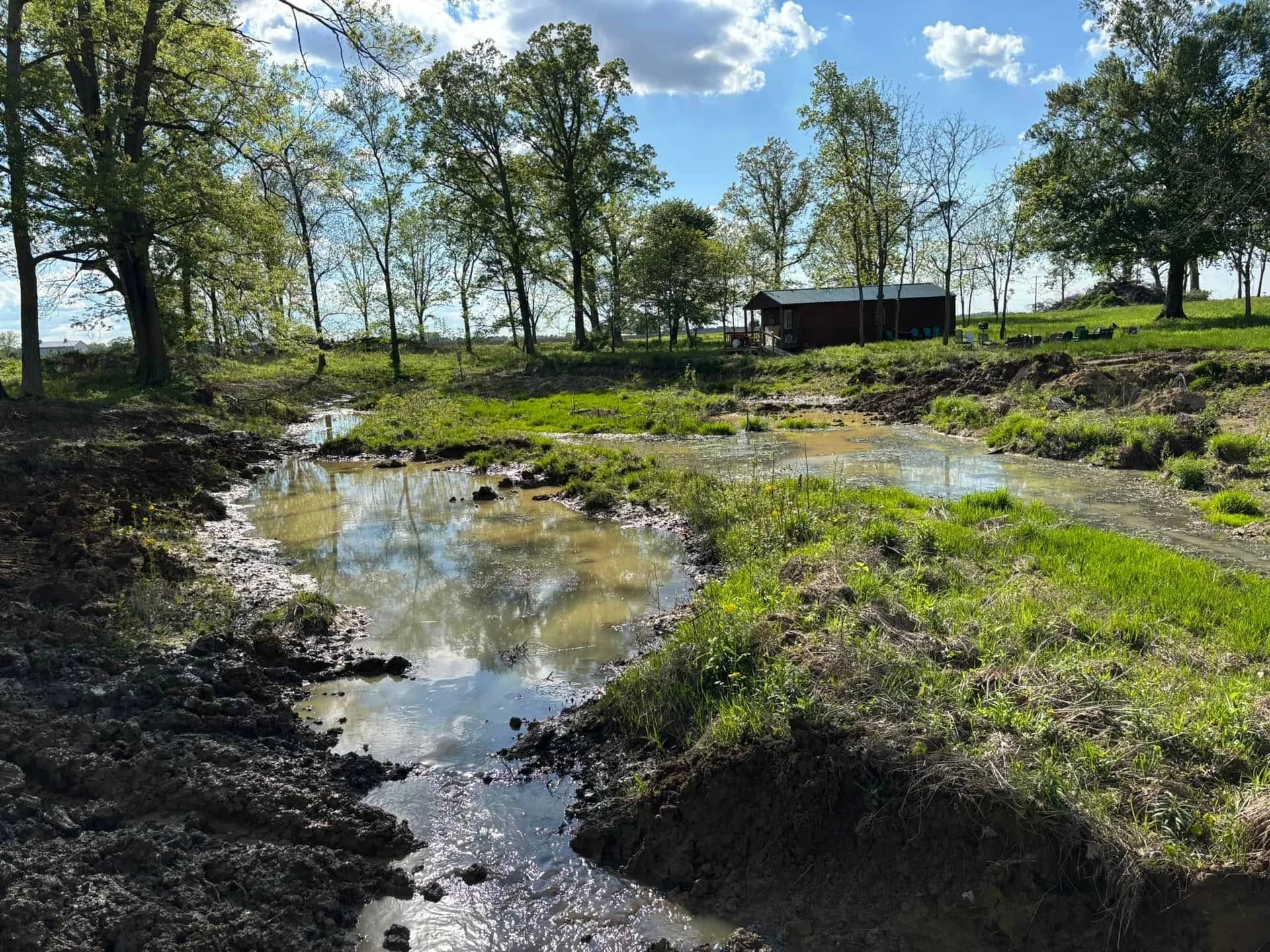
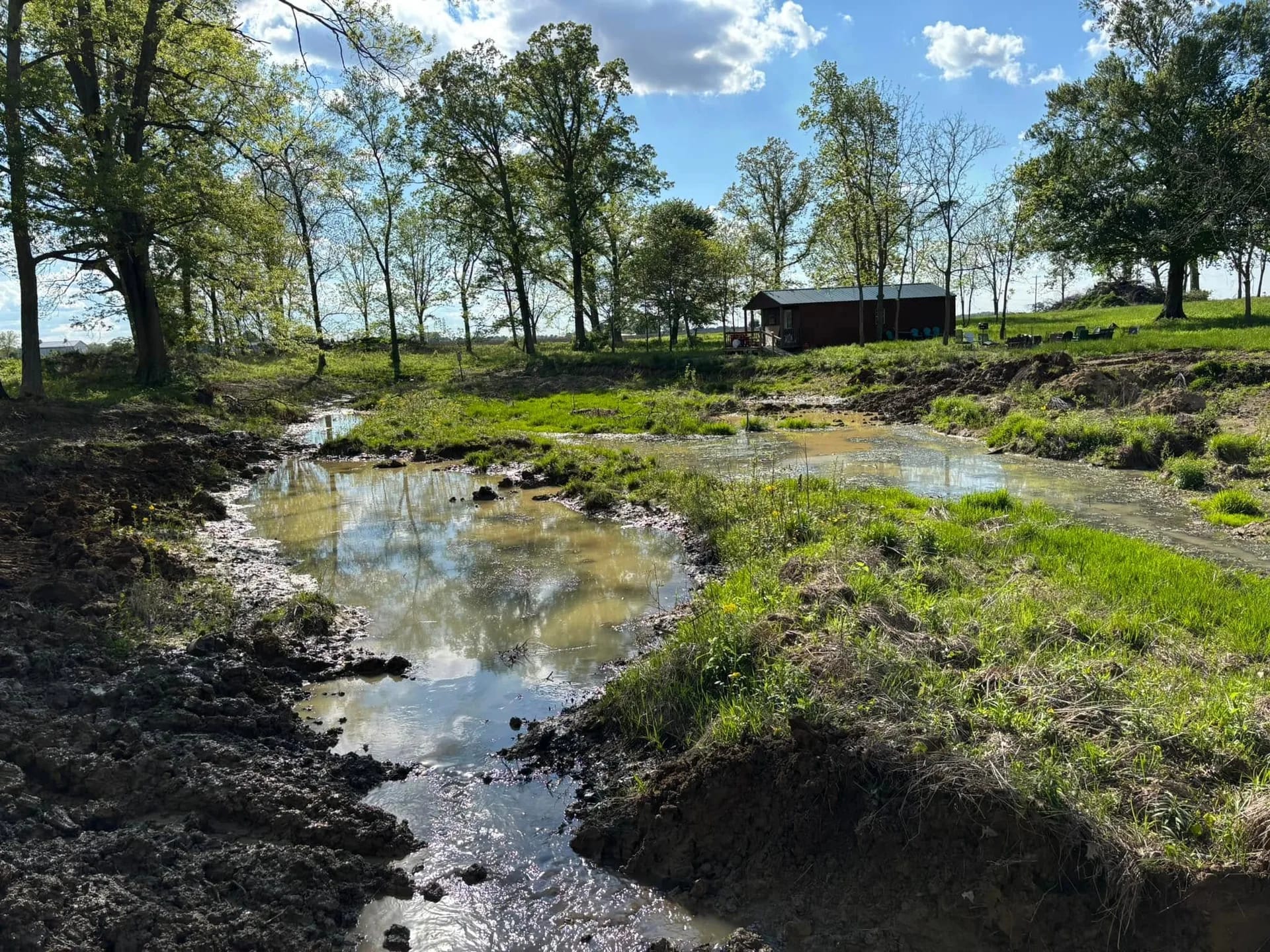
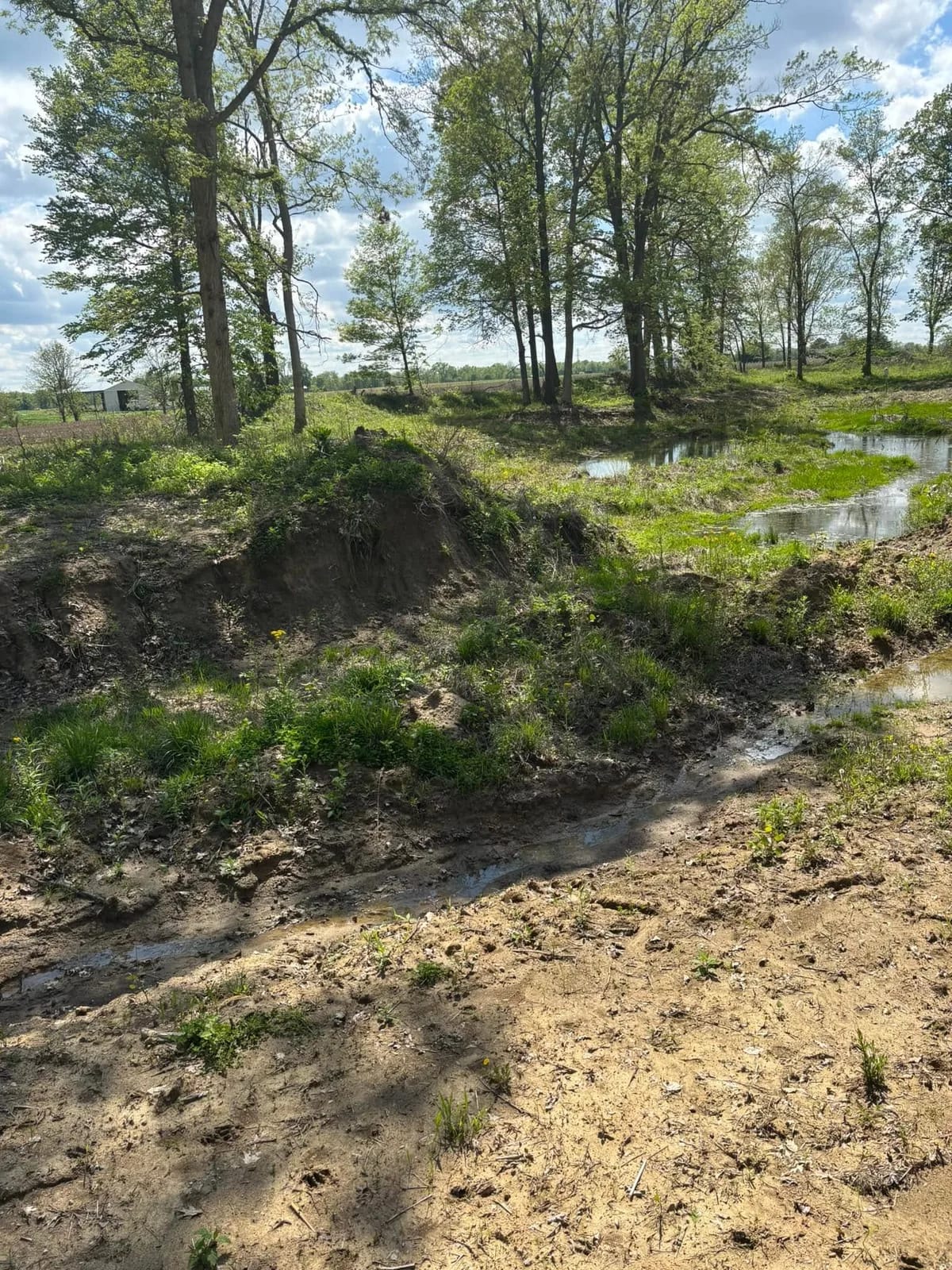
Has the spot where the creek comes in turned into a mud flat with cattails on it? Can you walk out farther from the inlet every summer without getting your knees wet? That fan of mud is your pond getting smaller, one storm at a time.
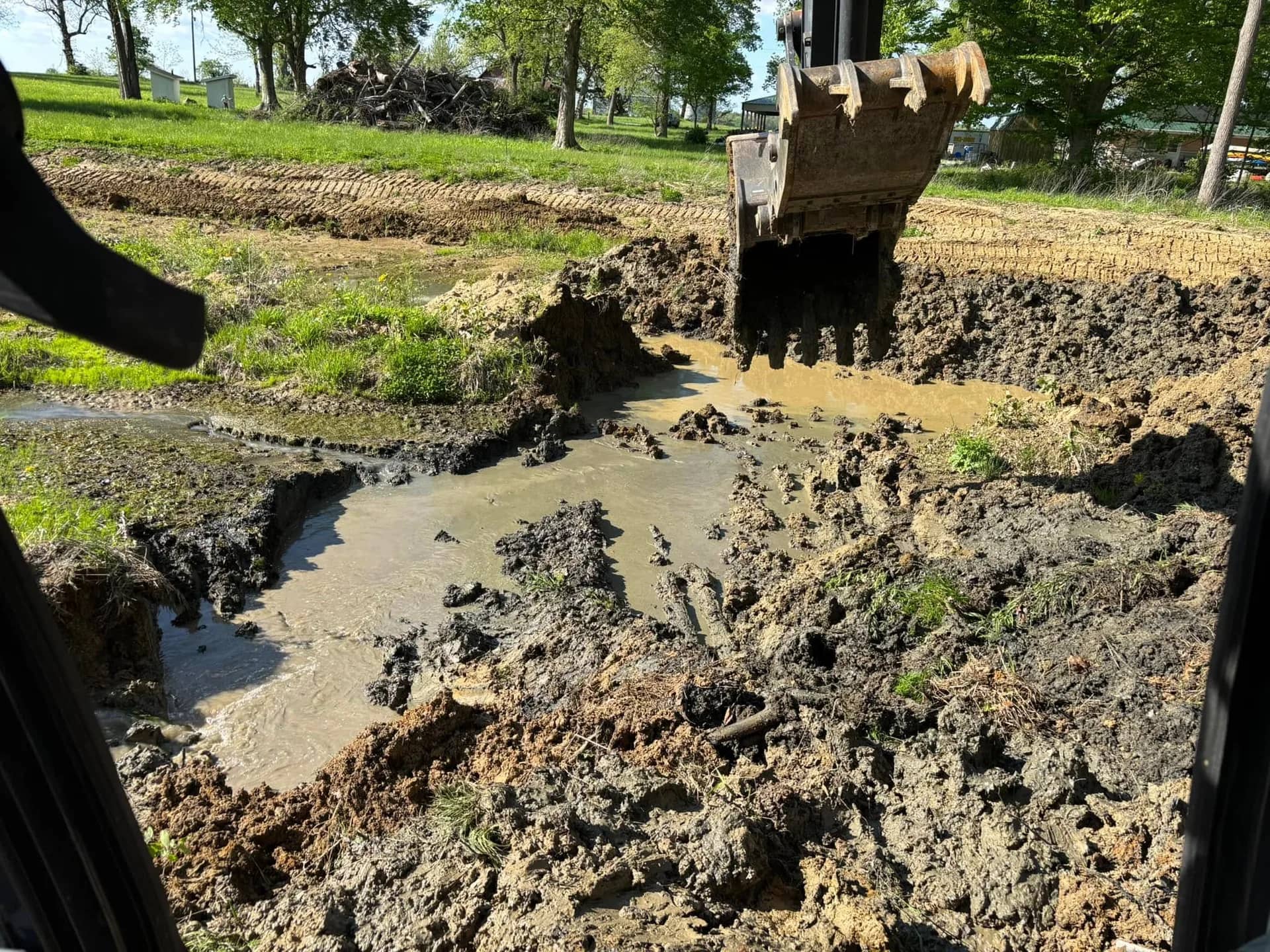
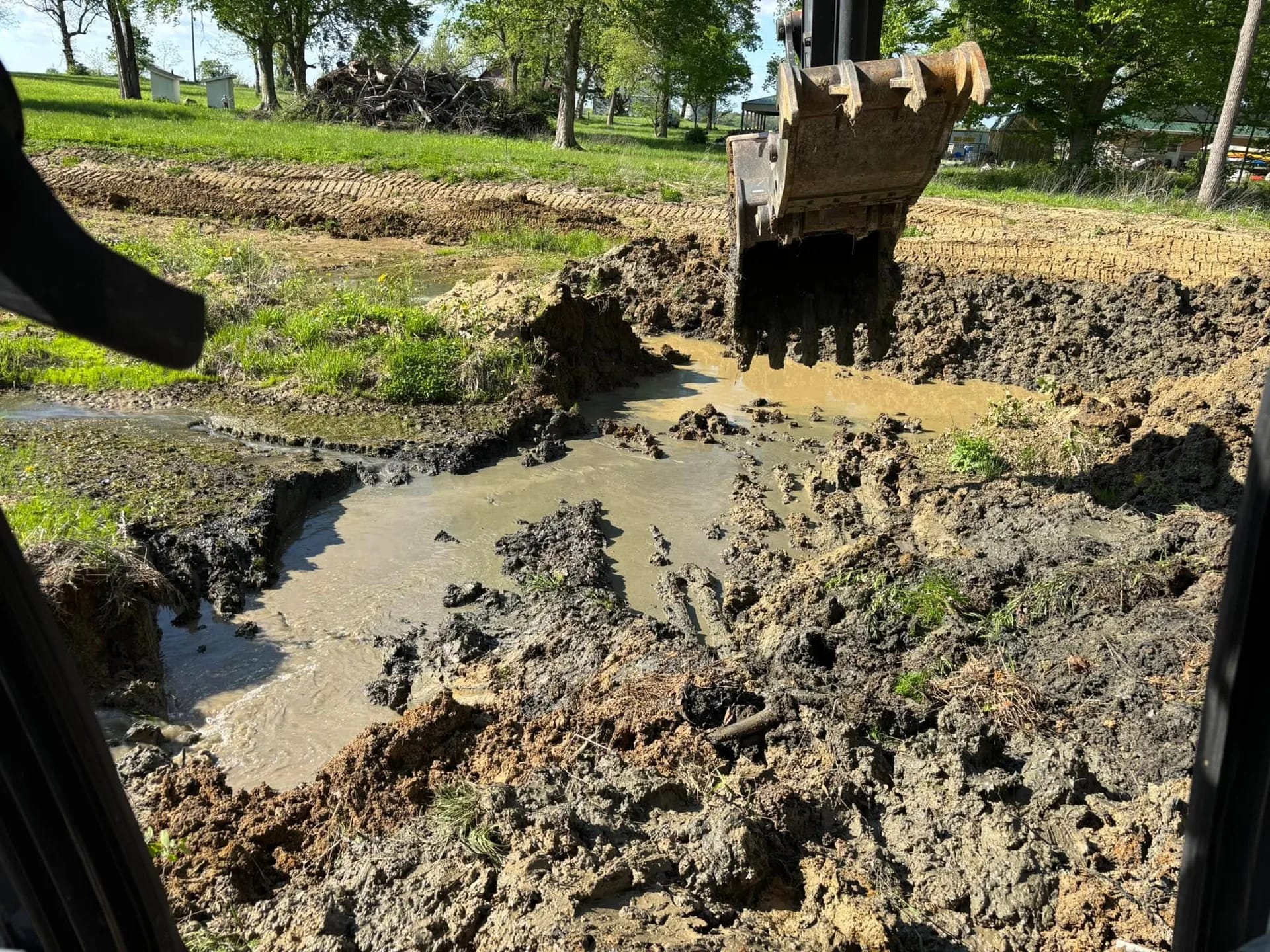
K&H Excavating does one-time pond silt removal at the places mud piles up first: the delta where a creek or field ditch enters, the forebay above a lake, and the small basins built to catch sediment. We're a Rosedale excavating company run by owner Kory Stone out of Parke County. Creeks around here drain cropland, loess hills, and, farther south, old strip-mine ground on their way to farm ponds and private lakes. Kory digs the delta out with excavators and dozers, takes the basin back down to the depth it was built to, and finishes by setting rock at the inlet so the next storm doesn't carve it right back out. It's the catch-up job that comes before regular silt pond maintenance. Call or text Kory at (765) 548-3704 and he'll come probe the inlet and tell you how much is there.
When to call
Signs Your Pond Needs Silt Removal at the Inlet
A delta grows from the inlet outward. Once plants take hold on it, they slow the water even more and trap the next load faster, so the shallow end creeps toward the middle of the pond a little more each year. Silt removal from a pond at that early stage is a smaller job confined to one end. Wait long enough and it turns into a whole-basin job. Watch for:
- A mud or sand fan at the creek mouth that shows above water by late summer.
- Cattails, willows, or grass growing where there used to be open water.
- The forebay or sediment basin above your lake is level with its outlet and passing brown water.
- The inlet channel has cut a gully, or the rock that was there is buried or washed away.
- Fish and swimmers avoid the shallow end, and algae starts there first each summer.
- Muck smells when you step in it near the inlet.
- You're about to sell the property, enlarge the pond, or start a yearly maintenance plan and want a clean starting point.
What's included
What Our Pond Silt Removal Includes
Pond silt removal at K&H means taking out the sediment that has built up at an inlet or in a catch basin, returning that area to its original depth, and rebuilding the inlet so it holds up.
Opening Up the Delta at the Creek Mouth
Where a creek hits still water, it slows and drops what it's carrying, heaviest first. That's why the delta at the mouth is often firmer sand and silt with soupy muck on top and farther out. Kory probes it to find where the original bottom is, then digs the delta from the bank with an excavator, working back from firm ground so the machine never sits on soft silt. If the creek can be routed around the work area while the digging is underway, the dig stays drier.
Back to Design Depth, Not Past It
The goal is the bottom the pond or basin was built to, not deeper. Kory looks for the change from loose silt to the firm original clay. Cutting through that clay can open a leak, so he stops there. If you have the original plans or know the built depth, that's the target. Purdue Extension recommends building ponds with an extra two feet or more just to hold future sediment, and this is the job that gives that room back.
Re-Armoring the Inlet
A cleaned inlet with bare dirt washes out in the first hard rain. Kory reshapes the inlet channel so water enters on a gentle grade, then sets rock where the flow hits. The rock goes on last, on finished grade, so no machine tracks over it and it sits on the shape that was dug for it.
Dewatering and Placing the Spoil
Wet silt is heavy and runs. Clemson Extension notes that lowering the water level lets sediment dewater before removal, and that spoil belongs on upland ground with double silt fence around any stockpile. Kory sets the spoil above the floodplain on your property or trucks it off, then seeds bare ground so it greens up.
Local ground
The Pond Silt Problems We See Most in West Central Indiana
Clemson Extension says ponds get shallower as sediment builds, and shallow water brings more aquatic plants and algae (Clemson Extension, Pond Maintenance: Dredging). Once cattails root on a delta, it stops being mud you can dig in an afternoon and starts being a root mat that has to come out with the silt.
University of Florida Extension describes muck as 20% to more than 80% organic matter from leaves, plants, and algae, and points out that plain silt has no organic part at all. The same publication says there's little scientific evidence that bacterial or "muck-eating" products work. At an inlet you usually get both layers, and the only way to remove them is to dig.
Surface coal mines cover roughly 10% of Clay County and 7% of Vigo County, according to IDNR mine data, and IDNR warns that mine spoil is far looser than the original ground. Both counties also carry wide stretches of wind-blown loess, a fine, silty soil. Creeks draining that ground carry a lot of pond silt.
IDNR's LARE sediment policy puts it plainly: deal with where the sediment comes from before you dredge. Kory looks upstream for the gully, washed-out waterway, or bare field before he quotes. If the inlet will refill every year, a yearly maintenance plan makes more sense than repeat one-offs, and if the whole pond has gone shallow, pond dredging services cover the full basin.
Why K&H
Why Landowners and Lake Owners Choose K&H Excavating
A silt job is mostly about reach, weight, and knowing where to stop digging.
Wet silt swallows small machines. K&H reaches in from solid bank with an excavator, spreads spoil with a dozer, and loads its own trucks when spoil leaves the property.
Kory walks the inlet, probes the delta, and looks upstream before he gives you a number, at no charge. Calls and texts are answered Monday through Saturday, 8 a.m. to 6 p.m., and after hours by text.
Kory probes the delta himself and runs the job, so the depth he quoted is the depth he digs to.
Inlet rock gets set after the dig, on the reshaped channel, so it isn't tracked over or buried. It's a small order-of-work detail that keeps the inlet from washing out next spring. Learn about Kory and how K&H works.
How it works
How Our Pond Silt Removal Works
Step 1 — Probe the Inlet With Kory
Kory meets you at the pond, walks the inlet and the creek above it, and probes the delta to see how deep the silt runs. He'll ask what the pond is for and where you'd like the spoil to go, and then you get a written estimate.
Step 2 — Locate, Access, and Drawdown
Kory places the Indiana 811 locate at least two full working days before digging, plans a route in that keeps gates closed and avoids soft spots in the field or lawn, and lowers the water first where the pond has a drain or can be pumped down. If the inlet sits in a floodway or on a lake that needs an IDNR permit, you'll hear about it before any digging, along with what the owner will need to file.
Step 3 — Dig the Delta, Then the Basin
The excavator takes the delta from the creek mouth outward, then cleans the rest of the area back to its design depth. A dozer shapes spoil as it comes out. Questions while the work is going? Kory is a call or text away.
Step 4 — Rebuild the Inlet and Seed the Spoil
Kory reshapes the inlet channel, sets the rock, and grades and seeds the spoil area above the floodplain, with silt fence where it's needed.
Step 5 — The Final Walk-Around with Kory
You walk the inlet with Kory: the depth, the rock, the spoil area, and where to watch for the next delta forming. You'll know exactly what came out and what to look for next spring.
How we quote
How Much Does Pond Silt Removal Cost in West Central Indiana?
Every silt job is priced after Kory probes the delta, because cost follows the volume that comes out and how hard it is to get to. As arithmetic, a delta 100 feet by 60 feet averaging 3 feet deep holds 18,000 cubic feet, or about 667 cubic yards, at 27 cubic feet per yard.
K&H takes cash, check, and credit card. Ask about payment options during the walk-through.
What changes the price
- Volume of silt, measured by probing the delta and the basin.
- Water. A pond that can be lowered digs faster than one worked wet from the bank.
- Muck versus mineral silt. Soupy organic muck has to dry before it can be moved far.
- Access and distance from the bank to the spoil area.
- Spoil spread on site versus hauled off.
- Rock for the inlet and how much channel needs reshaping.
Quoted separately
- Full-basin cleanout of a pond that's shallow end to end (pond dredging services)
- Tree and brush removal along the berm or creek bank
- Fish relocation, aeration, or weed treatment
Related work
Often Paired With Pond Silt Removal
Clearing the inlet usually starts a bigger conversation. Here's what comes up next.
Silt Pond Maintenance Plans
If the creek above your pond or lake will keep delivering, a yearly plan can be built around scheduled inspections and dig-outs so the delta doesn't get this big again, with terms Kory sets for each site. See yearly silt pond maintenance plans.
Pond Dredging Services
When the shallow end has spread across most of the pond, the whole basin needs work, dry or from the bank. See pond dredging services, dry and wet methods.
Lake Sediment Removal
On a lake, the delta at one creek mouth is often only the start; coves and beaches downstream can need the same treatment. See lake sediment removal at coves and inlets.
More in Silt Pond Maintenance: Silt Pond Maintenance · Silt Pond Maintenance Plans
Where we work
Pond Silt Removal Across the Wabash Valley and West Central Indiana
K&H is based in Rosedale, in Parke County, and takes silt jobs within about 50 miles as a matter of course, and farther for larger lake inlets, up to about 75 miles and into eastern Illinois. Heading south, county roads reach IN-59 at Brazil, and IN-46 runs east through Spencer to Bloomington, past the Owen County country around Cagles Mill Lake. North, US-41 goes through Rockville toward Turkey Run and Sugar Creek, and on to I-74 and IN-25 for Lafayette. West, IN-163 crosses the Wabash at Clinton. Terre Haute is about 16 miles down US-41, and Indianapolis is east on US-36.
Ground matters for a silt dig. Around Bloomington, limestone sits under the clay, and the NRCS pond handbook warns that crevices and sinks in limestone can empty a pond, so digging to the original bottom and no deeper matters more there than anywhere. In Clay and Vigo counties, inlets drain strip-mine spoil and loess. In Parke, Vermillion, and Fountain counties, creeks drain glacial till farmland.
Need pond silt removal near Bloomington or an inlet cleaned out near Lafayette? We serve Rosedale, Terre Haute, Bloomington, Lafayette, and Indianapolis. See all of K&H's excavation services.
Not sure if your pond is in range? Call or text Kory at (765) 548-3704.
Other services from K&H
Questions
Pond Silt Removal FAQ
How is pond silt removal different from dredging the whole pond?
Silt removal targets the spots where sediment piles up first: the delta at the inlet, a forebay, or a catch basin. Dredging the whole pond takes sediment out of the entire basin. Inlet work is smaller, faster, and usually doesn't require draining the pond. If probing shows the shallow area has spread across most of the pond, Kory will tell you a full cleanout makes more sense.
Can you do silt removal from a pond without draining it?
Often, yes. The excavator works from the bank, and the delta at an inlet is usually within reach. With excavators and dozers — no skid steers — the machines have the reach and weight for wet ground. K&H digs mechanically with excavators, so a deep, wide basin far from the bank may need a drawdown or a long-reach machine brought in for the job.
How deep will you dig?
Back to the depth the pond or basin was built to, and no deeper. Kory digs until the loose silt gives way to firm original clay, because cutting into that clay can open a leak. To hold down weeds and algae, Purdue Extension recommends 8 to 12 feet over at least 75% of a pond. An inlet area is usually shallower by design.
What happens to the pond silt you dig out?
It goes on upland ground outside the floodplain, either spread on your property or trucked off. Muck needs time to dry before it can be spread thin. Any stockpile gets silt fence, and bare ground gets seeded so rain doesn't carry it back into the pond.
Do I need a permit for pond silt removal?
It depends on the water. Federal rules exempt maintenance of farm and stock ponds from Section 404 permits in most cases, but an IDNR permit is needed for excavation in the floodway of any stream with a drainage area of one square mile or more, and IDNR says dredging on public lakes almost always needs a Division of Water permit (IDNR private pond and lake management). Kory will tell you on the walk-through which likely applies, and the owner files.
How long does silt removal take, and when is the best time?
Kory can size up the timing when he probes the delta, since the volume, the water level, and the weather set the pace once the machines are in. Summer and fall are best, because banks are firm and water is low. Spring is the wettest season here, with April and May each averaging about 4.7 inches at Terre Haute, so spring jobs often wait on the weather.
Will the silt come back?
Yes, as long as the creek keeps carrying it. Removal buys back depth. Fixing the source upstream and checking the inlet every season keep it from piling up as fast. Kory will point out what's feeding the delta and whether a yearly plan would pay off.
Ask Kory About My Pond Inlet
Still have a question about pond silt removal? Call or text Kory at (765) 548-3704.
Call or text
Ask Kory about pond silt removal
(765) 548-3704Calls and texts answered Monday to Saturday, 8 a.m. to 6 p.m. Text a few photos of the property and Kory can give you a head start before the site walk.
Get a free estimateFree estimate
Let's Get Your Inlet Back to Open Water
Send Kory a photo of the delta or tell him where the creek comes in. He'll come probe it, look upstream, and give you a straight number for digging it out and rocking the inlet. Reach him through our contact page, or call or text directly.