
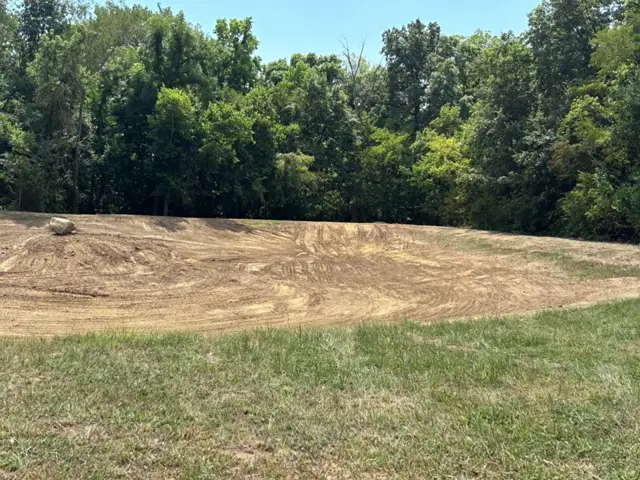
Ponds and lakes
Farm Pond Construction in Rosedale, IN
Tired of hauling tanks to the back pasture every dry spell? A stock pond with a properly packed dam can water your herd for decades, and nearly everything that decides whether it lasts is buried inside that dam.
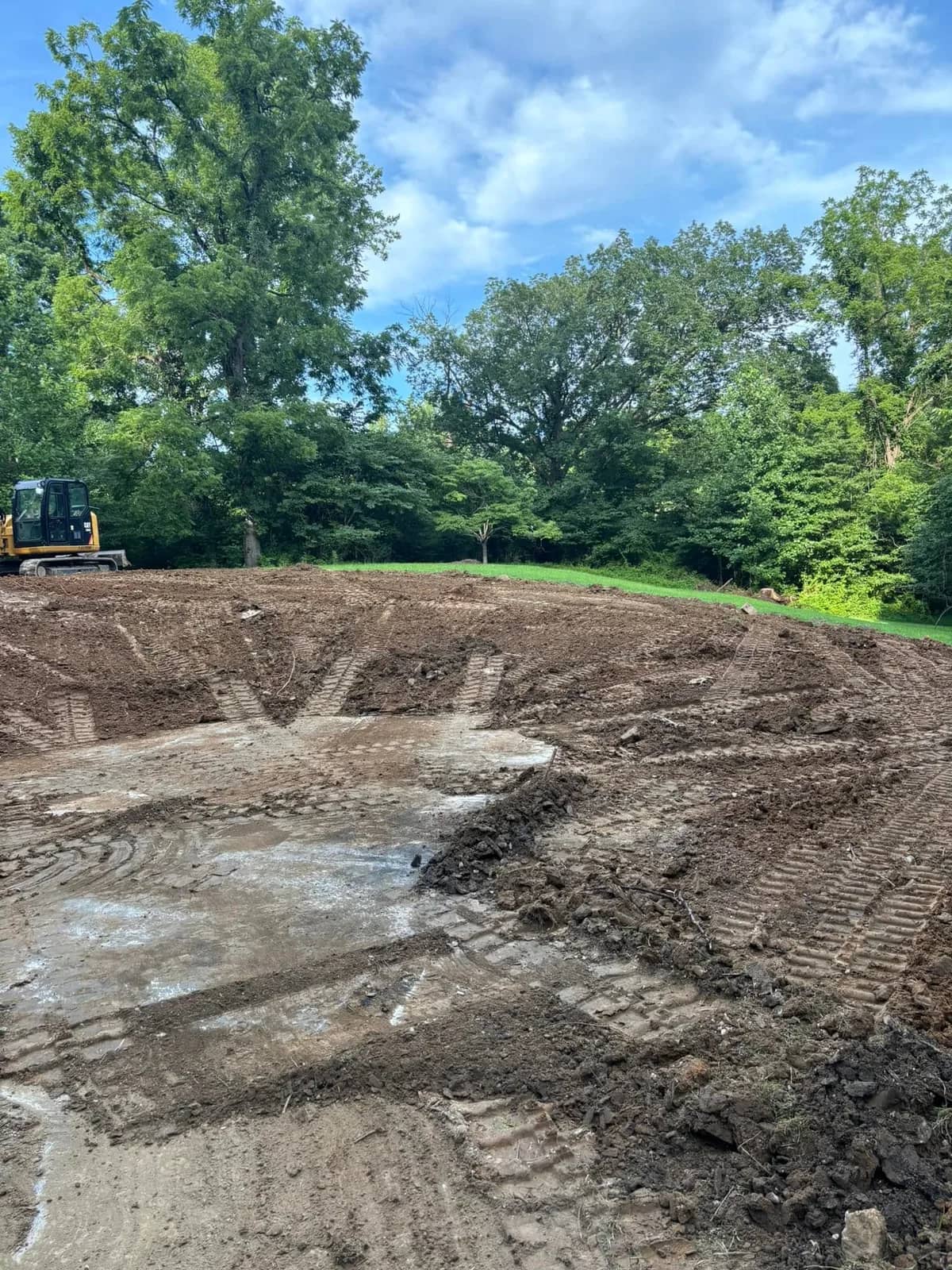
Farm pond construction is the work closest to home for K&H Excavating. Kory Stone comes from a Parke County cattle and hay family, and he builds stock ponds and fishing ponds the way he'd want one on his own pasture. We're a Rosedale excavating company based in Rosedale, just south of Big Raccoon Creek, and a farm pond here usually means an embankment pond: a dam thrown across a draw, keyed into clay with a core trench, packed in thin lifts, and fitted with a pipe spillway and an emergency spillway sized to the acres that drain to it. For every type of pond K&H digs, see our pond building overview. If you've got cattle to water or a draw worth damming, call or text Kory at (765) 548-3704 to set up a free site walk.
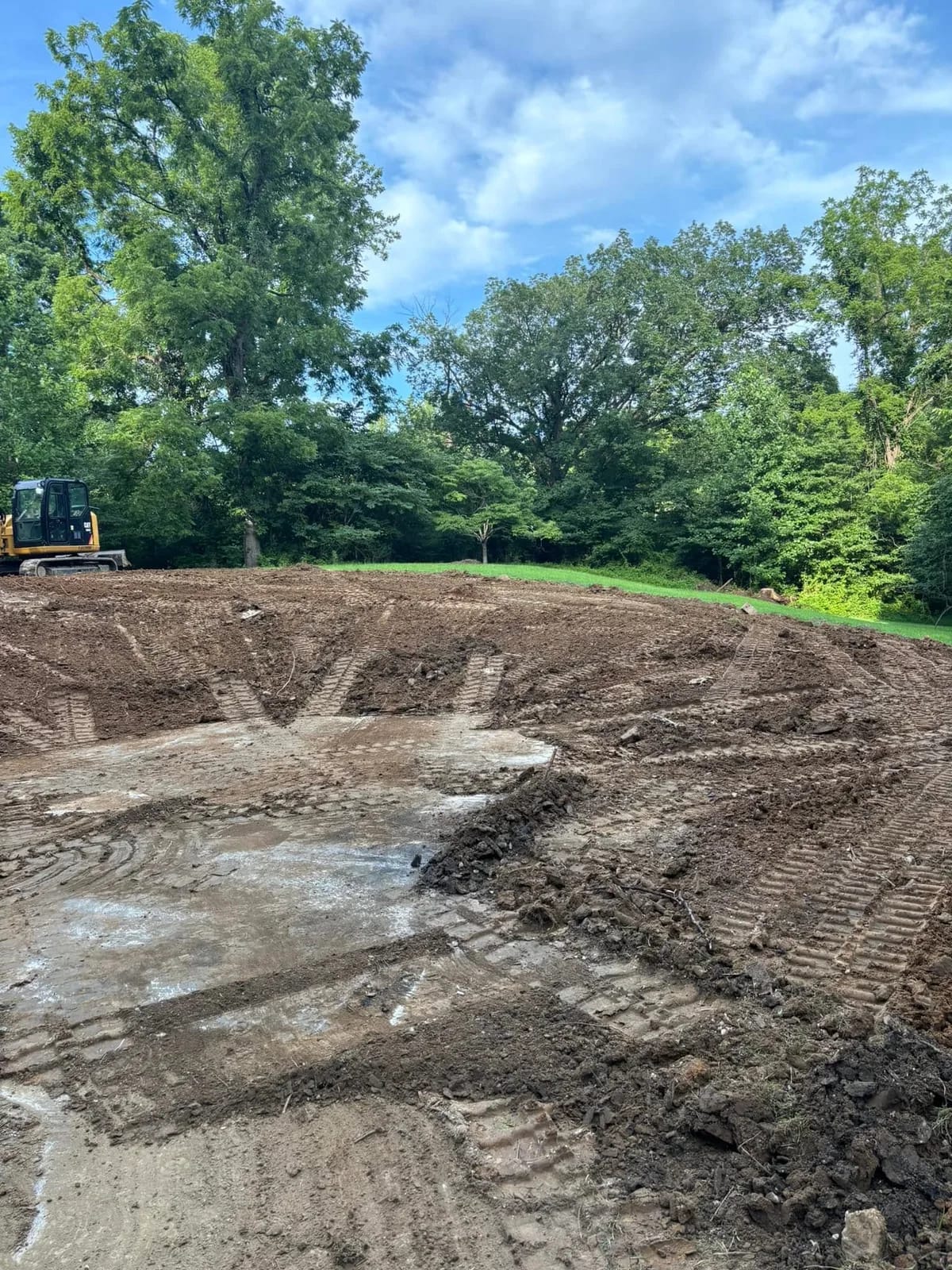
When to call
Signs It's Time to Build a Farm Pond
No water in the right pasture costs you every week: hours on the water wagon, a herd grazing one corner to dirt, and paddocks you can't use. Meanwhile the draw that could feed a pond keeps cutting. April and May each average about 4.7 inches of rain at Terre Haute, so a gully eating into a field now will be wider next May. A dam built in late summer or fall catches that spring water instead.
- You're running hoses or hauling a tank to cattle on ground with no creek or well.
- A draw carries water after every rain and is bone-dry by July.
- A gully is working its way up into a hay field or crop ground each spring.
- An old farm pond dam is seeping, slumping, or grown up in trees, and patching it no longer makes sense.
- You're taking over the family farm, adding head, or cross-fencing, and need water where the new fences run.
- You'd like a pond that waters cattle on one end and gives the grandkids somewhere to fish on the other.
What's included
What Our Farm Pond Construction Includes
A K&H farm pond is an embankment pond: a compacted earthen dam built across a low point so runoff stacks up behind it. NRCS treats any pond with 3 feet or more of water standing against the fill as an embankment pond, and that's when the details below start to matter.
Farm Pond Design Starts Up the Draw
Farm pond design begins at the top of the watershed, not at the dam. Purdue Extension's ID-410-W works an Indiana example: a 1-acre pond averaging 9 feet deep needs roughly 27 to 45 acres draining to it. Kory walks the draw to its head, notes field tile, terraces, and road ditches that add or steal water, and looks for the spot where the valley narrows so the dam can be shorter.
A Core Trench Cut Into Clay
Oklahoma State Extension describes the core trench as what ties the dam into an impervious layer of native soil, so water can't slip underneath. Alabama Extension calls for cutting at least 12 inches into that impervious layer, with a bottom at least 8 feet wide and sides no steeper than 1:1, and the Ohio NRCS standard sets a 3-foot minimum depth. Kory cuts it with an excavator along the dam centerline and backfills it with the best clay on site, compacted in thin layers.
Pond Dam Construction, One Thin Lift at a Time
Pond dam construction rewards patience. USDA's Agriculture Handbook 590 brings fill up in horizontal layers about 6 inches thick, running lengthwise along the dam. The dirt should squeeze into a firm ball that holds together when you shake your hand, with no free water showing. Sod, roots, and big rocks stay out, nothing goes on frozen ground, and the dam is built about 5 percent high to allow for settling. The water side runs at 3:1; the back can be flatter so you can mow it.
Pond Spillway Construction and a Way to Drain It
Pond spillway construction covers two paths for water. The principal spillway is a pipe through the dam for everyday overflow, sized to your watershed. Dirt around it is hand-compacted until at least 2 feet of fill covers the pipe. The emergency spillway is a level, grassed channel around one end of the dam that passes big storms. An optional valve on the pipe lets you draw the pond down later.
Local ground
The Farm Pond Problems We See Most in West Central Indiana
Water will follow the outside of a spillway pipe through loosely placed dirt. Hand-tamped layers around the barrel prevent most of it, and on dams 15 feet or taller the NRCS Conservation Practice Standard 378 requires anti-seep collars or a filter diaphragm, with collars set no closer than 10 feet apart.
A dam pushed up loose settles unevenly. USDA's pond handbook allows about 5 percent for settlement on rolled fill but about 10 percent on dams built without rolled compaction.
Herds standing in the shallows trample the edge and foul the water. Purdue's ID-409-W recommends fencing at least 100 feet back on the upslope side, with a restricted entry point for drinking, and Kory plans the dam and shoreline with that fence line in mind.
Purdue's ID-410-W, citing NRCS 378, says to remove all woody growth within 25 feet of the embankment or spillway, because roots weaken the fill. If the draw you want to dam is choked with honeysuckle and autumn olive, brush and underbrush clearing pulls the roots before any of that ground becomes dam. Already have a pond that just needs more room? Pond excavation and enlargement may be the better fit.
Why K&H
Why Farmers Choose K&H Excavating as Their Farm Pond Contractors
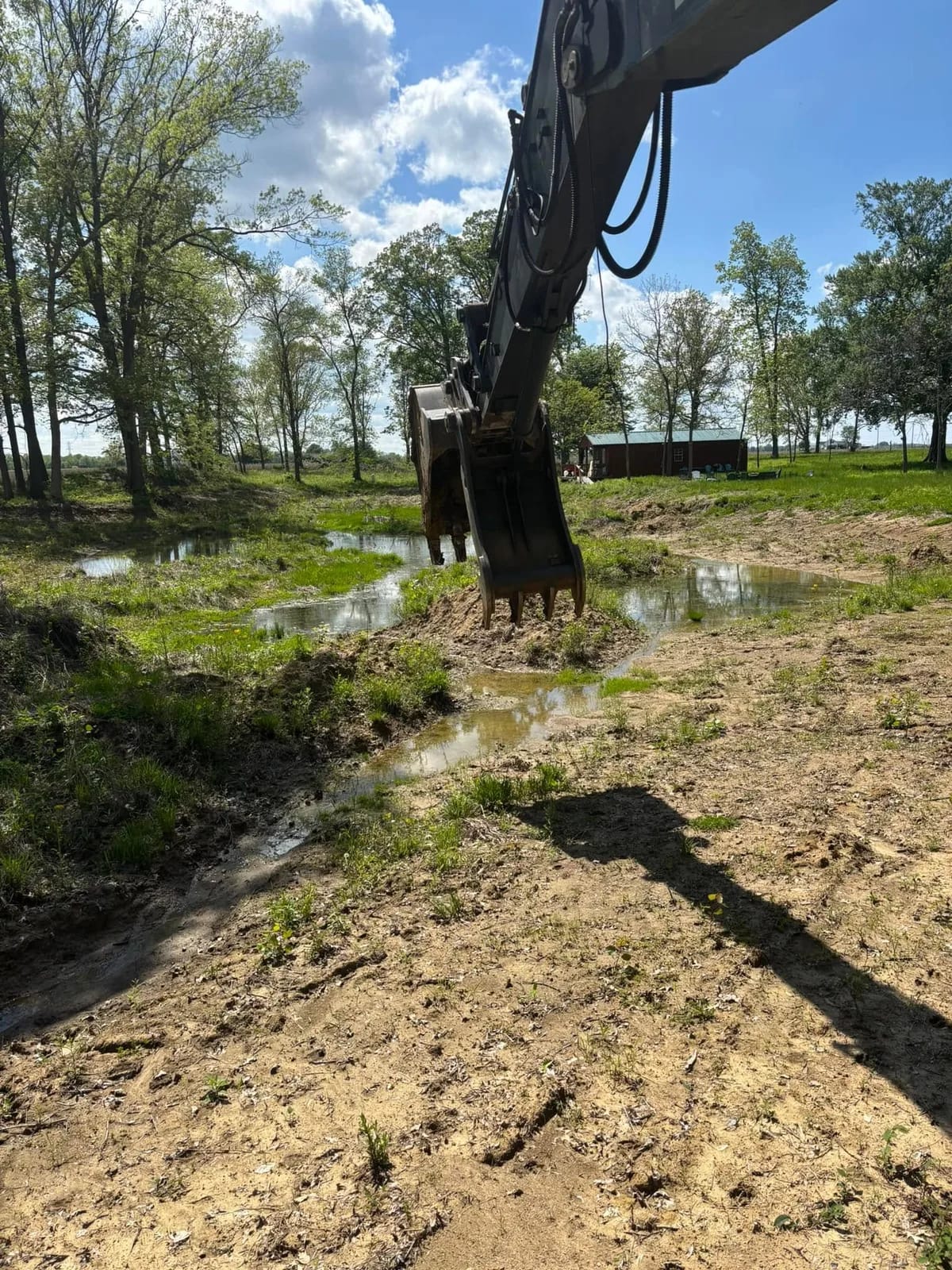
K&H is set up for dams: one owner, machines heavy enough to pack fill, and a cattleman's sense of where water belongs on a farm.
The person who walks your draw and digs the test holes is the person in the excavator when the core trench goes in and on the dozer when the lifts get packed.
NRCS sizes a core trench bottom to fit the equipment that digs, backfills, and compacts it, and a dam needs fill tracked layer after layer. K&H digs the trench and basin with excavators and packs every lift with dozers.
Parke County had 646 farms and roughly 8,400 head of cattle in USDA's 2022 Census of Agriculture, and Kory's family has run cattle and put up hay here. Before staking a dam, he works out where the herd will approach, which side the tractor will cross, and where the fence will run.
Kory walks the watershed and digs test holes before he puts a number on paper, and it costs you nothing. Calls and texts are answered Monday through Saturday, 8 a.m. to 6 p.m., and texts after hours are welcome. Meet Kory and see how K&H works.
How it works
How Our Farm Pond Construction Works
Step 1 — Walk the Watershed With Kory
Kory walks from the head of the draw down to where a dam could sit. He'll ask how many head the pond waters, whether you want fish, and whether equipment will cross the dam, since each answer changes the top width and slopes. A written estimate follows the walk.
Step 2 — Test Holes, Stakes, and an 811 Call
Kory digs test holes along the dam line to find the clay the core trench will tie into, then stakes the centerline, both toes, the pipe, and the emergency spillway. He files the Indiana 811 locate two or more full working days ahead and points out any permit that looks likely. Those filings belong to the landowner as permit holder, and Kory will have told you on the walk-through what to expect.
Step 3 — Strip the Footprint and Cut the Core Trench
Topsoil and sod come off the whole dam footprint and get stockpiled for later, because organic matter in a dam is a weak spot. The excavator cuts the core trench, which is refilled in compacted layers.
Step 4 — Raise the Dam and Set the Pipe
The dozer brings the dam up in thin, packed lifts, with the spillway pipe set early and hand-tamped all around. Have a question while the dam climbs? Text Kory and the answer comes from the man running the dozer.
Step 5 — The Final Walk-Around with Kory
Saved topsoil goes back on the slopes so grass has something to root in. You and Kory walk the crest, pipe outlet, and emergency spillway, and talk through fencing and keeping brush off the dam. Fall and winter rain fills the pond.
How we quote
How Much Does Farm Pond Construction Cost in West Central Indiana?
A farm pond is priced once Kory has walked the watershed and dug test holes, with a quote that covers the core trench, dam, basin, pipe, and emergency spillway. Our cost to build a pond guide shows how acre-feet turn into cubic yards.
Pay by cash, check, or credit card, and bring up any other payment questions when Kory walks the site.
What changes the price
- Dam height and length. Taller dams need a wider base, and the Ohio NRCS table raises the minimum top width from 6 feet under 10 feet tall to 8 feet from 10 to 14.9 feet.
- Equipment crossings. NRCS-Ohio calls for a 12-foot top if farm machinery will drive across the dam.
- Core trench depth. The farther down the clay layer sits, the more digging and backfilling before the dam starts.
- The pipe package: diameter, length, a drain valve, and anti-seep collars on dams 15 feet or taller.
- Clay supply. Borrowing clay from elsewhere on the farm or hauling it in adds machine and truck time.
- Spoil handling and how far the machines travel to reach the site.
Quoted separately
- Clearing timber and pulling stumps from the draw (land clearing services)
- Fencing, livestock waterers, and tank lines below the dam, which fall outside the dirt work
- Fish stocking, aeration, and docks, best planned once the dam is in
Related work
Often Paired With Farm Pond Construction
Pond Excavation & Enlargement
Sometimes the better answer is to deepen or widen a pond you already have instead of damming a second draw. See pond excavation and enlargement for existing ponds.
Brush & Underbrush Clearing
Bush honeysuckle and autumn olive, both on Indiana's invasive plant list, are spread by birds and take over disturbed ground, and Purdue warns that cutting alone brings them back. Kory pulls them roots and all with an excavator before the dam goes in. See brush and underbrush clearing for draws and fence rows.
Silt Pond Maintenance
A farm pond below crop ground catches the topsoil that washes off it. Purdue lists sediment traps as one design option, and a small silt pond above the main pond is easier to clean out than the pond itself. See silt pond maintenance.
More in Pond Building: Pond Building · Pond Excavation & Enlargement · Pond Construction Cost Guide
Where we work
Farm Pond Construction Across the Wabash Valley and West Central Indiana
K&H works out of Rosedale in southern Parke County. Farm ponds within about 50 miles are routine, and for a bigger dam Kory will go up to about 75 miles, including across the line into eastern Illinois. Coxville Road runs north to US-41 and Rockville, and from there US-36 heads east through Bellmore, Bainbridge, and Danville toward Indianapolis, about 73 miles by road. North on US-41 to I-74 at Veedersburg and then IN-25 leads to Lafayette. Bloomington is reached by IN-59 at Brazil and IN-46 east through Spencer.
Most of that farm country sits on glacial till; Putnam County is close to 60 percent Huron-Erie Lobe till, so dam clay is often on site, though test holes still decide. The glaciers never reached Bloomington, and USDA's pond handbook warns that hidden crevices in limestone can empty a pond in a short time.
Searching for farm pond contractors near Lafayette or a stock pond in the Terre Haute area? Our local pages cover Rosedale, Terre Haute, Bloomington, Lafayette, and Indianapolis. Browse all of K&H's excavation services.
Wondering whether your farm is in range? Call or text Kory at (765) 548-3704.
Questions
Farm Pond Construction FAQ
What keeps a farm pond dam from leaking?
A core trench into true clay, fill placed in thin layers at the right moisture, no roots or sod in the dam, and hand-tamped dirt around the pipe. Native soil always gets the last word on seepage, so instead of promises you get test holes, and a straight answer before any digging if the ground can't hold water.
What goes into building a stock pond for cattle?
Building a stock pond starts with enough depth to carry water through a dry August. Purdue notes farm ponds are generally at least eight feet deep, and USDA's handbook says deeper ponds are needed where a year-round supply is essential. Fence the herd back and give it one restricted entry point.
Does a farm pond need a permit in Indiana?
Building or maintaining a farm or stock pond is exempt from federal Section 404 permitting, unless the pond is a new use of the water that cuts off or reduces the flow of regulated waters (EPA Section 404 exemptions). The state stormwater rule is different. IDEM does not count lakes and ponds as agricultural land disturbance, so a pond project that disturbs an acre or more needs Construction Stormwater General Permit coverage. On the site walk, Kory points out which of these probably applies, and the landowner, as permit holder, files whatever is required.
Is digging a pond in clay soil always a good idea?
Clay is what holds water, so clay ground is usually where you want a pond. The catch is moisture: clay that's too wet smears instead of packing, and USDA's handbook rules out placing fill in standing water. Uplands north and east of Rosedale are older glacial till, while valley bottoms carry outwash and creek deposits that can run sandy, so Kory digs test holes and builds in the drier months.
How is fishing pond construction different from a stock pond?
Fishing pond construction leans harder on size and shape. Purdue recommends at least a quarter acre for one fish species and a half acre for two or more, 8 to 12 feet of depth over most of the pond, and 3:1 shoreline slopes out to about 3 feet of water. IDNR cautions that Indiana ponds deeper than about 12 to 15 feet often lack oxygen at the bottom in summer, so extra depth beyond that rarely helps the fish.
How wide should the top of my dam be?
The Ohio NRCS standard sets a 6-foot minimum top for dams under 10 feet tall and 8 feet for dams 10 to 14.9 feet tall. If farm equipment will cross, it calls for at least 12 feet, and Alabama Extension recommends 16 feet for vehicle traffic.
Who actually builds my pond, and with what?
Kory is on every job himself, so the person who quotes your pond runs the machines that build it. And it's excavators and dozers, no skid steers, because a dam needs a real trench and real compaction. Every job also starts with a free on-site estimate.
Ask Kory About My Farm Pond
Still have a question about farm pond construction? Call or text Kory at (765) 548-3704.
Call or text
Ask Kory about farm pond construction
(765) 548-3704Calls and texts answered Monday to Saturday, 8 a.m. to 6 p.m. Text a few photos of the property and Kory can give you a head start before the site walk.
Get a free estimateFree estimate
Let's Get Water Where Your Herd Needs It
Show Kory the draw you've been eyeing, and he'll walk the watershed, dig test holes, and tell you straight what kind of dam it will hold and what it will cost. Prefer a form? Use our contact page.