
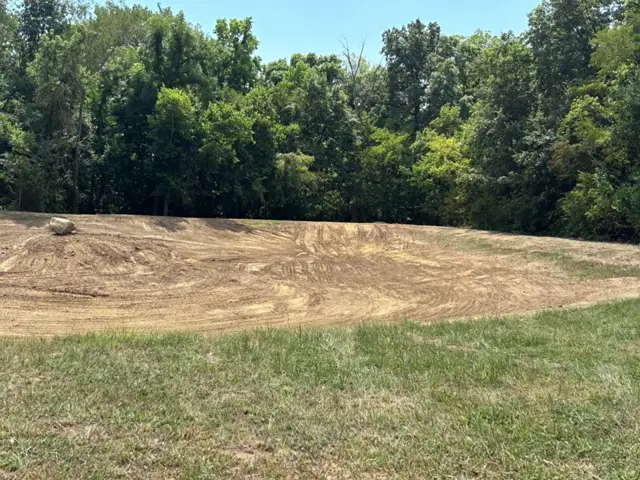
Ponds and lakes
Pond Building in Rosedale, IN
Want a pond that stays full through August, holds bass and bluegill through an Indiana winter, and waters your cattle without turning into a mud wallow? It starts with the dirt under it.
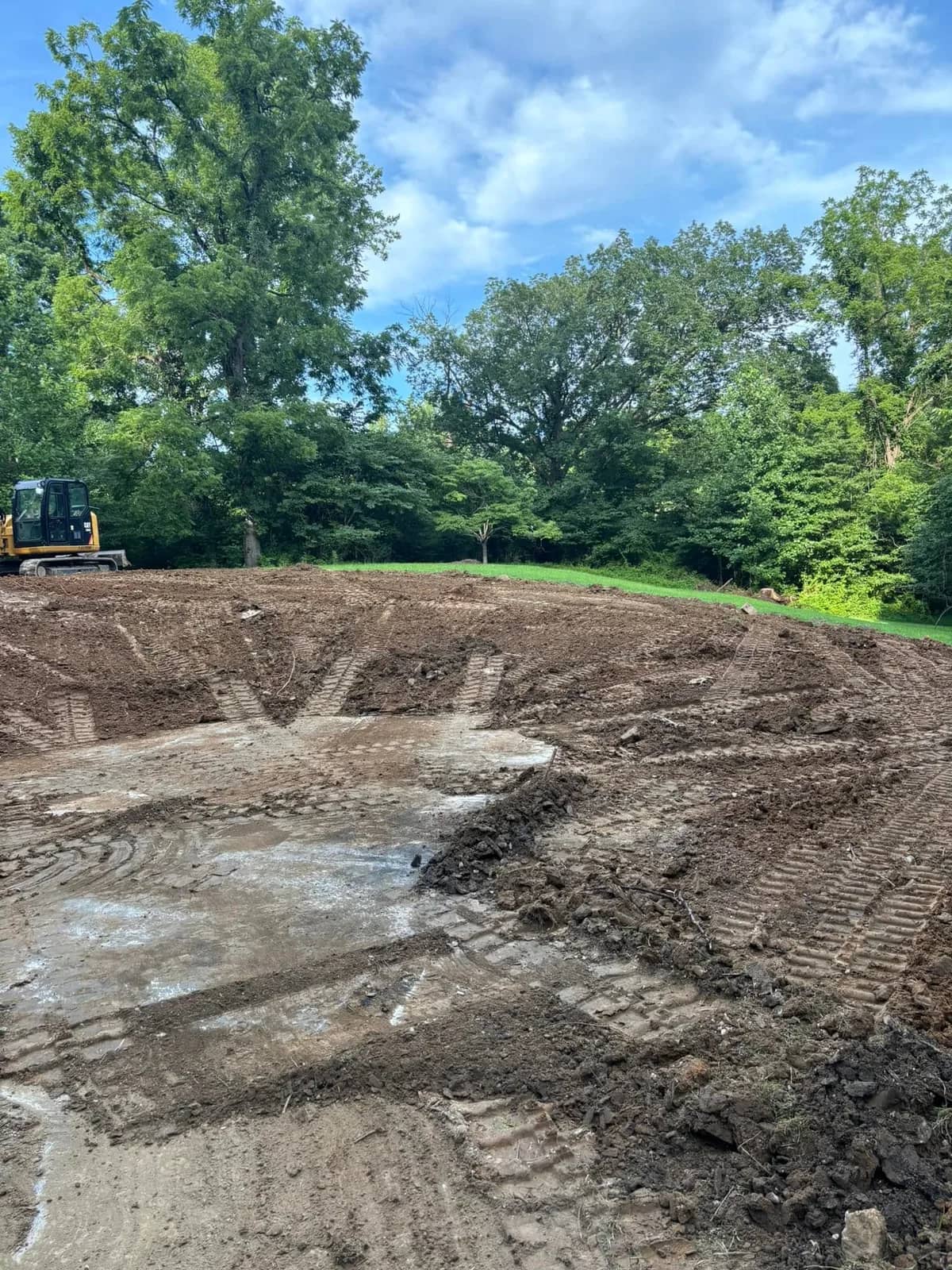
K&H Excavating handles pond building for landowners across west central Indiana, from farm and stock ponds to fishing and wildlife ponds dug on 10, 40, or 200 acres. We're a Rosedale excavating company run by Kory Stone out of Parke County, a couple of miles from the Vigo County line. That's cattle-and-hay country, and it's where Kory learned what a pond has to do for a farm before he ever dug one for a customer. Every pond starts with test holes to check the clay, a layout matched to how much water your land actually sheds, and a dam or basin built with excavators and dozers. Kory runs the job himself from the first stake to the final pass on the dam. If you've got a draw, a wet corner, or a spot you've always pictured holding water, call or text Kory at (765) 548-3704 and he'll come walk it with you.
When to call
Signs It's Time to Start Building a Pond on Your Property
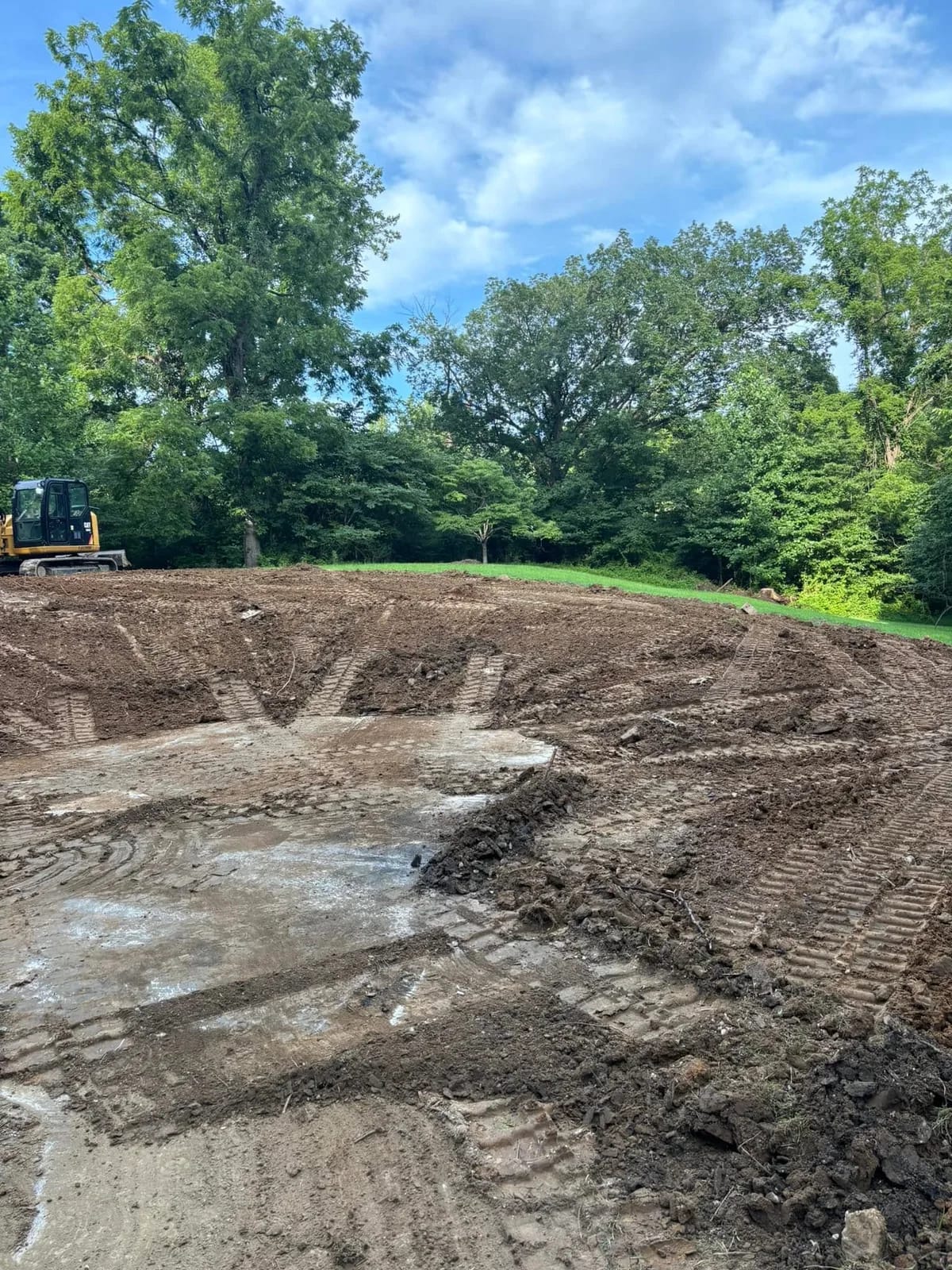
Most of the best pond sites in the Wabash Valley are already telling you where they are: a draw that runs every spring, a low spot where the beans drown out, a fence corner the cattle stand in all summer. Summer and fall are the best months to dig, because the ground is dry enough to compact and fall and winter rain fills the new basin. A late-summer call can have water standing by spring.
- Your cattle are walking a long way to water, or you're hauling tanks to the back pasture.
- A draw or swale carries runoff after every rain and you'd rather hold that water than lose it.
- A low corner of the field floods out every wet spring, and you're tired of replanting it.
- You want a place to fish, swim, or put up a dock where the family can gather.
- You're building a house on acreage and want the pond dug while the equipment is already on site.
- You've bought or inherited ground and want water on it for wildlife, hunting, or resale value.
- An old pond is too shallow or full of weeds, and it would be cheaper to start fresh than fight it (see pond sediment removal).
What's included
What Our Pond Construction Includes
Pond construction at K&H means shaping a basin and, where the ground calls for it, a compacted earthen dam that holds water for decades, not one wet season.
Test Holes Before Anything Else
Water stays in a pond because of clay, so Kory digs test holes across the planned basin before he quotes the job. Oklahoma State Extension recommends test holes on a 50- to 100-foot grid, dug a foot or two below the planned bottom. The goal is enough clay to seal the bottom and build the dam, and no sand or gravel seams to drain it. If the holes turn up sand, gravel, or loose mine spoil, you hear that on the walk-through, before a dime goes into digging, along with what it would take to fix it, or whether to pick another spot.
Laying Out the Pond Around Your Land
These are custom built ponds, laid out around your watershed, not a stock shape. Purdue Extension says Indiana ponds typically need three to five acres of watershed for every acre-foot of water stored, so a 1-acre pond around 10 feet deep needs a good-sized drainage area to stay full. Kory sizes the pond to the land that feeds it. He sets the water line, the dam location, the spillway path, and where the spoil goes, and he works around field access, fences, and tile lines you want left alone.
Building the Dam and the Basin
For embankment ponds, Kory cuts a core trench under the dam down into solid clay, then builds the dam back up in thin, compacted lifts. Alabama Extension recommends 6 to 8 inches per lift, with stumps and roots kept out of the fill. NRCS Practice Standard 378 calls for side slopes that are each 2:1 or flatter and add up to 5:1 or more, plus at least a foot of freeboard. The basin is dug to Purdue's numbers: 8 to 12 feet over most of the pond, with 3:1 edges so weeds don't take over the shallows.
Spillways, Finish Work, and a Walk-Around
Every dam needs a safe path for overflow. That's a principal spillway pipe (NRCS sets a 4-inch minimum) and an emergency spillway cut into undisturbed ground beside the dam. When the dirt work is done, Kory dresses the slopes so the dam is ready for grass, since roots are what hold an embankment together, and he keeps trees off it. Before he loads up, you walk the whole job with him at the Final Walk-Around with Kory.
Local ground
The Pond Problems We See Most in West Central Indiana
Rosedale sits near the edge of the last glacier, so soils change fast between farms. Around Bloomington, unglaciated red clay over limestone hides sinkholes that can pull a pond dry. In Clay and Vigo counties, old coal strip-mine spoil is much looser than the original ground, so it can settle and seep. Test holes catch all three before you pay for a basin that won't hold water.
A pond with wide, flat shallows turns into a weed bed, because rooted plants grow wherever the water is under about 4 feet. Purdue recommends 8 to 12 feet over at least 75% of the pond, plus 2 extra feet to hold the sediment that will wash in over the years (Purdue Extension ID-410-W). If you already have a shallow pond, pond excavation and enlargement can take it deeper.
Terre Haute averages more than 40 inches of rain a year, and April and May are the wettest months. A dam with no emergency spillway, or a pipe too small for the watershed, overtops and cuts a notch. Kory sizes both to what your land sheds.
Cattle wading in knock down banks and muddy the water. Purdue recommends keeping farm animals 100 feet back unless there's a restricted entry point, so Kory leaves room in the layout for a fence line and one restricted watering point.
Why K&H
Why Landowners Choose K&H Excavating as Their Pond Builders
Plenty of pond builders can move dirt. The difference is who runs the machine and how he reads your land.
You aren't handed off to a crew you've never met. Kory walks the site, digs the test holes, runs the excavator and dozer, and does the final walk-around himself, so the person who quoted the pond is the person who builds it.
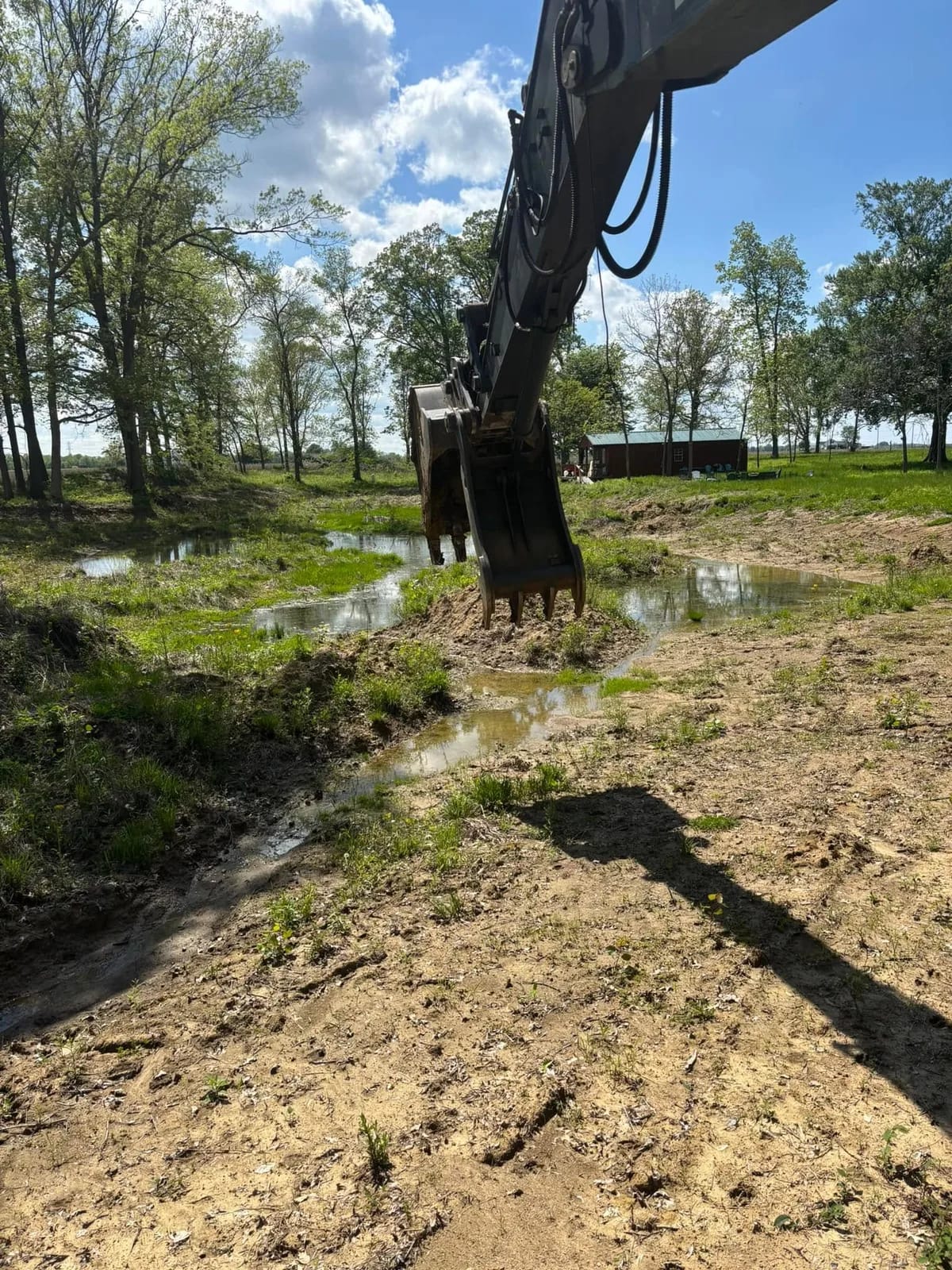
A pond dam needs real compaction and a basin needs real reach. K&H runs excavators to cut the core trench and basin and dozers to spread and pack the fill in lifts. That's the equipment a pond construction company should show up with.
Kory's family has farmed and run cattle in Parke County, so he lays out a pond the way a farmer uses it: where the cattle can drink, where the tractor crosses the dam, and where the overflow won't wash out a field.
Kory walks the ground and digs test holes before he gives you a number, at no charge. Calls and texts are answered Monday through Saturday, 8 a.m. to 6 p.m., and after hours by text. Learn about Kory and how K&H got started.
How it works
How Our Pond Building Works
Step 1 — Walk the Ground With Kory
Kory meets you on the property, walks the draw or low spot you have in mind, and looks at where the water comes from and where it leaves. He'll ask what the pond is for (cattle, fishing, swimming, wildlife), because that changes the depth, the edges, and where the dam goes. Once he's seen the ground, you get a written estimate.
Step 2 — Test Holes and Layout
Before digging starts, Kory digs test holes with the excavator to confirm there's enough clay to hold water. Then he stakes the water line, the dam, the spillway, and the spoil area. He also places the Indiana 811 locate request at least two full working days before digging, as state law requires. If the pond sits in a floodway or the dam crosses Indiana's dam-safety thresholds, he'll tell you on the walk-through that a permit is likely needed. The landowner, as permit holder, files that paperwork before work begins.
Step 3 — Core Trench, Dam, and Basin
The excavator cuts the core trench to clay and digs the basin. The dozer spreads and packs the fill in thin lifts to build the dam, with the principal spillway pipe set as the dam goes up. Topsoil is stripped and set aside so it can go back on the slopes. Kory's number takes texts, so you can check on how the dam is coming along whenever you like.
Step 4 — Shape, Spillway, and Topsoil
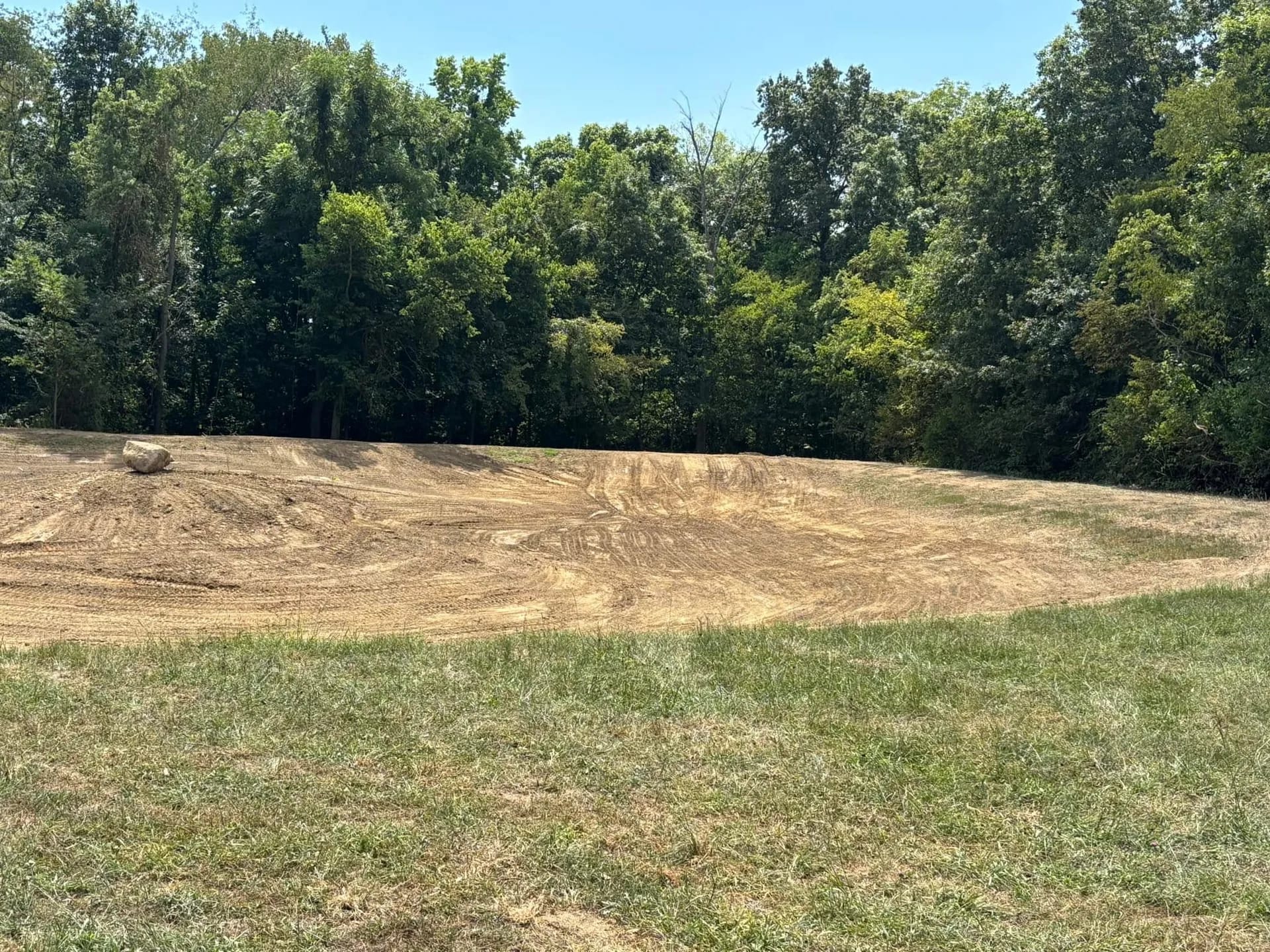
Kory shapes the 3:1 edges, cuts the emergency spillway, dresses the dam, and spreads the saved topsoil back over the slopes so the disturbed ground can green up before the next heavy rain.
Step 5 — The Final Walk-Around with Kory
You walk the finished pond with Kory: the dam, the pipe, the spillway, the depth, and how to keep trees and burrowing animals off the dam. You know exactly what you're paying for, and the pond fills with the next rains.
How we quote
How Much Does Pond Building Cost in West Central Indiana?
Every pond is priced after Kory walks the ground and digs test holes, because cost is mostly a matter of how much dirt moves and how hard the site is to work. Our cost to build a pond guide walks through the cubic-yard math in detail.
K&H takes cash, check, and credit card. Ask Kory about payment options when he quotes the job.
What changes the price
- Surface acres and depth. A 1-acre pond averaging 10 feet deep holds about 16,000 cubic yards of water.
- Dam versus dug-out. An embankment pond needs a core trench, compacted lifts, and spillways; a dug pond needs more total excavation.
- Soil. Clay that seals easily costs less than ground that needs clay hauled in or a different site.
- Access. Wet bottoms, timber in the way, and long walks for the machines add time.
- Spoil. Spreading dirt on site is cheaper than hauling it off.
- Spillway pipe size and fittings.
Quoted separately
- Clearing trees and stumps from the pond site (land clearing)
- Removing silt from an existing pond before enlarging it (pond silt removal)
- Docks, aeration, fish stocking, and fencing, which sit outside the dirt work and are worth planning for on their own
Related work
Often Paired With Pond Building
A pond digging service rarely ends at the waterline. These come up next.
Farm Pond Construction
If the pond is mainly for cattle or crop water, the dam, pipe, and livestock access need extra attention. See farm pond construction for stock and fishing ponds.
Land Clearing
A pond site in the woods needs trees and stumps pulled first, because roots buried under a dam become leaks later. Kory clears with an excavator and dozer and takes the stumps out. See land clearing with excavators and dozers.
Pond Silt Removal
Where a creek or field ditch feeds the pond, silt builds a delta at the inlet over time. Cleaning out the inlet before it spreads keeps the main pond deep. See pond silt removal at the inlet.
More in Pond Building: Farm Pond Construction · Pond Excavation & Enlargement · Pond Construction Cost Guide
Where we work
Pond Building Across the Wabash Valley and West Central Indiana
K&H is based in Rosedale, in southern Parke County, and builds ponds within about 50 miles as a matter of course, and up to about 75 miles, including eastern Illinois. Counties close to home include Parke, Vigo, Clay, Vermillion, and Putnam. Terre Haute is about 16 miles from Rosedale by way of US-41 south, and US-41 north runs toward Rockville and Turkey Run. IN-59 drops south through Brazil to IN-46 and on to Bloomington and the Lake Monroe country. US-36 heads east past Raccoon Lake toward Danville and Indianapolis, and US-41 north to I-74 gets us to Lafayette.
Ground changes across that footprint. North of Bloomington, most ground is glacial till, often clay-rich, though it varies farm to farm. Around Bloomington it's karst, where test holes and a careful look for sinkholes matter more than anywhere. On the old strip-mine ground of Clay and Vigo counties, the spoil has to be checked before anyone promises a pond will hold.
Looking for pond building in Terre Haute or a pond builder near Bloomington? We serve Rosedale, Terre Haute, Bloomington, Lafayette, and Indianapolis. See all of K&H's excavation services.
Not sure if your property is in range? Call or text Kory at (765) 548-3704.
Questions
Pond Building FAQ
What do I need before building a pond on my property?
You need a spot with enough watershed to fill it, soil with enough clay to hold water, and room for the dam and spillway. Purdue Extension figures three to five acres of watershed per acre-foot of water in Indiana. Kory checks all three on the free walk-through and digs test holes before quoting. You'll also need an Indiana 811 locate before digging, which Kory places.
How do I pick between pond contractors?
Ask whether they dig test holes before they quote, how they compact the dam (lift thickness and equipment), and how they size the spillways. Ask who will actually run the machine on your job. At K&H, the answer is Kory himself, on every job. Ask to see ponds they built a year or more ago that still hold water.
How long does it take to build a pond?
Size, dam height, soil, and weather set the pace, so Kory gives you a realistic timeline on the walk-through rather than a one-size number. Summer and fall are the best months, because the ground is dry enough to compact. Spring rain can push start dates back. The pond then fills with rain over the following weeks or months.
How deep should my pond be?
For fish, Purdue Extension recommends 8 to 12 feet over at least 75% of the pond, and at least 5 feet so fish survive the winter. Edges graded at about 3:1 keep the shallows from becoming a weed bed. Kory adjusts depth for stock ponds and wildlife ponds.
Do I need a permit to build a pond in Indiana?
Most private farm ponds don't need a state dam permit. A dam does become state-regulated if it's 20 feet or taller, holds more than 100 acre-feet, or drains more than a square mile (IDNR dam owner FAQs). Work in the floodway of a stream draining a square mile or more needs an IDNR floodway permit, even where the floodway isn't mapped. If an acre or more of ground is disturbed, IDEM's construction stormwater permit applies, farm ponds included. Kory will tell you on the walk-through which of these likely applies.
Will my new pond hold water?
No honest pond builder can promise a pond will never seep, because the soil decides. What K&H does is dig test holes first, cut a core trench into clay, compact the dam in thin lifts, and keep roots and stumps out of the fill. Those are the steps that make a pond hold. If the test holes show the site won't hold water, Kory will tell you before you spend money digging.
Ask Kory About My Pond
Still have a question about pond building? Call or text Kory at (765) 548-3704.
Call or text
Ask Kory about pond building
(765) 548-3704Calls and texts answered Monday to Saturday, 8 a.m. to 6 p.m. Text a few photos of the property and Kory can give you a head start before the site walk.
Get a free estimateFree estimate
Let's Put Water Where Your Land Wants It
Tell Kory where you're thinking of a pond, and he'll come walk it, dig a few test holes, and give you a straight answer on depth, dam, and price. Reach him through our contact page, or call or text directly.