Land and sites
Full-Structure Commercial Demolition in Rosedale, IN
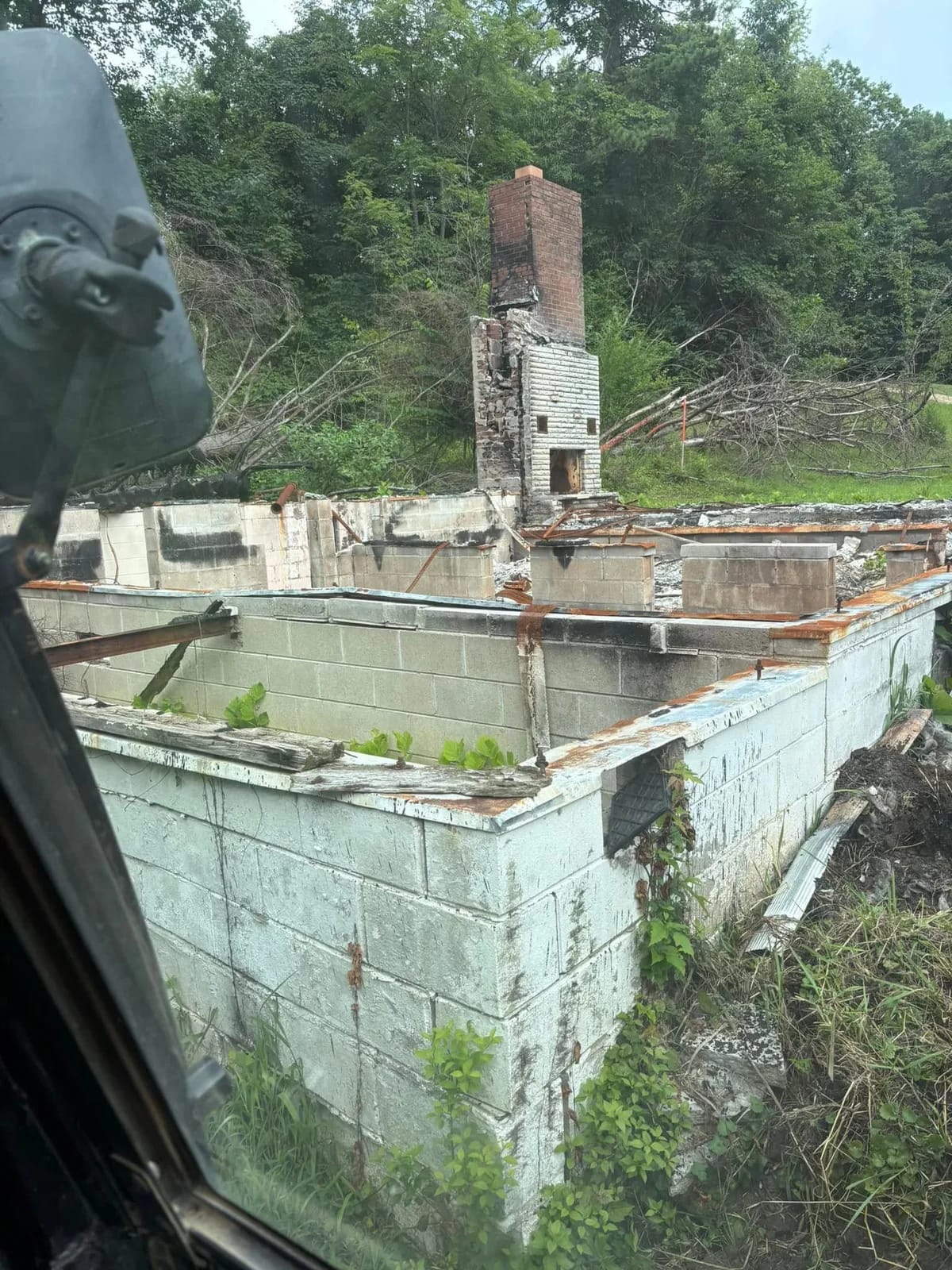
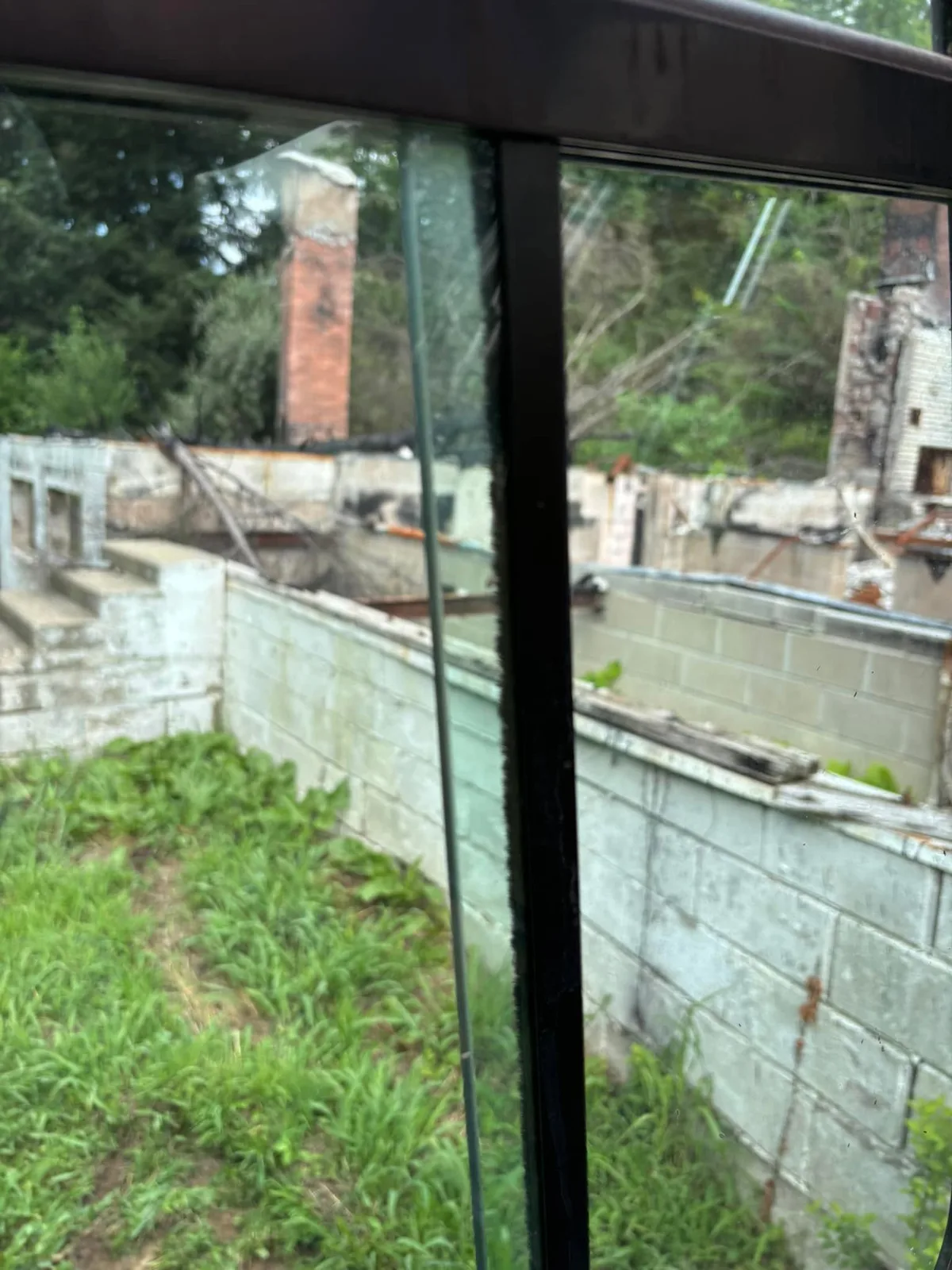
A vacant store on a lot you're trying to sell. A hog house that hasn't held pigs in ten years. A 60-foot stave silo leaning a little more toward the machine shed every spring. K&H takes down whole structures, walls to footings, and hauls them away.
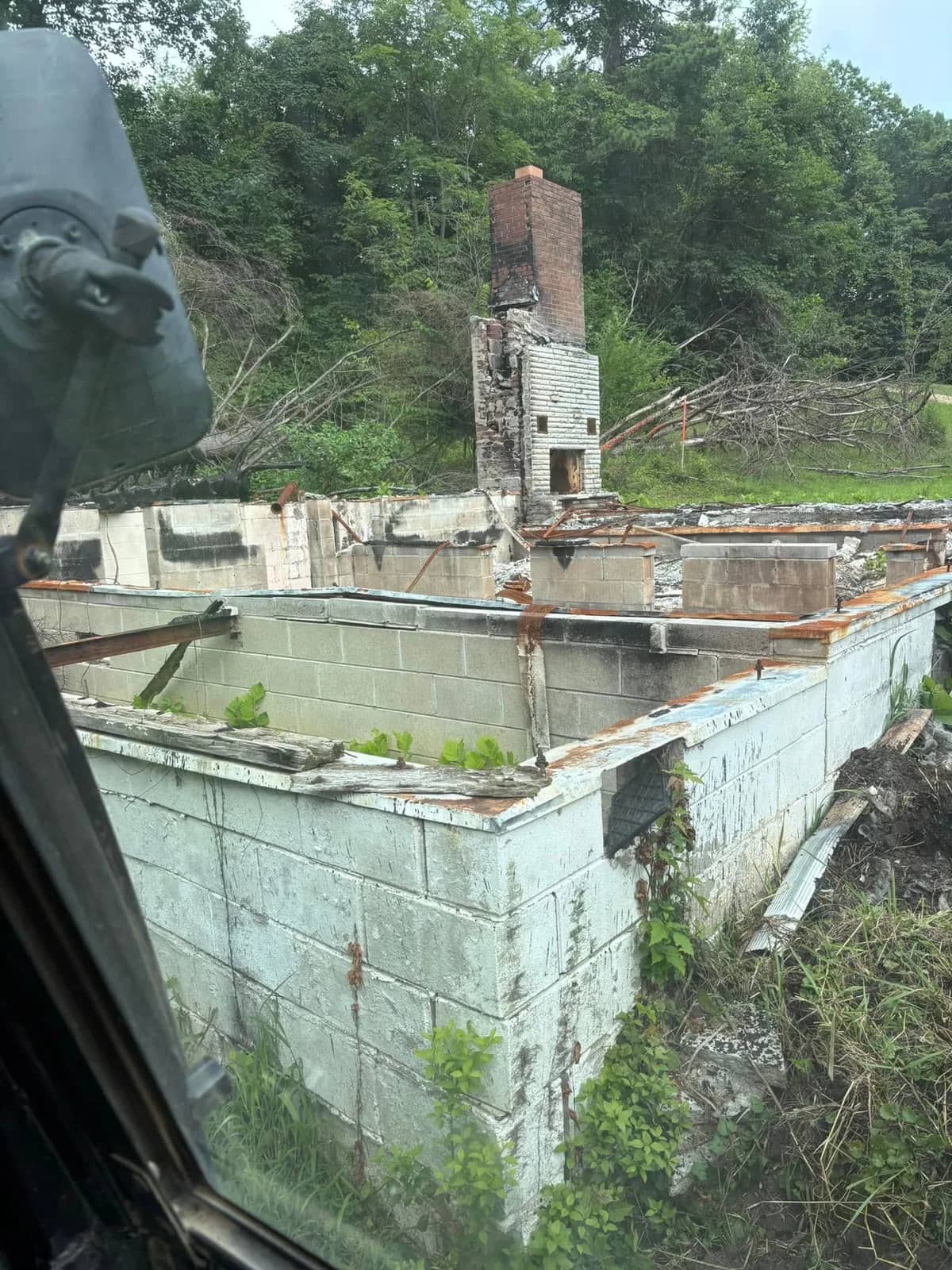
K&H Excavating provides commercial demolition for business owners, investors, and farm operations across west central Indiana and into eastern Illinois. That covers shops, garages, warehouses, and small commercial buildings, plus the big farm structures: barns, concrete stave silos, grain bins, and hog and poultry houses. We're a Parke County excavating company owned by Kory Stone, who farms near Rosedale and runs the excavator himself. Bigger, harder teardowns are the work Kory is building K&H around. He plans the fall zone before anything tips, walks you through the asbestos inspection and IDEM notice, and hauls the debris on K&H's own trucks. Call or text Kory at (765) 548-3704 to walk your building.
When to call
Signs a Commercial or Farm Building Has Reached the End
Big structures don't fail all at once. A silo loses a stave or a hoop rusts through. A grain bin's roof takes on water and the bottom ring starts to go. A commercial roof leaks into a building nobody's heating. Each season the structure gets less predictable, and a less predictable structure is harder and slower to bring down safely. If you can see it's headed that way, it's cheaper to plan the teardown now, with the ground frozen and the schedule open, than after a storm decides where it falls.
- A silo is missing staves, has loose or rusted hoops, or has started to lean.
- Grain bins have sat empty since you started hauling to the elevator, and the steel is rusting through.
- A hog or poultry house is empty and you don't plan to fill it again.
- Barn demolition is the only way to make room for a new machine shed or pole barn.
- A commercial building is vacant and a buyer, lender, or developer wants a clear lot.
- The farm or business is being sold, settled, or split up, and the old buildings have to go before closing.
- Storm damage has left a building open, and your insurance carrier wants it dealt with.
What's included
What Our Commercial Demolition Services Include
Our commercial demolition services take a structure from standing to graded ground: survey, checks, teardown, sorting, haul-off, and backfill, all run by the owner.
Commercial Buildings, Taken Down to Dirt
Shops, garages, warehouses, and small commercial buildings come down with the excavator, from the roof in, and the footings and slab come out after. K&H does whole-structure demolition only. It doesn't do interior strip-outs or selective demolition inside a building that's staying. IDEM typically doesn't treat a commercial building as a mostly wooden structure, so commercial debris gets hauled, not burned.
Barns, Hog Houses, and Poultry Houses
Barn demolition on a working farm means taking the building down without blocking the lane the feed truck uses or the fence the cattle lean on. Kory strips metal roofing and siding for scrap, brings the frame down, and digs out the posts, footings, and floor. Hog and poultry houses are long, low buildings, often with concrete floors or pits underneath, and those have to be empty before work starts.
Concrete Stave Silos and Grain Bins
Concrete silo demolition is about where it lands. One silo-removal contractor told Agweek in 2024 that a 20-by-60 silo weighs 75 tons, "so where it goes is the path of destruction." Kory clears a fall zone well past the silo's height. Where there's no room to tip it, top-down removal may be the answer, and Kory will tell you which approach fits once he's seen the site. Grain bins are emptied, then taken down and the steel recycled.
Asbestos Checks for Farm and Commercial Buildings
Indiana requires an Indiana-licensed asbestos inspection before demolition of everything except noncommercial homes with four or fewer units. Nearly every teardown also needs IDEM's notification, followed by at least 10 working days before the machine can start. K&H doesn't inspect or abate asbestos, and the property owner files the notice. Kory points out what your structure likely needs on the walk-through, then builds the inspection and the wait into the schedule. Full detail on those steps is on our building demolition page.
Local ground
The Commercial and Farm Demolition Problems We See Most in West Central Indiana
In one NIOSH fatality investigation, an excavator operator was killed when a brick chimney roughly 26 to 30 feet tall fell onto his cab during a house demolition. NIOSH recommended an engineering survey that looks at the risk of unplanned collapse, plus following the ANSI boom-height standard for demolition machines (NIOSH FACE 98-18). It wasn't a silo, but the lesson fits one: tall, heavy structures get surveyed and a fall zone gets planned before the machine gets close. OSHA's demolition rules require that survey by a competent person, too.
Farmers often assume a barn is exempt the way a farmhouse is. Indiana's exemption names only noncommercial homes with four or fewer units, and in a 2002 letter, EPA's Region 5 office said that agricultural buildings used for commercial purposes, such as a dairy barn or crop storage building, are subject to the federal asbestos rule, with applicability decided case by case (EPA letter on asbestos NESHAP and farm buildings). Before assuming a barn is exempt, check with IDEM's Office of Air Quality.
Older farm and commercial buildings can carry cement-asbestos siding or roofing, sold as transite. EPA treats transite as a Category II material under its demolition rules. It can't be burned, and the inspector's findings decide how it has to come off before Kory starts.
Putnam County reported 77,598 hogs in the 2022 Census of Agriculture, and Parke County about 8,400 head of cattle. Farms that size go through a lot of buildings over the decades. When an old hog house or barn comes down, Kory can also clear the brush and trees that grew up around it (land clearing).
Why K&H
Why Farms and Businesses Hire K&H Over Other Commercial Demolition Contractors
K&H is sized for the shop on a small-town main street and the silo row on a family farm: big enough to need real iron, small enough that the owner runs the machine.
Kory walks the building, plans the fall zone, runs the excavator, and signs off at the end. Nobody new shows up on demolition day needing the plan explained.
K&H loads and hauls with its own trucks, sorting steel for scrap as it goes. A commercial lot or barnyard doesn't sit buried in debris waiting for a hauler.
Business owners and farmers don't stop thinking about a job at 6 p.m. Calls and texts come in Monday through Saturday, 8 a.m. to 6 p.m., and texts get answered after hours, so a question about the schedule gets an answer that night.
Kory farms in Parke County, so he plans a teardown around the grain leg that's still working, the cattle in the next lot, and the harvest traffic on your lane. Get to know Kory and how K&H works.
How it works
How Our Commercial Demolition Works
Step 1 — Walk the Structure With Kory
Kory walks the building or silo with you, pacing off the fall zone and noting everything nearby: other buildings, power drops, grain legs, roads, and neighbors. He looks at construction (steel, masonry, wood, or concrete stave) and what's under it. The written quote comes after that visit.
Step 2 — Inspector, IDEM Notice, and Locates
The owner books an Indiana-licensed asbestos inspector and files the IDEM notification, which starts the 10-working-day wait. Kory places the Indiana 811 request. The dig law also gives utility operators reasonable time to remove or protect their lines before a structure comes down, so that call goes in early.
Step 3 — Shutoffs and a Cleared Fall Zone
Every electric, gas, water, and sewer line is shut off and capped, with disconnects scheduled through the utility providers. Equipment, vehicles, and livestock come out of the fall zone. On a silo or tall building, nobody stands inside that zone while it comes down.
Step 4 — Take It Down and Sort It
The excavator brings the structure down along the planned line. Steel, metal roofing, and bin rings get sorted for scrap, concrete for recycling, and the rest for disposal. Kory keeps checking the structure as it comes apart, the way OSHA requires.
Step 5 — The Final Walk-Around with Kory
After the footings and floors are out and the ground is backfilled and graded, you walk it with Kory. The building is gone, the debris is hauled off, and the ground is ready for whatever you put there next.
How we quote
How Much Does Commercial Demolition Cost in West Central Indiana?
K&H prices commercial and farm teardowns after Kory walks the structure. The quote covers the teardown, sorting, haul-off, and backfill, so you aren't paying three contractors.
K&H accepts cash, check, and credit card.
What changes the cost to demolish a commercial building
- Square footage, height, and construction: steel frame, masonry, wood, or concrete stave.
- Floors, pits, basements, and footings that have to come out and be backfilled.
- Asbestos inspection results, and any abatement that has to happen first.
- Room around the structure. A silo with an open fall zone costs less than one that has to come down top-first.
- Haul distance and disposal fees.
- Season and ground. Frozen January ground carries trucks better than wet April fields.
Quoted separately
- Asbestos inspection and abatement by Indiana-licensed inspectors and contractors
- IDEM's $50-per-structure notification fee
- Clearing trees and brush grown up around old buildings (land clearing)
- A new pad for the replacement building (pole barn and shed site prep)
Related work
Often Paired With Commercial Demolition
When the building is down, these are usually next.
Concrete Demolition
Hog houses, machine sheds, and commercial buildings usually leave a big slab or pit behind. Kory breaks it, pulls the steel, and hauls it in the same mobilization. See breaking out old slabs, pits, and foundations.
Land Clearing
Old farmsteads collect fence rows, volunteer trees, and brush around the buildings. Clearing it with the excavator and dozer, stumps and all, turns the whole spot back into usable ground. See clearing overgrown farmsteads and fence rows.
Pole Barn & Shed Site Prep
Many owners take down an old barn so a new one can go in on the same ground. Once it's down, Kory can rough-grade the spot so it sheds water before the new one goes up. See pole barn site prep.
More in Demolition: Demolition · Concrete Demolition
Where we work
Commercial Demolition Across the Wabash Valley, West Central Indiana, and Eastern Illinois
K&H runs out of Rosedale in Parke County and takes commercial and farm demolition within about 50 miles routinely, and up to about 75 miles for the right job. That reach crosses the state line. IN-163 runs west from US-41 through Clinton and Blanford toward Paris, Illinois, and from Terre Haute, I-70 heads west toward Marshall. Back in Indiana, US-41 north through Rockville reaches I-74 for Lafayette, and US-36 runs east past Raccoon Lake and Danville into Indianapolis. County roads lead to IN-59 at Brazil and IN-46 through Spencer to Bloomington. Day-to-day work centers on Parke, Vigo, Clay, Vermillion, and Putnam counties.
The work changes across that map. Farm country around Rosedale and east into Putnam County is barns, cribs, silos, bins, and livestock houses. In Terre Haute, Lafayette, Bloomington, and Indianapolis, it's commercial buildings on lots with sidewalks, neighbors, and city permits. Whatever permit a city asks for is pulled by the property owner, and Kory can point out what's likely needed when he walks the site.
Searching for commercial demolition in Terre Haute or a silo teardown near Lafayette? We serve Rosedale, Terre Haute, Bloomington, Lafayette, and Indianapolis. See all of K&H's excavation services.
Is your building in range? Call or text Kory at (765) 548-3704.
Questions
Commercial & Agricultural Demolition FAQ
What's the cost to demolish a commercial building?
The cost to demolish a commercial building depends on its size, height, and construction, what's under it, the asbestos results, and how far the debris travels. Kory gives you a written price after walking it, and estimates are free.
Do farm buildings need an asbestos inspection before demolition?
Indiana's exemption covers only noncommercial homes with four or fewer dwelling units. In a 2002 letter, EPA said that agricultural buildings used for commercial purposes, like a dairy barn or crop storage building, are subject to the federal asbestos rule, though applicability is decided case by case. Plan on an Indiana-licensed inspection and IDEM's 10-working-day notice for most barns and livestock buildings, and check your building with IDEM. Kory will go over it on the walk-through.
How do you handle concrete silo demolition?
The first job is a fall zone, cleared well past the silo's height, with nothing and nobody inside it. Where there's room, the silo comes down into that zone. Where buildings are too close, it may have to come down from the top. Broken staves can be hauled for recycling or crushed for farm aggregate.
Do you do grain bin removal?
Yes. The bin has to be empty first. Then the roof and sidewall rings come down and the steel goes to scrap. Kory digs out the concrete foundation and any aeration floor and fills and grades the ground.
Do you do interior demolition or strip-outs?
No. K&H takes down whole structures: the walls, the roof, the footings, and the floor. Interior strip-outs and selective demolition inside a building that's staying aren't something K&H offers.
How do I choose between commercial demolition companies?
Ask who plans the fall zone and who runs the machine, how they handle the asbestos inspection and IDEM notice, whether footings and floors are included, and who hauls the debris. At K&H, Kory runs every job himself, with debris hauled on our own trucks. Ask any company you're considering to show you a finished site.
Can you work around a farm or business that's still operating?
Yes, and that's planned on the walk-through. Kory keeps lanes open for feed trucks and grain carts, works around livestock and harvest, and sets the fall zone away from anything that's staying. Kory answers texts after hours, so a last-minute change to your schedule reaches him the same evening.
How long does commercial or farm demolition take?
Expect two weeks or more for the asbestos inspection and the 10-working-day notice, plus the Indiana 811 locate. On-site time depends on the structure: a grain bin is quick, a silo row or a large commercial building takes longer, and Kory will lay out a realistic schedule once he's walked it. Winter, January through March, is Kory's demolition season.
Ask Kory About My Building
Still have a question about commercial demolition? Call or text Kory at (765) 548-3704.
Call or text
Ask Kory about commercial & agricultural demolition
(765) 548-3704Calls and texts answered Monday to Saturday, 8 a.m. to 6 p.m. Text a few photos of the property and Kory can give you a head start before the site walk.
Get a free estimateFree estimate
Let's Take It Down and Get the Ground Working Again
Tell Kory what's standing, whether it's a storefront, a silo, a bin row, or an empty hog house, and what you want there instead. He'll walk it, plan the fall zone, and give you one price to take it down and haul it off. Reach him through our contact page, or call or text directly.