
Land and sites
Acreage Land Clearing in Rosedale, IN
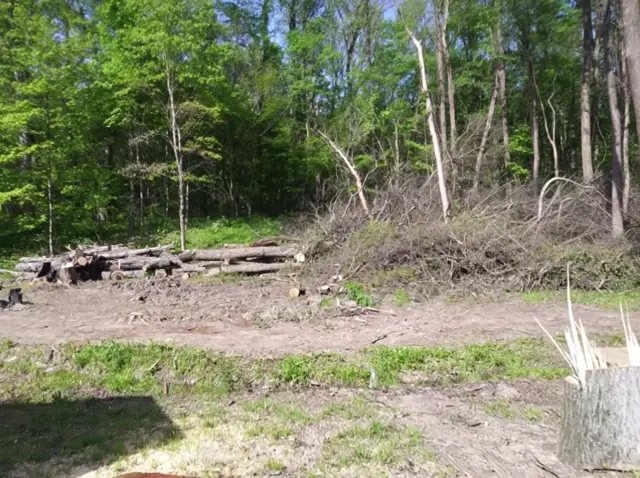
Fence rows that turned into woods? Forty acres of timber standing where you want corn, cattle, or a building? K&H takes the trees out with the roots still on them, so the ground can be farmed or built on.
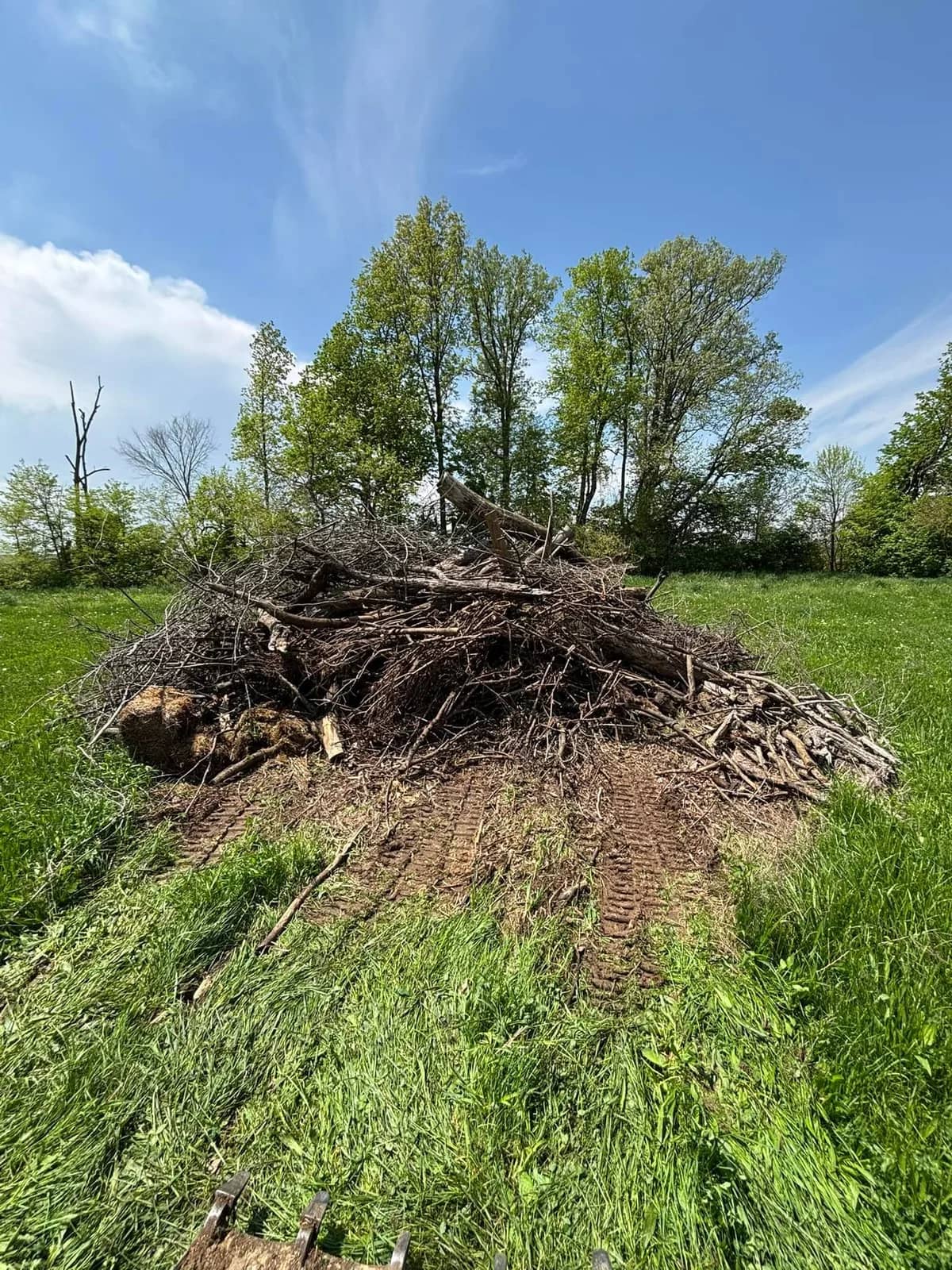
K&H Excavating does land clearing the way a farmer wants it done. Trees come out with the root ball attached, the stumps leave with them, and the ground is left ready for a disk, a grass drill, or a dirt contractor. We're a Parke County excavating company based in Rosedale, and owner Kory Stone runs the excavators and dozers himself. K&H is built for acreage clearing: 30, 50, or 100 acres of grown-up fields, timber, or development ground that has to be open and stump-free before anything else happens. Farms in Parke County alone hold about 29,400 acres of woodland (USDA 2022 Census of Agriculture). If you're looking at a tract like that, call or text Kory at (765) 548-3704 and set up a time to walk it.
When to call
When Clearing Land for Farming or Development Can't Wait
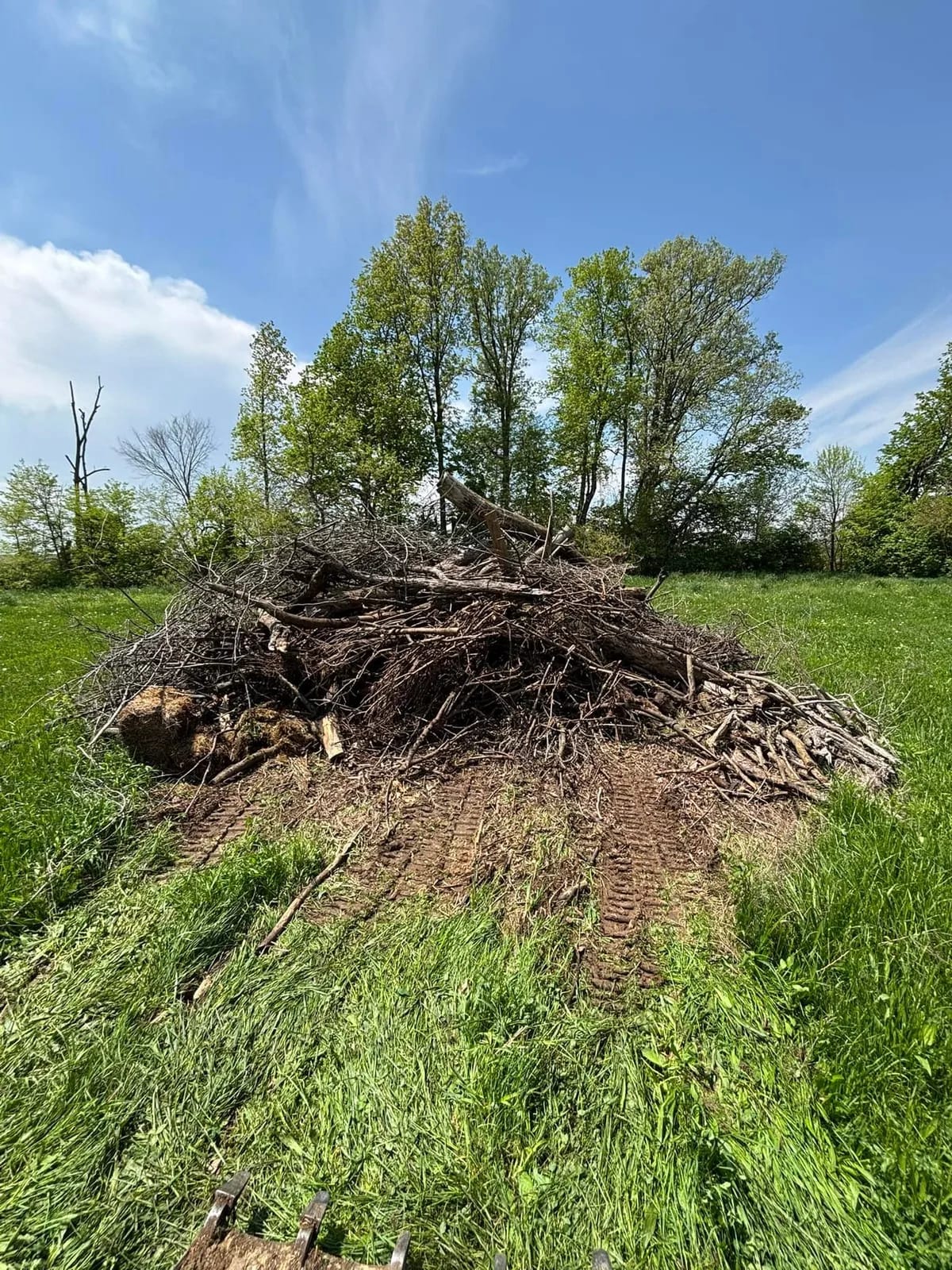
Woods don't hold still. Every year a field sits idle, the saplings add another ring and the roots spread, so a brush job turns into a tree job. Timing matters too. Kory clears hardest from January through March, when frozen ground carries a dozer into bottoms that go soft after the spring rains. Miss that window and the work can slide into summer, past your planting date or building start.
- You bought or inherited ground with old fields that have gone back to trees, and you want them in crops or grass again.
- Timber has crept 30 or 40 feet into your field edges, and the planter loses more rows every year.
- You're developing a tract for lots, a farm building, or a commercial land clearing project, and it has to be open and stump-free before grading.
- A logger took the saw timber and left tops, culls, and stumps across the whole tract.
- You're planning a pond or a home site in the woods and need the trees and roots out first.
- Fence rows have grown into hedges so thick you can't see the wire, or the fence is gone entirely (see brush and underbrush clearing).
What's included
What Our Land Clearing Includes
Ground clearing at K&H means taking trees, stumps, and roots off the land you want to use, then leaving it ready for whatever comes next.
Trees Out With the Root Ball Attached
Kory uses the excavator to push or pull standing trees over so the root ball comes up with the trunk. Virginia Cooperative Extension notes it can be faster to remove whole trees and high stumps than to dig out low-cut ones. This is also where excavator clearing parts ways with a forestry mulcher. A typical mulcher grinds trees and brush where they stand and leaves the chips on the ground, and the roots usually stay in the soil. Mulching has its place on trails and light brush. When the ground is headed for a plow or a footing, the roots need to come out.
Stumps Pulled Where Dirt Will Go
A stump buried under a future pond dam, barn floor, or farm lane rots, leaves a void, and the ground settles. INDOT's standard specifications won't allow stumps, roots, or any part of a tree inside a road embankment, and they require stump holes to be backfilled and compacted. K&H holds cleared ground to the same idea. Stumps come out, holes are filled and packed with the dozer, and roots are picked off the surface so a disk doesn't hang up on them.
Debris Piled Where the Rules Allow
NRCS Practice Standard 460 for land clearing puts debris piles at least 100 feet from woodland, buildings, and roads, and says not to push cleared debris into standing timber (NRCS Conservation Practice Standard 460). Kory windrows and piles to that spacing. From there, the wood can be loaded and hauled off on K&H's own trucks, and if you'd rather burn, Kory will talk through where the law allows it. The disposal plan is settled on the walk-through, so it's in your price from the start.
A Finish You Can Work
Clearing is done when the stump holes are filled, the big roots are gone, and the surface is dressed with the dozer so water runs off instead of pooling. NRCS 460 calls for getting cleared ground back into vegetation so it doesn't wash, and Kory will lay out what needs to happen before seeding. For a scope-by-scope look at stump extraction, windrowing, and debris options, see our land clearing services.
Local ground
The Land Clearing Problems We See Most in West Central Indiana
Overnight lows at Terre Haute average below freezing from December through February, while April and May each bring about 4.7 inches of rain, the most of any month (NOAA 1991–2020 normals). A dozer on thawed, wet bottom ground leaves ruts that take a season to work out. That's why winter is clearing season at K&H: frozen ground carries the machines into wet corners they can't reach in spring.
When trees are cleared for a change in land use, such as a housing development, a private road, or an industrial site, burning that tree waste needs IDEM's approval first (IDEM: open burning that requires prior approval). The landowner or developer, as the responsible party, files State Form 49635, plus more forms if an air curtain destructor is used. Kory will tell you on the walk-through which side of that line your job likely sits on.
Burying stumps and roots in fill is the fastest way to ruin a new pond or building site. Pulling them during clearing costs less than digging up a leaking dam later.
Big Raccoon Creek runs less than a mile north of Rosedale, and creek bottoms like these can hold wetlands. IDEM says mechanical clearing that discharges fill into a wetland or stream needs a Section 401 certification from IDEM and a federal Section 404 permit from the Army Corps of Engineers. If part of your tract looks wet, Kory will point it out before a machine goes in.

Why K&H
Why Landowners Choose K&H Excavating as Their Land Clearing Contractors
Here's what you get when the job is acreage and the stumps have to come out.
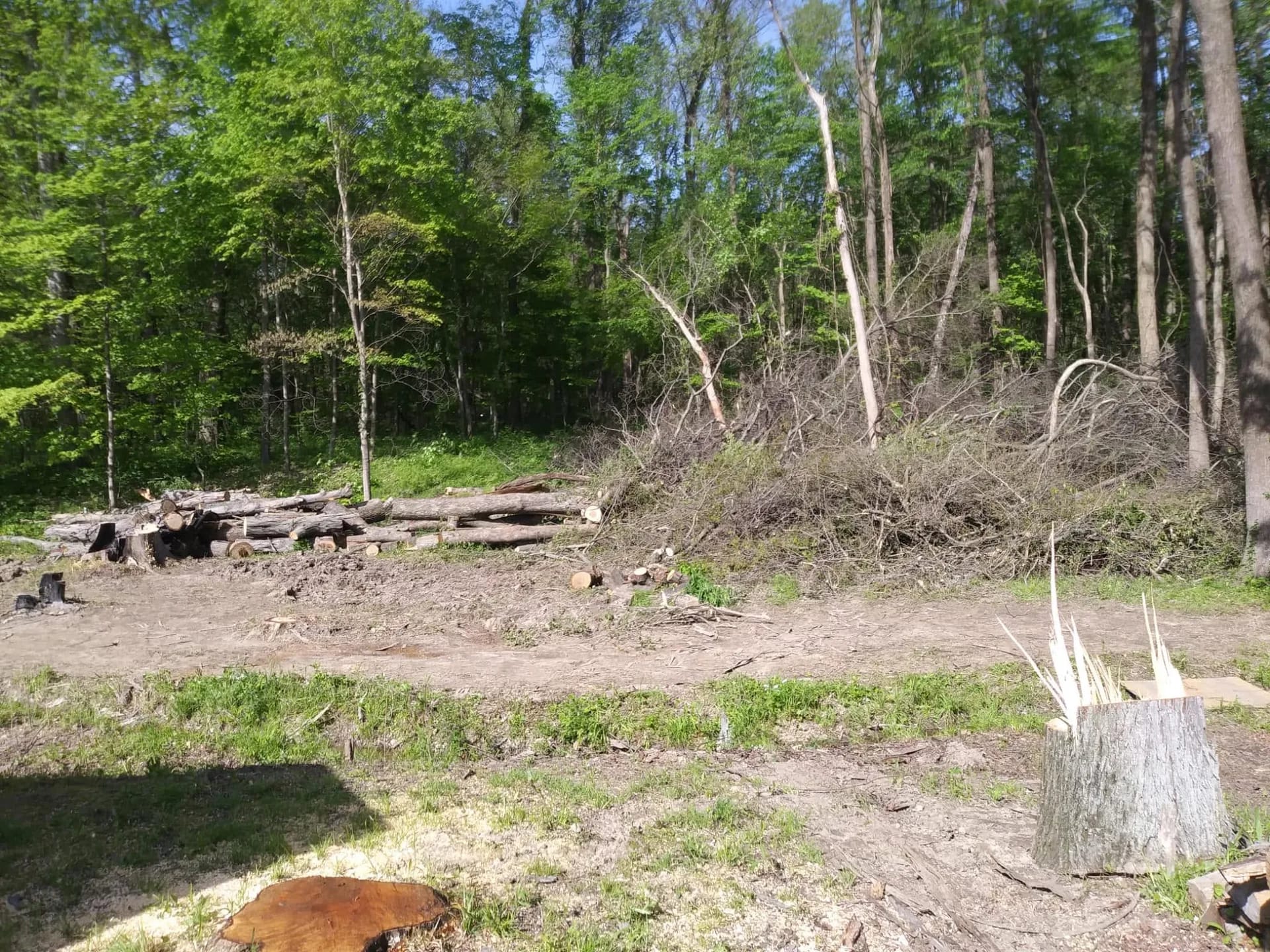
The man who walks your tract and prices it is the man in the excavator seat. Kory runs K&H's clearing himself, so the trees you asked to keep and the tile line you pointed out don't get lost between a salesman and an operator.
Acreage needs machines that can lift a root ball and push a long windrow. K&H clears with excavators and dozers and doesn't sell skid-steer mulching. If light mulching is really what your ground needs, Kory will say so.
K&H runs its own trucks. Where burning isn't allowed or you don't want smoke, logs, stumps, and brush leave the property without waiting on a hired hauler.
Kory prices and schedules for acreage clearing: grown-up farms, timber tracts, and development ground that has to be open from fence to fence. Owners of smaller pieces are welcome to call, and Kory will tell you straight whether the job is a fit. Read how Kory went from the farm to running K&H full time.
How it works
How Our Land Clearing Works
Step 1 — Walk the Acreage With Kory
Kory walks the tract with you: the tree line, the wet spots, the trees you want left, the fences and tile, and the gate the trucks will use. He'll ask what the ground is for next, because cropland, pasture, and a building site each need a different finish. Once the walk is done, you get a written estimate that spells out the disposal plan.
Step 2 — Plan the Piles and the Paperwork
Before the first tree goes down, Kory sets the windrow and pile locations, at least 100 feet from woods, buildings, and roads. Pulling stumps is digging, so he places the Indiana 811 locate request at least two full working days ahead. If the clearing is for development, he'll point out whether IDEM burn approval or, at an acre or more of disturbance, IDEM's construction stormwater permit is likely to apply. The landowner or developer files those as the permit holder.
Step 3 — Trees and Root Balls Out
Kory works the tract in blocks, laying trees over with the excavator and stacking them for the dozer. The wettest ground gets cleared while it's frozen. Want to know how far along it is? Text Kory.
Step 4 — Close Out the Piles and Holes
Debris is burned where it's allowed or loaded onto K&H's trucks. Stump holes are backfilled and packed, roots are picked off the surface, and the dozer dresses the ground so it drains and can be worked.
Step 5 — The Final Walk-Around with Kory
Kory takes you over the cleared acreage to check the edges and the trees you kept, and you talk through seeding and what to watch the first spring. You see exactly what you paid for, and the ground is ready for its next use.
How we quote
How Much Does Land Clearing Cost in West Central Indiana?
Land clearing cost per acre varies widely, because an acre of grown-up fence row and an acre of mature oak are two different jobs. Kory prices clearing after he walks the ground, so the number reflects your trees and your finish, not an average.
K&H takes cash, check, and credit card.
What changes the price
- Tree size and density: how many stems per acre, and how big around.
- Acreage and layout: one open block clears faster than scattered strips and fence rows.
- The debris plan: burning on site where allowed, or loading and hauling off.
- Ground and season: frozen ground versus wet bottoms, slopes, and creek crossings.
- The finish: rough-cleared, or root-picked and dressed ready for a disk or a builder.
- Rules on the site: wetlands, burn approval, and stormwater requirements.
Quoted separately
- Cut-and-fill grading or topsoil work after clearing (site preparation)
- Tearing down old houses, barns, or sheds on the tract (demolition)
- Seeding, fencing, and herbicide on resprouts, which sit outside the clearing price
Related work
Often Paired With Land Clearing
Opening up acreage usually leads to one of these.
Land Clearing Services
Most tracts mix two or three scopes, from thumb work on single trees to dozer windrows and stump extraction. See land clearing services, scope by scope.
Brush & Underbrush Clearing
Some ground doesn't need the big timber touched, just the honeysuckle and autumn olive pulled out from under it. That work fits well in late fall and winter, when the leaves are off the native trees. See brush and underbrush clearing for woods and fence rows.
Pond Building
A pond site in the woods has to be cleared before anyone can dig, and every root under the dam is a future leak. Clear it in winter and the pond can be dug in summer and fall, the best digging months. See pond building on cleared ground.
More in Land Clearing: Land Clearing Services · Brush & Underbrush Clearing
Where we work
Land Clearing Across the Wabash Valley and West Central Indiana
K&H works out of Rosedale in southern Parke County. Clearing jobs within about 50 miles are routine, and for large tracts Kory will truck the machines out to about 75 miles, including into eastern Illinois. North of home at Rockville, US-36 runs east past Raccoon Lake through Bainbridge and Danville into Indianapolis. US-41 continues north from Rockville to IN-47, which runs past Turkey Run State Park toward Crawfordsville, and US-41 continues to I-74 for the run to Lafayette. Terre Haute is about 16 miles south on US-41, and Bloomington is reached over IN-59 and IN-46 through Spencer.
The woods vary across that footprint. Putnam County farms hold about 18,600 acres of woodland and Vigo about 12,400, well behind Parke (USDA 2022). In Clay and Vigo counties, some grown-up ground is old strip-mine spoil, which IDNR warns is much looser than undisturbed ground and should be tested before anyone builds on it.
Looking for land clearing near Terre Haute, or acreage cleared outside Lafayette or Indianapolis? We serve Rosedale, Terre Haute, Bloomington, Lafayette, and Indianapolis. See all of K&H's excavation services.
Not sure your acreage is in range? Call or text Kory at (765) 548-3704.
Questions
Land Clearing FAQ
What does land clearing cost per acre?
It depends on what's standing on the acre and what you need left behind. Light brush on an old field and mature hardwoods on a slope take very different machine hours. Kory prices after a free walk-through rather than guessing at a per-acre figure, and the estimate spells out the disposal plan and the finish.
Do you take smaller clearing jobs?
K&H is set up for acreage, and Kory is focused on jobs in the 30- to 100-acre range. Smaller jobs can still make sense, especially when the clearing is part of a pond or building project K&H is already doing. Call or text and describe the ground. Kory will give you a straight answer either way.
What's the difference between forestry mulching and excavator clearing?
A typical forestry mulcher grinds trees and brush in place and leaves the chips on the ground, and the roots usually stay in the soil. Excavator clearing pulls the root ball out with the tree, which is what you want under a field, a pond dam, or a building. That's why K&H runs excavators and dozers — no skid steers — and doesn't offer mulching. If mulching fits your goal better, Kory will tell you.
Can I burn the brush piles after clearing?
It depends on why the land is being cleared. Clearing for a change in land use, like a subdivision or industrial site, needs IDEM approval before burning. Maintenance burning of vegetation from farms in an unincorporated area doesn't need approval, but it has to be attended, kept out of high wind, and limited to clean vegetation, never treated wood or trash. Clearing woods for new cropland can fall between those two, so check with IDEM before you light a pile. Where burning doesn't fit, the answer is debris hauled on our own trucks.
Do I need a permit to clear land in Indiana?
Sometimes. IDEM's construction stormwater permit covers clearing, grading, and excavation that disturbs an acre or more, and clearing in preparation for development is not exempt. Mechanical clearing that puts fill into a wetland or stream needs a Section 404 permit from the Corps and a 401 certification from IDEM. Whether clearing woods for new cropland counts as exempt farm activity should be checked with IDEM. Kory will point out what likely applies on the walk-through.
Who actually runs the machines on my job?
Owner Kory on every job. Kory walks the ground, prices it, operates the machines, and goes over the finished tract with you. Your day-one questions get answered by the person doing the work.
Is clearing land for farming different from commercial land clearing?
The machines are the same, but the finish isn't. Clearing land for farming ends with stumps out, holes filled, roots picked, and the surface smooth enough for a disk and a drill. Commercial land clearing often ends at a rough-cleared surface for a site contractor to grade, with more paperwork, like IDEM burn approval and stormwater coverage. Kory sets the finish on the walk-through.
Ask Kory About My Acreage
Still have a question about land clearing? Call or text Kory at (765) 548-3704.
Call or text
Ask Kory about land clearing
(765) 548-3704Calls and texts answered Monday to Saturday, 8 a.m. to 6 p.m. Text a few photos of the property and Kory can give you a head start before the site walk.
Get a free estimateFree estimate
Let's Get Your Acreage Open Before Spring
Text Kory roughly how many acres you have and what you want the ground to become, and he'll set a time to walk it with you. If a form is easier, use our contact page and he'll get back to you.