Land and sites
Building Site Preparation for Rural Homes in Rosedale, IN
Picked the spot for the house on your new acreage? Before the builder can stake a foundation, the trees, the topsoil, and the slope all have to be dealt with, and the order matters.
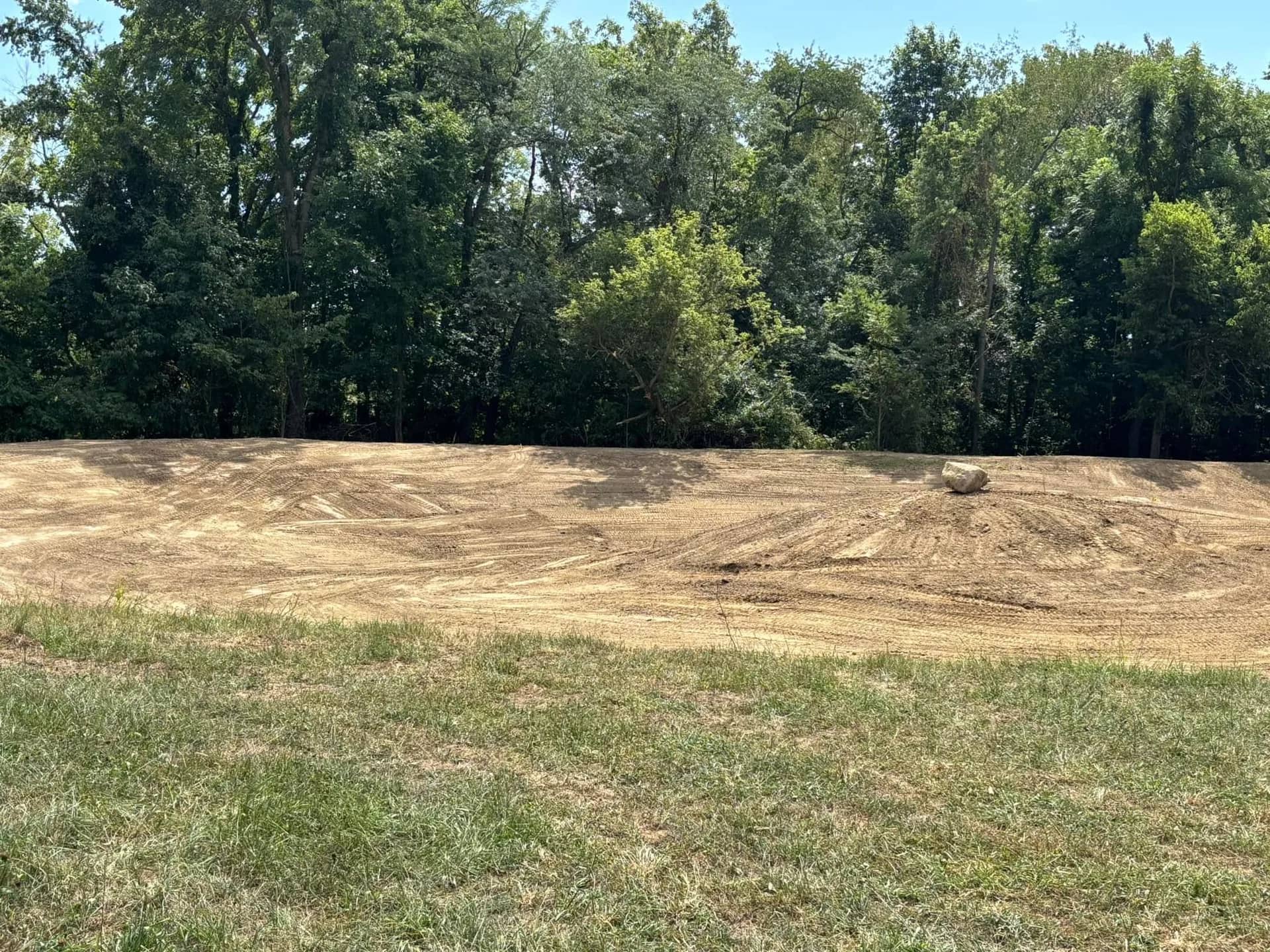
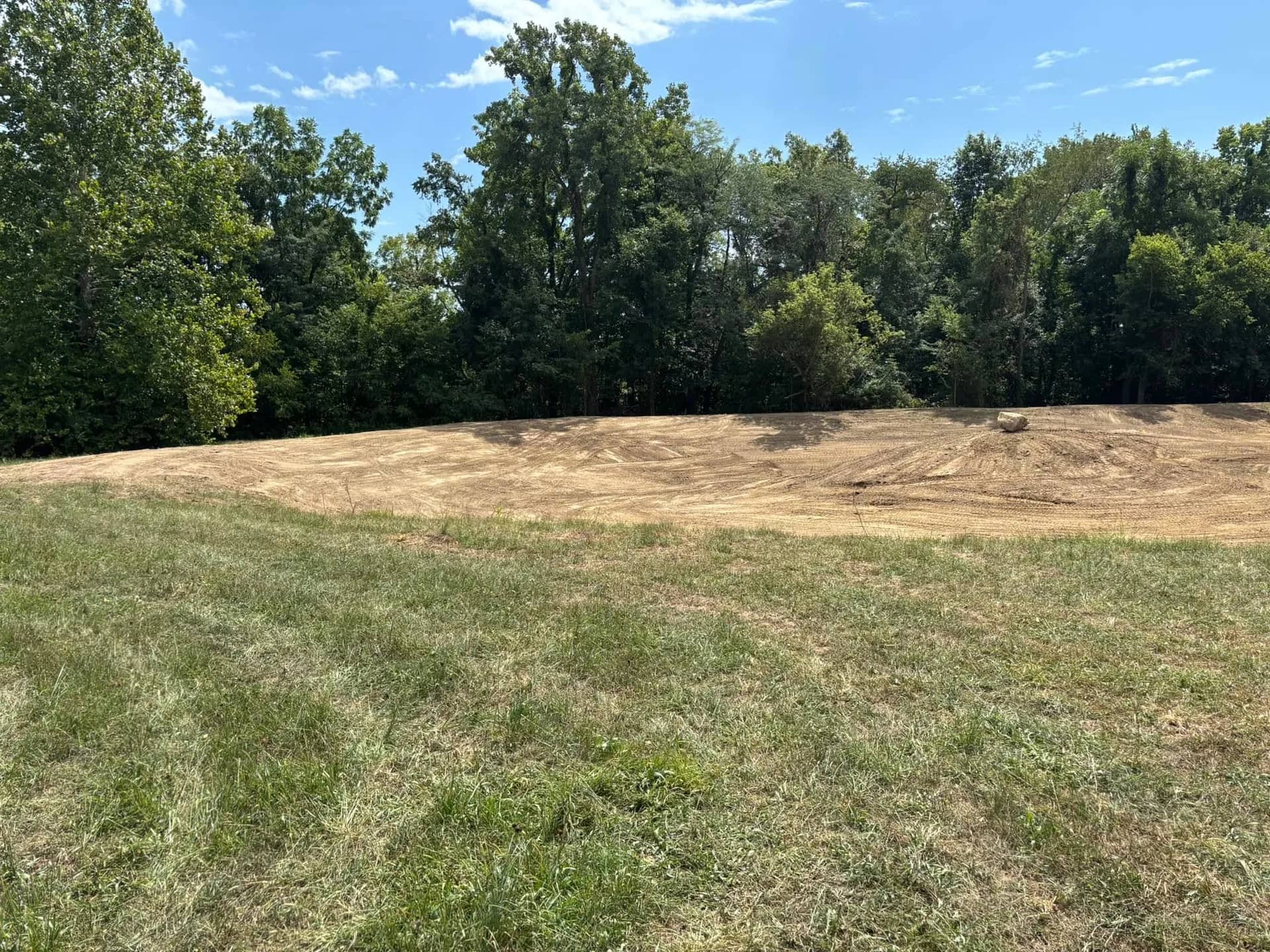
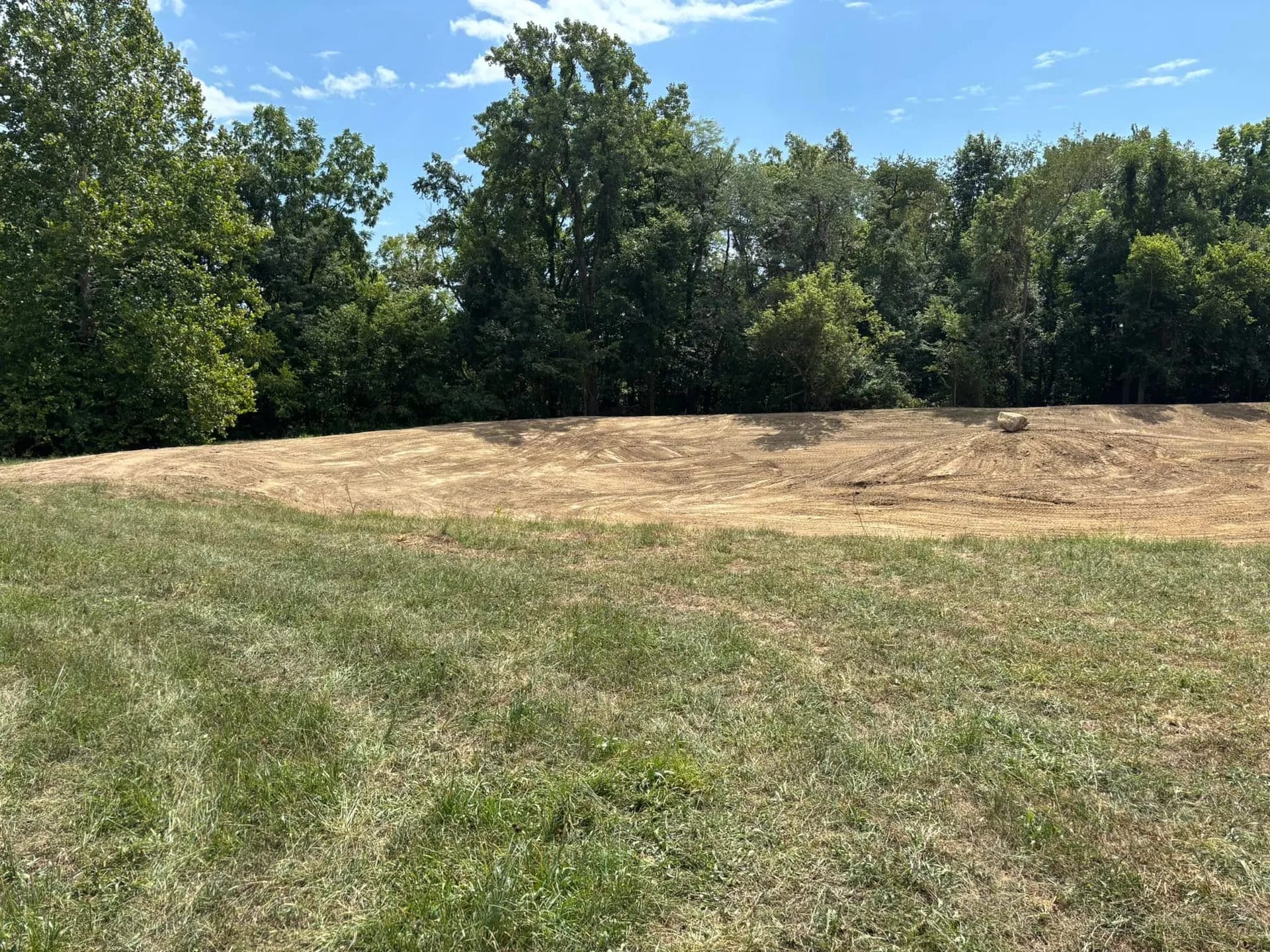
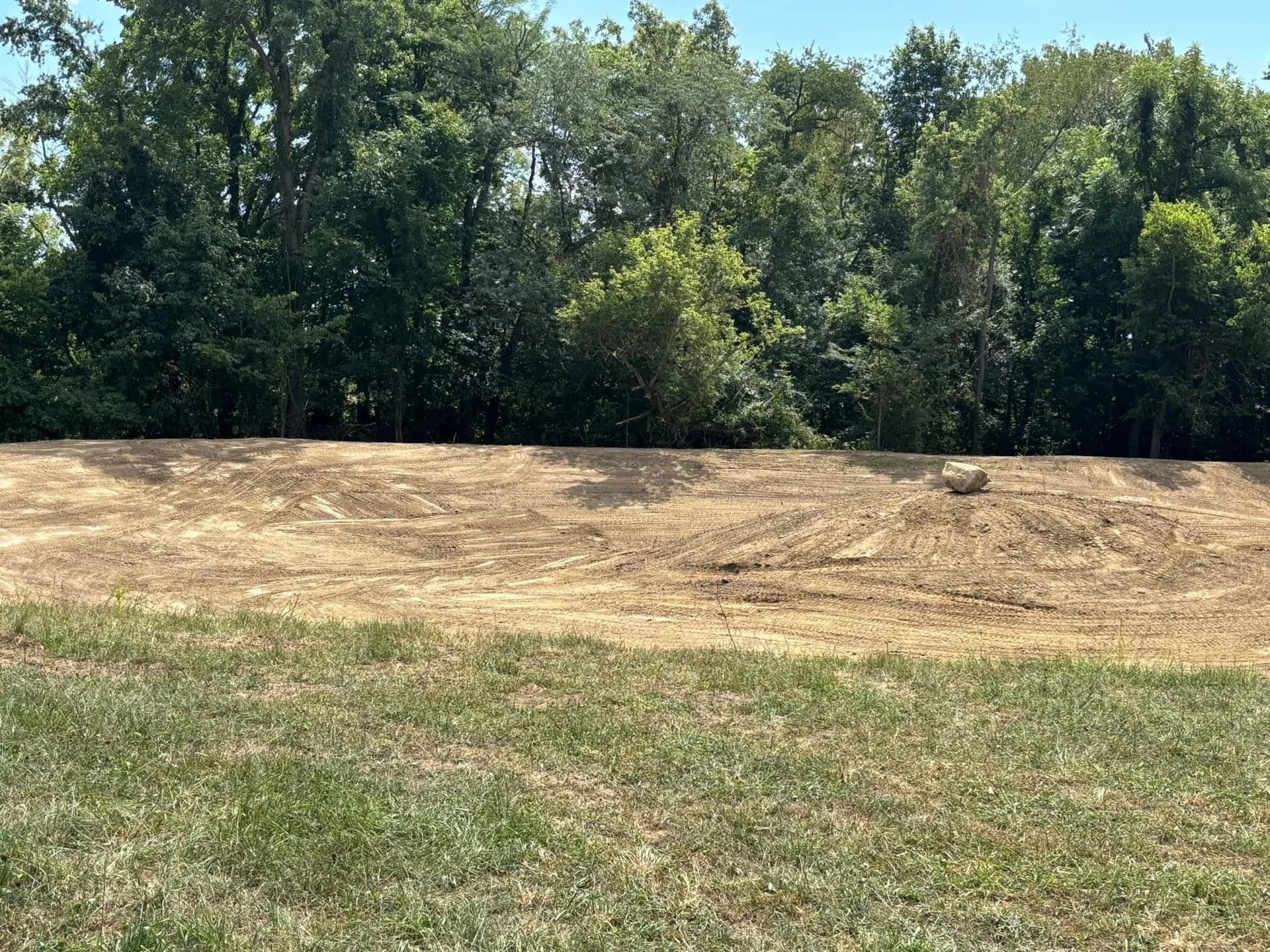
Building site preparation on rural acreage is a different job from getting a lot ready in a subdivision. There's usually timber to take down, a long way for the builder's trucks to travel, and no storm sewer to carry the water off. K&H Excavating is a Rosedale, Indiana excavation contractor run by Kory Stone in Parke County, and house sites in the country are a big part of our site preparation work. Kory clears the land for the house with an excavator and dozer, strips and saves the topsoil, and rough-grades the spot so water runs away from where the foundation will be. Then he lines up the timing with your builder and the basement dig. If you're getting ready to build, call or text Kory at (765) 548-3704 to walk the site.
When to call
Signs It's Time to Start Preparing Land to Build a House
A house builder can't pour footings in a stand of hickory, and most won't schedule you until the site is open and roughly at grade. The longer the site work waits, the more likely it lands in spring, when Terre Haute averages more than 12 inches of rain from March through May and freshly stripped ground turns to soup. Clearing in the frozen months of January through March and grading as the ground dries keeps the builder's start date where you want it.
- You've signed with a builder, and the house spot is still woods or brush.
- You want to keep the best trees around the house and need someone to work carefully near them.
- The spot you like sits low, and water crosses it after a heavy rain.
- The ground you bought was mined or reclaimed years ago, and you're not sure what's under the grass.
- You're building in the hills around Bloomington and have seen sinkholes or round depressions nearby.
- An old house, trailer pad, or barn foundation sits where the new house will go (see concrete demolition).
- You're selling the place in town or retiring to the farm and want the new house site ready before you move.
What's included
What Our Building Site Preparation Includes
Home site preparation on acreage comes down to four jobs done in order: getting trees and roots out, saving the topsoil, shaping the ground so water leaves the house, and setting the site up so the builder and the basement dig can start on time.
K&H clears the site, strips the topsoil, cuts and fills, and rough-grades. If your builder's plan calls for finished stone or pad work, Kory will tell you on the walk-through whether that's part of his quote or goes to your builder.
Clearing Wooded Land for a House
Kory walks the trees with you first and marks the ones you want kept around the house. The rest come out with the excavator, root ball and all, so no stumps are left to rot under the yard or the foundation. The dozer windrows brush, and logs and debris are hauled off on K&H's own trucks. IDEM requires approval before burning tree waste from clearing tied to a change in land use, so piles aren't simply lit on a new house site.
Stripping and Saving the Topsoil
The dark top layer comes off the house footprint, the area around it, and anywhere fill will go. It's soft, full of roots and organic matter, and settles under weight, so it has no business under a house. Kory stockpiles it at the edge of the work area, away from where the builder's trucks will turn around, so it's there to spread back over the yard once the house is up.
A Rough Grade That Moves Water Away From the House
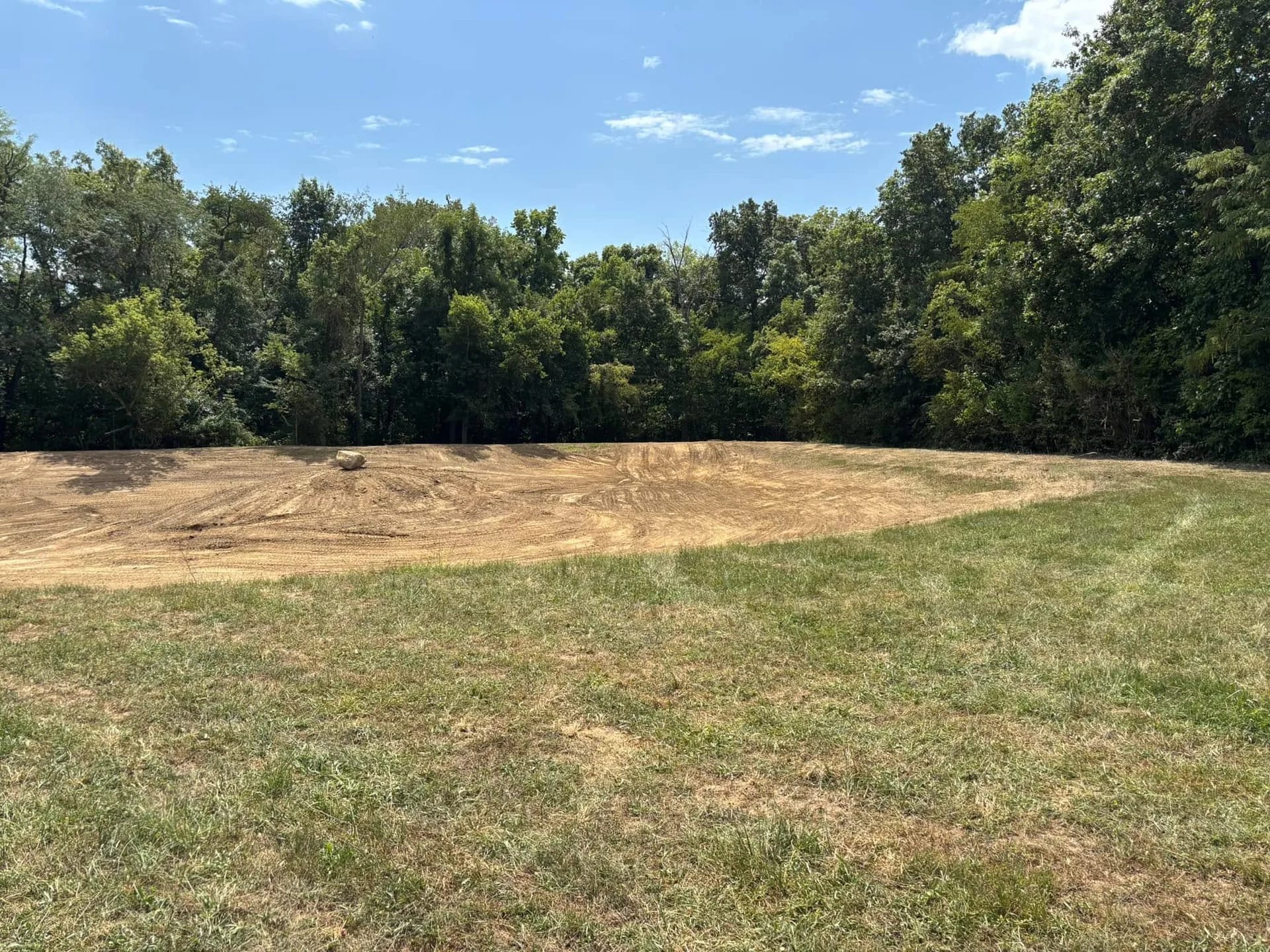
Your builder's plan sets the finished floor height. Kory rough-grades the site to that elevation so the ground falls away from the house on every side, and shapes the uphill side so runoff is turned around the building instead of across it. The final grade, after backfill, is shaped later with the stockpiled topsoil.
Foundation Site Preparation Around the Builder and the Basement Dig
The order on most rural house sites is clear, strip, rough grade, dig the basement or foundation, build, backfill, then spread topsoil back. When K&H also does the basement excavation, the dig spoil is piled where it can go back as backfill. OSHA requires excavated dirt and equipment to stay at least 2 feet back from the edge of an excavation unless retaining devices hold them, and Kory plans the spoil piles with that room built in.
Local ground
The Home Site Problems We See Most in West Central Indiana
IDNR has mapped surface coal mines over about 9.7% of Clay County and 6.8% of Vigo County, much of it now grassed over. IDNR warns that mine spoil is much looser than the original ground and can be very difficult to build on, and that testing and engineering studies should be done before building (IDNR abandoned mine problems). If your house site might be on spoil, Kory will say so on the walk and recommend a soil test before anything is graded.
Monroe County is mostly unglaciated: red clay over limestone, with mapped sinkhole areas covering roughly 7% of the county. INDOT's karst guidance warns that surface water soaking into karst can open soil voids and cause collapse. If you're building in Monroe County, ask Monroe County Planning about local karst and sinkhole rules before grading starts. On these sites, Kory grades so roof and yard water isn't sent toward a sinkhole.
A flat spot near a creek looks easy until the first April storm. IDNR regulates residential construction in the floodway of any stream draining a square mile or more, mapped or not. Kory will point out on the walk-through when a site looks like it may sit in one.
On a single-family lot, IDEM counts nonessential disturbance like ponds and outbuildings toward the one-acre threshold for stormwater permit coverage (IDEM CSGP applicability). A house, a pole barn site, and a pond dug the same season can add up quickly.
Why K&H
Why Rural Homeowners Choose K&H Excavating
Your house site gets graded once, and everything the builder does sits on it.
Kory walks the site with you, marks the trees, runs the machines, and is the one your builder calls with a question. You aren't relaying messages through an office.
Trees and brush from a house site don't get left in a pile at the edge of your yard for you to deal with. K&H has its own trucks to haul it off, so the site is clean when the builder pulls in.
Kory looks at the trees, the slope, and the soil, and gives you a written price at no cost. Calls and texts are answered Monday through Saturday, 8 a.m. to 6 p.m., and texts are welcome after hours.
When K&H also digs the basement, the person who rough-graded the site is the one who knows where the spoil should go and where the topsoil is waiting. Get to know Kory and how K&H works.
How it works
How Our Home Site Preparation Works
Step 1 — Walk the House Site With Kory
Bring your builder's plans or a rough sketch. Kory walks the spot with you, marks the trees you want kept, and checks the slope, wet areas, and truck access. If the ground might be mine spoil or karst, he'll tell you then. Afterward, you get a written estimate.
Step 2 — Set the Dates With Your Builder
Kory talks to your builder about the finished floor elevation, where the house is staked, and when the foundation work starts, so the site is ready that week and not a month early to wash. He places the Indiana 811 locate request at least two full working days before digging. If the work will disturb an acre or more, the permit holder files for IDEM stormwater coverage first.
Step 3 — Clear, Haul, and Strip
The excavator takes the trees and stumps, the dozer windrows the brush, and the trucks haul it out. Topsoil is stripped and stockpiled. Kory keeps the machines on one path in and out and stays outside the root zones of the trees you're keeping as far as the site allows.
Step 4 — Rough Grade to the Builder's Elevation
The dozer cuts and fills the house area to the elevation your builder gave, with fall away on every side and runoff turned around the uphill side. You're welcome to text Kory for a progress check while the grade comes together.
Step 5 — The Final Walk-Around with Kory
You walk the graded site with Kory, and your builder if they can make it: the elevation, the drainage, the topsoil pile, and the access path. From there the site belongs to the foundation and framing work.
How we quote
How Much Does Building Site Preparation Cost in West Central Indiana?
Each house site is priced after Kory walks it, since a cleared hayfield and a wooded hillside are different jobs. The estimate lists what's included, where K&H's work stops, and what's quoted on its own.
Cash, check, and credit card are all accepted.
What changes the price
- How many trees come out, how big they are, and how many keeper trees need careful work around them.
- How much the house area has to be cut down or built up to reach the builder's elevation.
- Whether fill has to be hauled in to raise a low site.
- Topsoil depth and where it can be stockpiled.
- Soft ground, springs, mine spoil, or rock.
- How far the debris has to be hauled.
Quoted separately
- The basement or foundation dig (basement excavation)
- Clearing beyond the house site, such as pasture or a building lot for a shop (land clearing services)
- Soil testing or engineering on mine spoil or karst
- Finished pad or stone work, when the walk-through puts it in Kory's quote instead of your builder's. K&H doesn't build driveways or dig septic or utility trenches.
Related work
Often Paired With Building Site Preparation
Basement Excavation
Once the site is cleared and at grade, the hole for the basement is next, and keeping the same operator means the spoil lands where backfill needs it. The dig is timed to your builder's footing date. See basement excavation and foundation digging.
Land Clearing Services
Many people who build in the country want more than a house spot opened: a view to the road, room for a garden, or old pasture brought back. Doing it while the machines are already there saves a second move-in. See land clearing services with stump removal.
Pole Barn & Shed Site Prep
A shop or machine shed usually follows the house within a year or two, and its site can be roughed in during the same job. Post-frame builders set their own pad specs, so we'll go over those with you. See site prep for a pole barn or shop.
More in Site Preparation: Site Preparation · Pole Barn & Shed Site Prep
Where we work
Building Site Preparation Across the Wabash Valley and West Central Indiana
From K&H's home base in Rosedale, Kory preps house sites within about 50 miles as regular work, and the working radius stretches to about 75 miles, into eastern Illinois. Bloomington is near the far edge. From Rosedale, county roads lead to IN-59 at Brazil, and IN-59 south meets IN-46, which runs east through Spencer into Bloomington. Terre Haute's east side is closer to home, about 10 miles down Rosedale Road and Fruitridge Avenue. Lafayette sits up US-41 and I-74, and Indianapolis is out US-36 past Raccoon Lake.
Home sites change a lot across that drive. North of Terre Haute and through Parke and Putnam counties, most building spots sit on glacial till. In Clay and Vigo counties, old mine ground is the thing to rule out. In Monroe and eastern Owen counties, it's karst. Kory looks for all three on the walk.
Searching for building site preparation near Bloomington or someone to clear a house site outside Terre Haute? We serve Rosedale, Terre Haute, Bloomington, Lafayette, and Indianapolis. See all of K&H's excavation services.
Building outside these towns? Call or text Kory at (765) 548-3704 to check.
Questions
Building Site Preparation FAQ
What does site preparation for building a house include?
At K&H it means taking out trees and stumps, stripping and stockpiling topsoil, cutting and filling to the builder's elevation, and rough-grading so water runs away from the house. Kory times the work with your builder and, if K&H is digging it, the basement. Driveways and utility trenches are separate trades, and Kory will sort out with you on the walk-through whether any finished pad or stone work lands with him or with your builder.
How long does building site preparation take?
It depends on the trees, the slope, and the weather. An open spot in a hayfield goes much faster than a wooded hillside. Kory gives you a timeline with the estimate and works back from your builder's foundation date.
Can you clear land for a house and keep some of the trees?
Yes. Kory marks the keepers with you before any machine moves, then works around them and keeps traffic out of their root zones as much as the site allows. Trees too close to the foundation or basement dig usually can't be saved, and he'll tell you which ones up front.
Do I need a soil test before building on old strip-mine ground?
IDNR says mine spoil is much looser than undisturbed ground and recommends testing and engineering studies before building on it. IDNR's county mine maps show where documented surface mines are, and Clay and Vigo counties have a lot of them. If your house site may be on spoil, Kory will recommend testing before grading, and that testing is quoted separately.
Do I need a stormwater permit to build a house on acreage?
If the house, the driveway, and everything else disturbed adds up to one acre or more, IDEM's Construction Stormwater General Permit applies. On a single-family lot, a pond or outbuilding built at the same time counts toward that acre. Kory will help you size up the disturbed area on the walk-through, and the permit holder files before work starts.
Who will I deal with during the job?
Kory. Kory is on every job himself, so the same person walks the site, runs the machines, and talks to your builder. Call or text him Monday through Saturday, 8 a.m. to 6 p.m., and texts are welcome after hours.
What happens to the trees and brush you clear?
They leave on K&H's trucks. Debris hauled on our own trucks means the house site is clean when your builder shows up, not ringed with brush piles. Kory will tell you where it's going, and if you want any logs kept back for firewood, just say so before clearing starts.
Is the estimate free?
Yes. K&H gives free on-site estimates. Kory walks the house site, checks the trees, slope, and soil, and gives you a written price with the scope spelled out.
Ask Kory About My House Site
Still have a question about building site preparation? Call or text Kory at (765) 548-3704.
Call or text
Ask Kory about building site preparation
(765) 548-3704Calls and texts answered Monday to Saturday, 8 a.m. to 6 p.m. Text a few photos of the property and Kory can give you a head start before the site walk.
Get a free estimateFree estimate
Let's Get Your House Site Ready for the Builder
Tell Kory where the house is going and when your builder wants to start, and he'll walk the site, mark the trees worth keeping, and give you a straight price. Reach him through our contact page, or call or text directly.