Land and sites
Site Excavation in Rosedale, IN
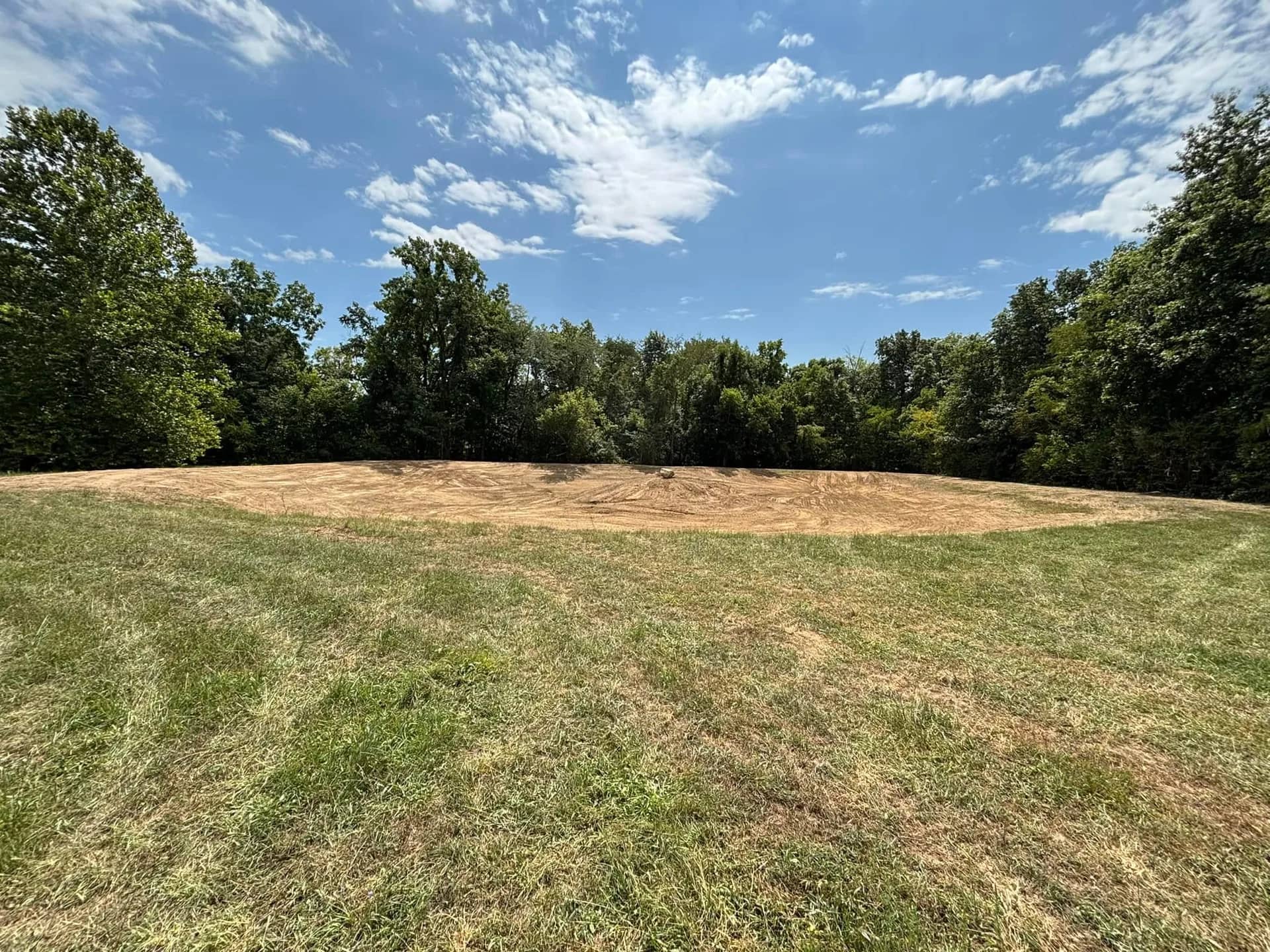
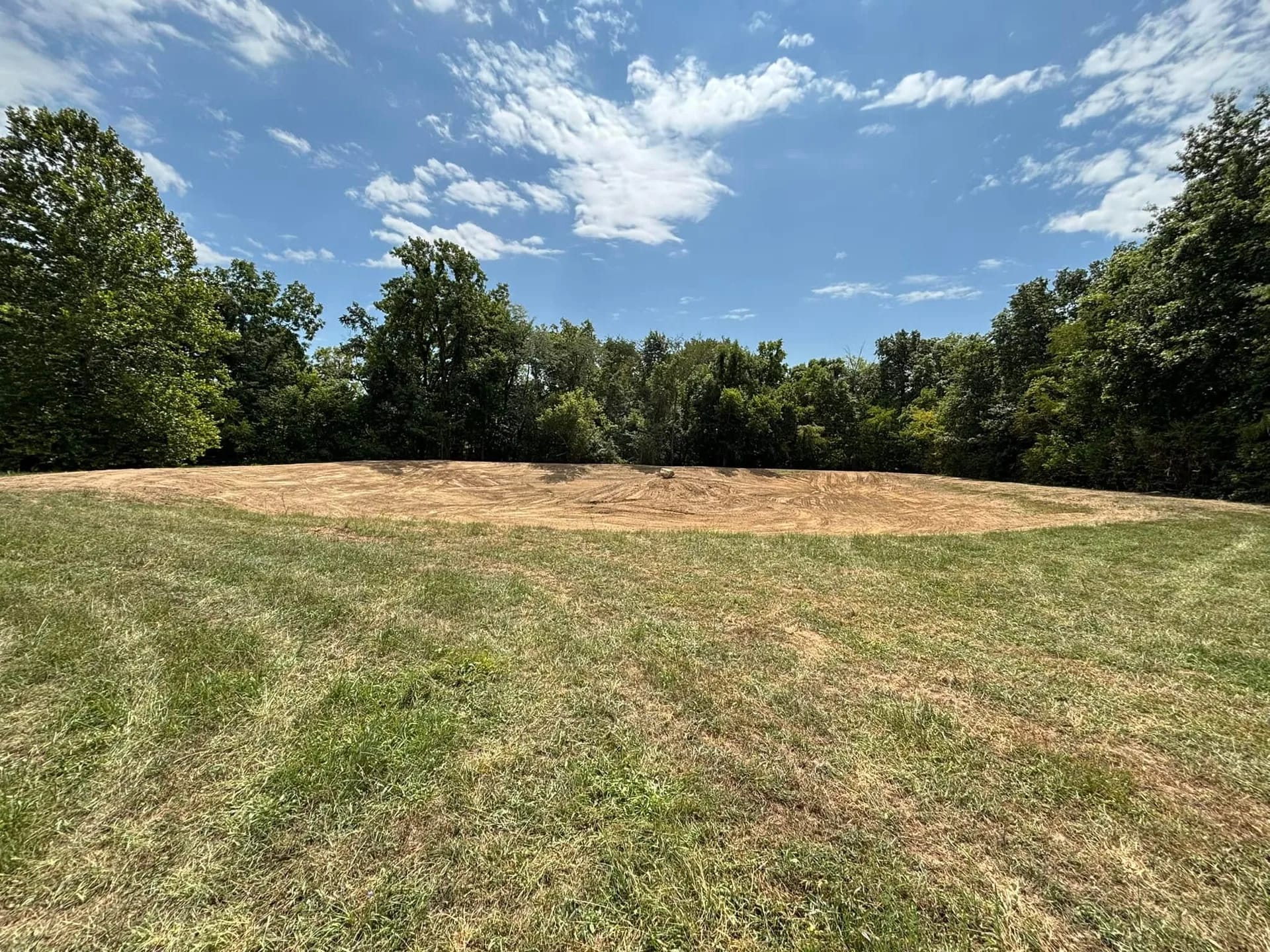
A hill where you want flat ground? A hollow that should be filled? A dirt pile from the last project that nobody ever spread? That's cut-and-fill work, and on a K&H job it starts by saving the topsoil.
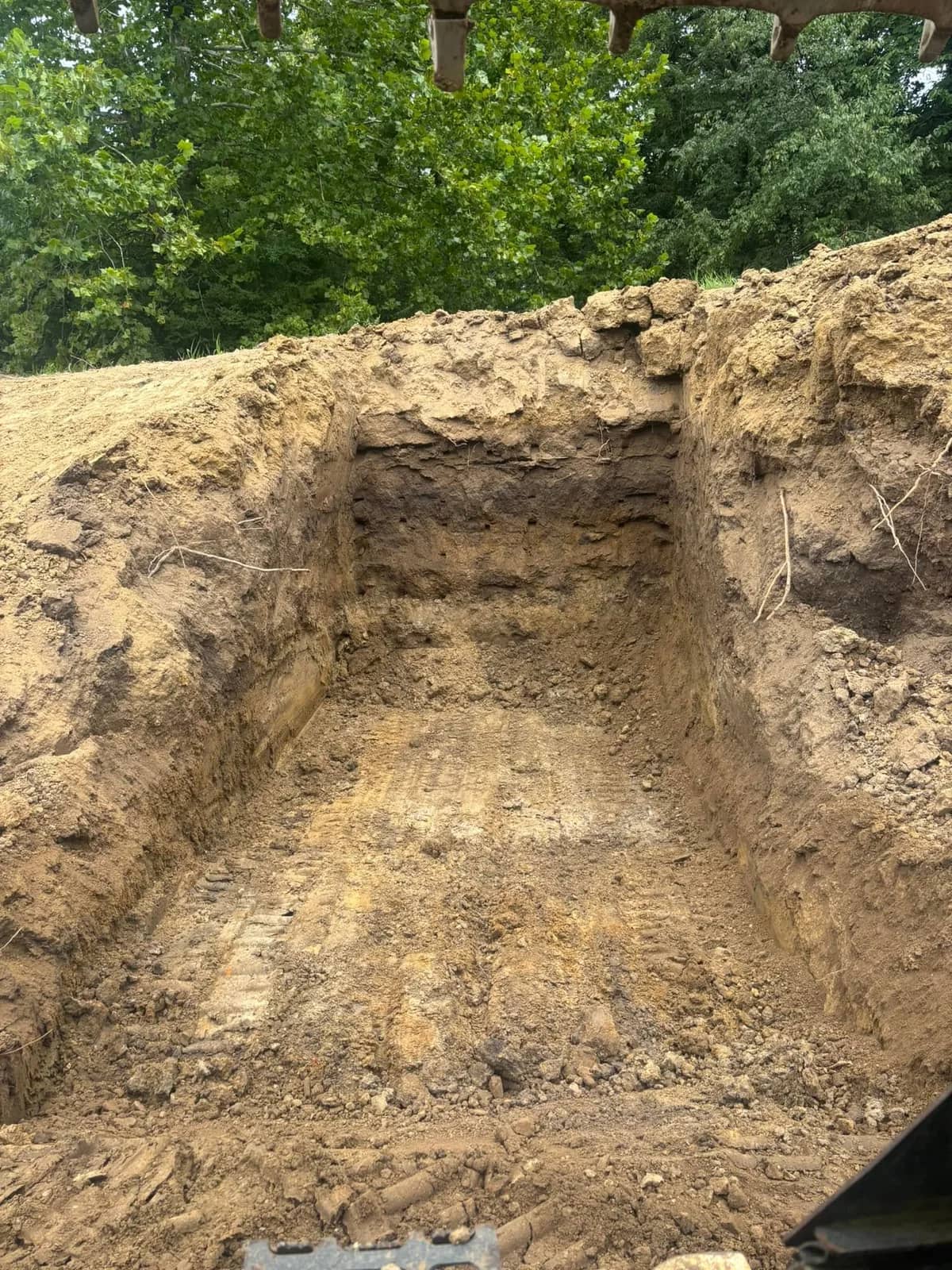
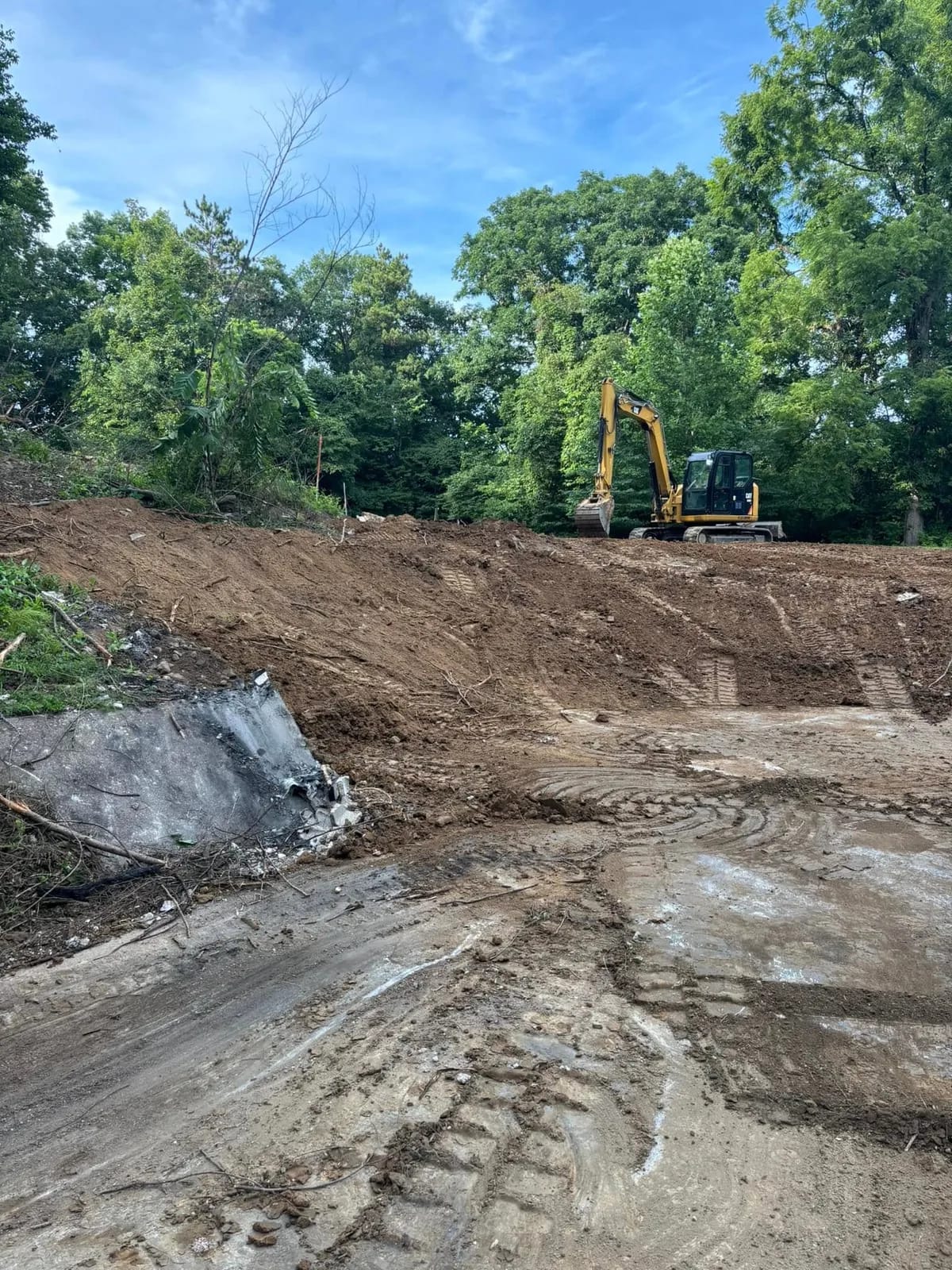
Site excavation is the bulk dirt work under most rural projects. It means cutting high ground down, filling low ground up, stockpiling what you'll need later, and trucking off what you won't. K&H Excavating is an excavating company based in Rosedale, in southern Parke County, and this work is the core of everything K&H does in excavation across the Wabash Valley. Kory Stone runs the excavator and dozer himself. He strips the topsoil before anything else and packs fill in layers, so a house site or yard doesn't sink two winters later. He doesn't dig utility or septic trenches; this page is about moving volume, not digging lines. If you have ground between Terre Haute and Rockville, or farther out, that needs reshaping, call or text Kory at (765) 548-3704 for a free look.
When to call
Signs Your Property Needs Excavation and Grading
Ground that's the wrong shape costs you a little every season. Water stands where it shouldn't, a lane washes out, or a building site sits too low to drain. Every hard rain moves more soil the wrong direction, and fill that was dumped without packing keeps settling. Dirt work goes best in the dry months of summer and fall, so a call in late spring usually lands you on the calendar before the ground is ready.
- Water pools against a building, in a barn lot, or across a lane after every rain.
- A slope is too steep to mow, farm, or build on, and the low ground beside it needs raising.
- A leftover dirt pile is sitting where you'd rather have grass.
- Runoff has cut a gully that gets deeper every spring.
- You're planning a house, shop, or ag building, and the site has to be cut or filled first.
- You've bought acreage and want the yard, equipment area, or lot shaped before you move in.
- Old fill on the property was never packed, and whatever sits on it is sinking.
What's included
What Our Site Excavation Includes
On a K&H job, site excavation means taking your ground from the shape it is to the shape you need, with the soil kept in the right layers along the way.
Topsoil Comes Off First
Before the first cut, the dozer peels back the topsoil and pushes it into a stockpile of its own, away from the subsoil. Topsoil is the thin, dark layer that grows grass and crops, and once it's buried under clay fill it's gone for good. Keeping it separate lets Kory spread it back over the finished grade, so the job greens up instead of staying a bare clay patch. Stockpiles go where they won't block drainage or your field access.
Cut and Fill in Packed Layers
The excavator cuts the high ground and loads it, and the dozer carries or spreads it into the low ground in thin layers, tracking each one down before the next goes on. Stumps, roots, and sod stay out of the fill. Indiana's highway specifications bar stumps and roots from embankments, and buried wood rots out and leaves voids under a yard just the same. Moisture matters too. A simple field check from the NRCS pond handbook is whether a handful squeezes into a firm ball with no free water.
Stockpiles, Spreading, and Hauling
Not every yard of dirt has a home on site. Extra material gets stockpiled for a later project, spread thin along a field edge, or loaded and hauled away on K&H's own trucks. Piles stay at least 2 feet back from any open cut, the minimum OSHA's excavation rule, 1926.651, sets when no retaining device is used, so nothing slides back into the hole. Hauled dirt goes where you and Kory agree.
Drainage Swales and Grassed Waterways
Where runoff needs a path, Kory can shape a broad, shallow swale or grassed waterway to carry it without cutting a gully. Purdue Extension advises that water should enter and leave your property at the same points it did before construction, to stay clear of Indiana drainage law. A swale moves water across your ground, not onto a neighbor's. IDEM treats grassed waterways built as farm conservation practices as exempt from its construction stormwater permit.
Local ground
The Dirt Problems We See Most in West Central Indiana
Sullivan County is about 11% old surface-mine ground, Clay close to 10%, and Vigo close to 7%. In IDNR's words, those crushed spoils are much looser than the original materials, which makes them hard to build on. Kory asks about mining history and digs a test hole before he tells you a fill will stay put. If a building is going on it, that answer shapes the site preparation plan.
April and May bring about 4.7 inches of rain each at Terre Haute. A fresh cut or an unseeded fill left open into spring sheds soil into ditches and onto the next field. Disturb an acre or more, and IDEM's Construction Stormwater General Permit applies, with a stormwater plan and erosion controls (IDEM construction stormwater permitting). Kory will tell you on the walk-through if your job is likely to cross that line.
If your field drains through buried tile, a cut or fill that crosses a line can crush it or bury its outlet, and a dry field turns wet the next spring. Kory asks where your tile runs before the first cut.
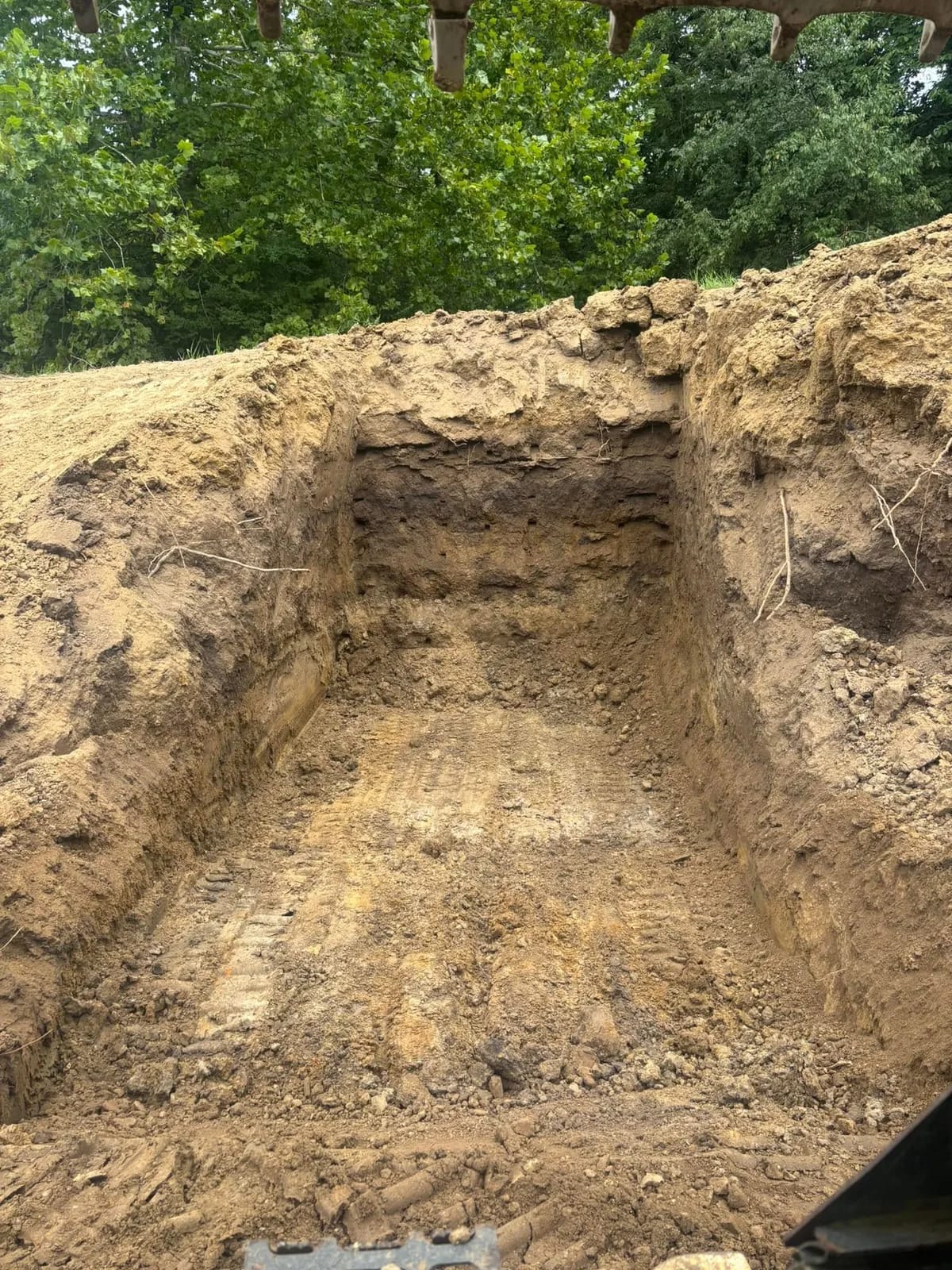
Dense glacial till, mine spoil, and creek-bottom sand each behave differently in a cut, and any of them can slough off after a week of rain. OSHA requires protection for anyone working in an excavation 5 feet or deeper, such as sloping the walls back. On a grading job, Kory lays finished slopes back flat enough to mow and hold grass. When a pond is the best place for extra dirt to come from, see pond excavation and enlargement.
Why K&H
Why Landowners Choose K&H for Land Excavation
Land excavation on rural property means soft lanes, cattle gates, and fields that have to grow something next year. Here's how K&H handles that.
The same person prices the job, runs it, and answers for it. Kory runs the excavator and dozer on your cut and fill, so the grades he described on the walk-through are the grades he's setting from the seat.
Moving a few hundred yards with a skid steer means a lot of small trips. An excavator loads in big bites, and a dozer spreads and packs a wide pass at a time.
When dirt has to leave, K&H loads it onto its own trucks instead of waiting on a hired hauler. The excavator keeps loading instead of sitting idle between trucks.
Kory's family farms in Parke County, so he plans the truck route around wet spots, hay ground, and cattle gates, and he closes what he opens. The Indiana PLA's professions list has no board for excavating contractors, so the document worth asking any contractor for is a certificate of liability insurance. See how Kory got into excavation and what K&H takes on.
How it works
How a K&H Cut-and-Fill Job Works
Step 1 — Kory Walks the High Spots and Low Spots
Kory meets you on the property and looks at where the dirt is now, where it needs to go, and where water runs today. He checks the soil with a shovel or a test hole, asks about tile and buried lines, and picks the route the machines and trucks will use. Afterward, you get a written estimate with the work laid out.
Step 2 — Locates, Stakes, and Grade Targets
Kory places the Indiana 811 locate request at least two full working days before digging, as state law requires. Then he stakes the cut and fill areas and sets the finished elevations. If more than an acre will be disturbed, this is when the stormwater permit question comes up. Kory will tell you what's likely needed, and the landowner or permit holder files it.
Step 3 — Strip and Stockpile the Topsoil
The dozer pushes the topsoil off the whole work area into its own pile, set where it won't wash or block a lane. Doing this first keeps the good soil from getting mixed into the fill, where it would rot, settle, and be lost.
Step 4 — Cut, Fill, Pack, and Haul
The excavator digs the high ground and loads trucks or the dozer, and fill goes down in thin, packed layers. Extra dirt is stockpiled, spread, or hauled away on K&H's trucks. Questions mid-job? Text Kory and he'll get back to you.
Step 5 — The Final Walk-Around with Kory
With the excavation and grading done, the topsoil goes back on and the ground is left ready for your seed. Then you walk the job with Kory: the finished grades, where water will go in the next storm, and anything you want touched up before the machines leave.
How we quote
How Much Does Site Excavation Cost in West Central Indiana?
Kory prices site excavation after he's seen the ground, because the cost follows cubic yards and conditions more than anything else. That walk-through is free, and it's how you get a real number instead of a guess.
Here's how the volume adds up, as plain arithmetic rather than a quote. A cubic yard is 27 cubic feet. Cutting a 60-by-120-foot area down an average of 2 feet removes 14,400 cubic feet, or about 533 cubic yards. Dirt also swells when it's dug, so hauling it takes more truckloads than the hole's volume suggests.
K&H doesn't do trenching or driveways. Payment is cash, check, or credit card; ask Kory about other options when he quotes the job.
What changes your excavation cost
- Cubic yards cut and filled, and how far the dirt travels on site.
- Haul-off versus spreading on your property.
- Soil type and moisture. Wet clay and mine spoil take longer to dig and pack.
- How hard the fill has to be packed. A building site needs more compaction than a field low spot.
- Access, timber in the way, and soft ground for the machines.
- Erosion control and the IDEM permit on jobs that disturb an acre or more.
Quoted separately
- Clearing trees and stumps first (land clearing)
- Breaking out old concrete or tearing down buildings (demolition)
Related work
Often Paired With Site Excavation
Site Preparation
Once the dirt is balanced, a building site still needs clearing and rough grading to the builder's plan. That usually follows right behind the cut and fill. See site preparation for homes and ag buildings.
Basement Excavation
Cutting a house site and digging the basement can happen on the same trip. The basement's subsoil then becomes backfill and yard fill instead of a haul bill. See basement excavation for rural homes.
Pond Excavation & Enlargement
Need fill? A pond dug on the same property can supply it, and deepening an existing pond does two jobs at once. See pond excavation and enlargement.
More in Excavation: Excavation · Basement Excavation
Where we work
Site Excavation Across the Wabash Valley and West Central Indiana
K&H runs out of Rosedale in southern Parke County and handles dirt work within about 50 miles as everyday work, with bigger jobs up to about 75 miles out, eastern Illinois included. Terre Haute is about 16 miles down US-41, and from there I-70 heads east past Brazil into Clay County. IN-163 crosses the Wabash west toward the Illinois line, US-41 heads north to Rockville, and US-36 carries the equipment east through Bainbridge and Danville toward Indianapolis. Lafayette and Bloomington sit out near the edge of the 75-mile range. The core radius covers Vigo, Clay, Parke, Vermillion, and Putnam counties.
Soils change with the county. Wind-blown loess and dune deposits cover about 44% of Vigo County and a third of Clay, the flat till plain takes over in Montgomery County and points north, and old mine ground runs through Clay, Vigo, and Sullivan. Searching for site excavation in Terre Haute, or dirt work closer to Bloomington or Indianapolis? We serve Rosedale, Terre Haute, Bloomington, Lafayette, and Indianapolis. See all of K&H's excavation services.
Not sure if your property is in range? Call or text Kory at (765) 548-3704.
Questions
Site Excavation FAQ
What's the typical excavation cost for a cut-and-fill job?
It depends on how many cubic yards move, how far they travel, and whether any leave the property. Kory prices it after he has walked the ground and seen the soil. Wet ground, mine spoil, and long hauls push the price up, and spreading dirt on site keeps it down. The estimate is free, so you'll know the number before work starts.
What's commercial excavation cost per cubic yard?
K&H doesn't publish a flat per-yard rate, because a yard of dry upland till spread 100 feet away costs far less to move than a yard of wet clay trucked off the property. For commercial and larger jobs, ask Kory how he'd price yours once he's seen the site. The volume math is simple: length times width times average depth in feet, divided by 27.
How long does site excavation take?
Kory sets out a realistic schedule on the walk-through, since volume, haul distance, and weather decide how many days the machines need. Summer and fall are the fastest months, because dry ground digs and packs cleanly. A week of rain can stop work until the soil firms up.
Do you dig trenches for water lines, electric, or septic?
No. Trenches for water, power, or septic aren't K&H work, and neither are driveways. Site excavation at K&H is bulk earthwork: cutting, filling, stockpiling, hauling, and grading. Kory can tell you on the first call whether your project fits.
Can you haul dirt off or bring fill in?
Yes to hauling off. Dirt hauled on our own trucks means K&H isn't waiting on a hired hauler to keep the job moving. Bringing fill in depends on the job and on what's available nearby. Often the cheaper answer is balancing the cut and fill on your own property.
Do you do residential excavation, or just farms?
Both, as long as it's real dirt work. Residential excavation at K&H is mostly house sites, yards, and outbuilding areas on rural acreage. It's the same setup either way: Kory on every job, with excavators and dozers — no skid steers.
Do I need to be home while you work?
Not usually. Most landowners meet Kory for the site walk, check in by text while the work goes on, and come back for the Final Walk-Around with Kory. Just make sure gates, livestock, and any buried lines or tile are covered before the first day.
Ask Kory About My Dirt Work
Still have a question about site excavation? Call or text Kory at (765) 548-3704.
Call or text
Ask Kory about site excavation
(765) 548-3704Calls and texts answered Monday to Saturday, 8 a.m. to 6 p.m. Text a few photos of the property and Kory can give you a head start before the site walk.
Get a free estimateFree estimate
Let's Get Your Ground Shaped to Drain and Build On
Show Kory where the dirt is and where you want it. He'll come look, dig a test hole if it helps, and lay out the work and the price in plain terms, free. Reach him through our contact page, or call or text directly.