
Land and sites
Excavator Land Clearing Services in Rosedale, IN
Pasture gone to timber? Woods you want turned into crop ground? Here's what K&H does with every tree, stump, and root on your tract, and where all of it ends up.
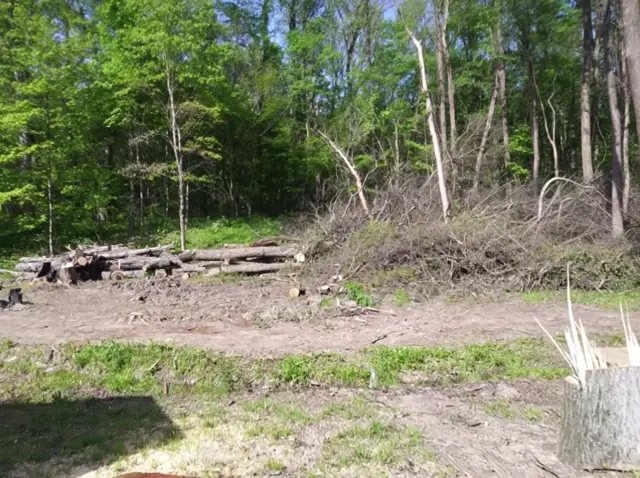
Land clearing services at K&H Excavating come down to a handful of specific jobs: taking trees down with an excavator, extracting stumps with the root ball, pushing brush into windrows with a dozer, and deciding whether the debris gets burned, buried, or hauled. Owner Kory Stone handles all of it from Rosedale in Parke County, where cattle, hay, and row crops share the land with a lot of grown-up woods. Most tracts need two or three of those scopes, and the mix sets the price. For the bigger picture of how K&H takes on acreage, see our land clearing overview, or start at the Rosedale excavating contractor homepage. To have Kory walk your ground, call or text (765) 548-3704.
When to call
Signs It's Time for Clearing Trees for Pasture or Cropland
Ground going back to woods costs more to reclaim with every season it's left. A sapling that pulls in one bucket pass becomes a tree whose roots take real digging, and the shade under it kills the grass your cattle were eating. Kory's best clearing window is January through March, when the ground is frozen and carries the machines. A call in the fall gets your tract on the list before the ground locks up.
- A pasture that used to carry cattle is now half shade and briars.
- You're clearing land for agriculture: turning woods into crop ground, or opening up acres a neighbor will farm.
- Dead or storm-broken trees are leaning over fence lines, lanes, or the hay barn.
- Stumps from an old logging job keep catching the mower and the disk.
- You're closing on a building lot and the builder needs the trees and stumps out first.
- A line of trees stands where you want a new pond, barn, or farm lane.
What's included
What Our Land Clearing Services Include
Each scope below is a separate line on your estimate, so you can see what you're paying for and drop what you don't need.
Tree Removal With an Excavator
With an excavator, nobody has to stand under the tree. Kory pushes it over with the boom, controls which way it goes, and moves it to the pile. That's how K&H handles tree removal and land clearing near fences, buildings, and trees you want to keep: each tree goes where Kory sets it, not where it happens to fall. A thumb helps when the job calls for one, since Caterpillar describes it as the attachment that turns a digging excavator into a material handler. Trackhoe clearing trees this way brings the roots up with the trunk, which saves digging later.
Stump Extraction, Root Ball and All
Land clearing stump removal at K&H means extraction, not grinding. Kory digs around the stump, cuts the side roots with the bucket, and lifts the stump out with its root ball. Then the hole is backfilled and packed. INDOT's road specifications only let a sound stump stay if it sits at least 3 feet below finished grade, never inside fill, and stump holes must be backfilled and compacted (INDOT Standard Specifications, Section 200). It's a good rule for farm ground too.
Dozer Push-and-Windrow
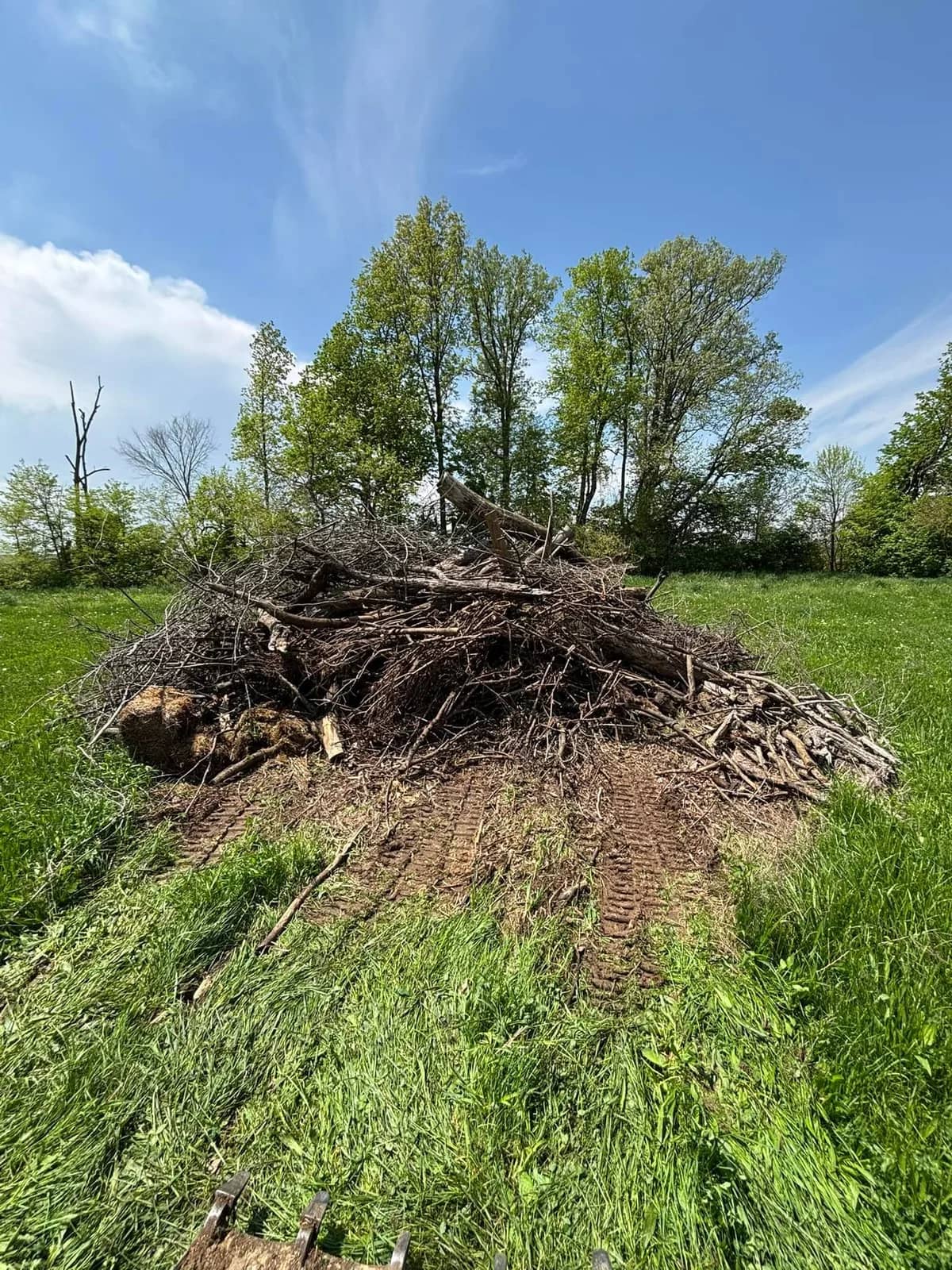
On open blocks of brush and small trees, the dozer is faster than the excavator. Kory pushes material into long windrows, with a root rake on the blade where the job calls for one. Rake makers build them to pull roots, rocks, and branches while disturbing as little soil as possible. NRCS Practice Standard 460 notes that windrowing can lessen the impact on wildlife, and it keeps piles at least 100 feet from woodland, buildings, and roads.
Burn, Bury, or Haul
Every pile needs a way out. IDEM exempts maintenance burning of farm vegetation in an unincorporated area from prior approval, as long as the fire is attended and kept out of high wind, but clearing for a change in land use, such as development, needs approval first. Clearing woods for new cropland doesn't fit neatly in either box, so it's worth a call to IDEM before anything is lit. Burying is the option to be careful with. Virginia Cooperative Extension warns that a backfilled burn-and-bury hole can develop sinkhole properties, so buried debris has to stay away from anything that will be built on or dammed. Hauling sends the logs and stumps off on K&H's own trucks.
Local ground
The Clearing Mistakes We See Most in West Central Indiana
Virginia Cooperative Extension puts it bluntly: bulldozer clearing "nearly always destroys the topsoil," and in many areas there are at best a few inches of it to begin with (VCE 465-341, Options for Clearing Land). The same publication says an excavator and root rake disturb less, though no method saves all of it. K&H limits the loss by pulling trees with the excavator and shaking dirt off the root balls before they're piled, pushing with a root rake rather than a straight blade where the job allows, and working soft ground only when it's frozen. On building sites, topsoil can be stripped and stockpiled before stumps come out.
Cutting trees and leaving stumps gives you a pasture you can't mow and sprouts you'll fight for years. Virginia Cooperative Extension recommends treating cut hardwood stumps with herbicide soon after cutting to stop resprouting. Pulling the stump takes the main problem out of the ground, but walk the field the first season and deal with any sprouts early.
If the cleared ground will carry a lane, a building, or a farm pond dam, stumps and roots can't go into it. They rot, and the fill above them settles.
IDNR's surface-mine maps show roughly a tenth of Clay County and about 7% of Vigo County has been surface-mined, and plenty of that ground has grown back to trees. It clears like any other woods, but IDNR warns that mine spoil is much looser than undisturbed ground. Plan on testing before you build on it.

Why K&H
Why Farmers Choose K&H Excavating for Tree Clearing Services
Lots of outfits offer tree clearing services. These are the reasons the work comes out different at K&H.
Extracting a stump takes an excavator with the weight to lift a root ball, and windrowing takes a dozer. That's the equipment K&H clears with. K&H doesn't sell skid-steer mulching, which typically leaves the roots in the ground.
K&H owns its trucks, so logs and stumps can leave your property on K&H's schedule instead of a hired hauler's.
Kory walks every scope with you before he puts a number on it, at no charge. He takes calls and texts Monday through Saturday, 8 a.m. to 6 p.m., and answers texts after hours.
Kory's family has run cattle and hay in Parke County, so he clears pasture thinking about fence lines, water, shade trees worth keeping, and where the cows will walk. See how Kory's farm background shapes K&H's work.
How it works
How Our Land Clearing Services Work
Step 1 — Flag the Keepers With Kory
You and Kory walk the tract and tie flagging on every tree you want left: shade trees in the pasture, a windbreak, a fence-row oak. He marks fences, tile outlets, and wet spots, then picks the scope for each area: careful single-tree work, stump extraction, or dozer windrows. After the walk, he writes up an estimate broken out by scope.
Step 2 — Locates, Timber, and Approvals
Stump extraction is digging, so Kory places the Indiana 811 request at least two full working days before work starts. If the woods hold timber worth selling, talk to a forester before clearing so it's harvested first. If the clearing is for development, the landowner or developer files for IDEM burn approval before any pile is lit, and Kory flags on the walk-through whether your job is likely to need it.
Step 3 — Trees Down and Stumps Out
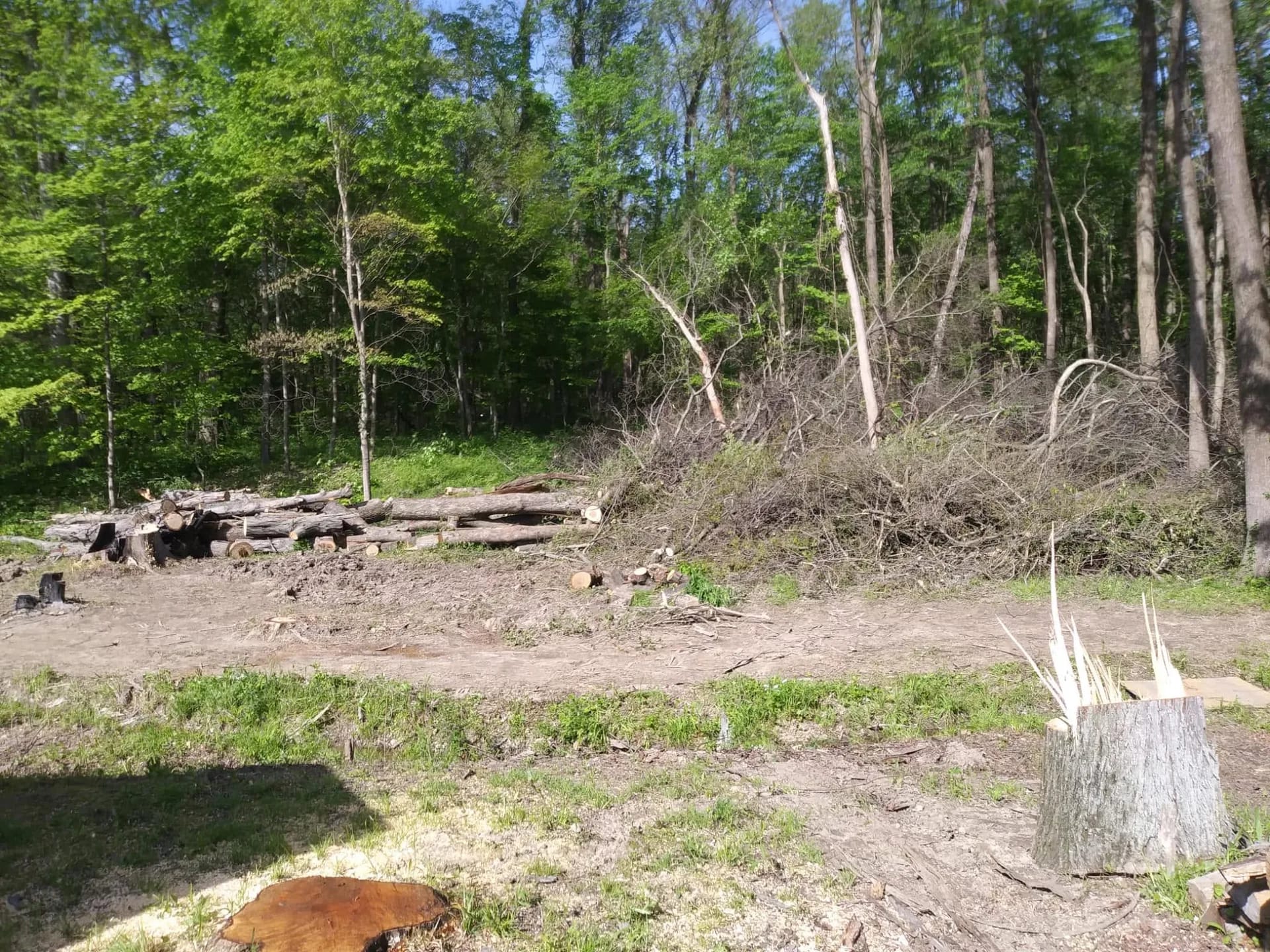
Kory works from the edges you're keeping inward, laying trees over with the excavator and lifting stumps as he goes. Soil is shaken off the root balls before they hit the pile. Text him any time you want to know where things stand.
Step 4 — Windrow, Burn, or Load Out
The dozer pushes brush into windrows set a good 100 feet or more off the woods, buildings, and roads. Piles are burned where that's allowed, or loaded onto K&H's trucks and hauled off. Stump holes are filled and packed as the area is closed out.
Step 5 — The Final Walk-Around with Kory
Kory picks roots off the surface and smooths the ground with the dozer. Then you walk it together: the keepers, the fence lines, the filled holes, and the finish you asked for. You'll know what to watch for the first spring, and the ground is ready to seed, graze, or build on.
How we quote
How Much Do Land Clearing Services Cost in West Central Indiana?
K&H prices clearing after Kory walks the tract, broken out by scope so you can see what each part costs. Two tracts the same size can price very differently once you count the stumps, the keepers, and the disposal plan.
Payment is by cash, check, or credit card.
What changes the price
- How many trees need careful work near fences, buildings, or keepers.
- Stump count and size, and whether every stump has to come out.
- Acres of open brush the dozer can push into windrows.
- The disposal choice: burning on site, or loading and hauling, and how far.
- Topsoil handling, if it's stripped and stockpiled before grubbing.
- The finish: grazing-ready, crop-ready, or rough-cleared for a builder.
Quoted separately
- Spreading topsoil and rough grading for a house or barn site (site preparation)
- Tearing down an old house, barn, or corn crib on the tract (demolition)
- Seeding, fence building, and herbicide on resprouts (talk these over with Kory on the walk-through)
Related work
Often Paired With Land Clearing Services
Once the big trees and stumps are out, one of these usually comes up.
Brush & Underbrush Clearing
Clearing the field often shows how bad the woods next to it have gotten. Honeysuckle and autumn olive in the remaining timber and fence rows are their own job, best done late fall through winter. See honeysuckle and autumn olive removal in woods and fence rows.
Building Site Preparation
A cleared, stump-free house site is ready for its next step: topsoil set aside, ground rough-graded so water runs away, and room for the basement dig. See building site preparation on rural acreage.
Farm Pond Construction
Clearing a draw for cattle water? Pull the trees and stumps in winter, and the dam and basin can be built in summer, when the ground is dry enough to compact. See farm pond construction for livestock water.
More in Land Clearing: Land Clearing · Brush & Underbrush Clearing
Where we work
Land Clearing Services Across the Wabash Valley and West Central Indiana
Home base is Rosedale, just north of the Vigo County line. Most clearing jobs fall within about 50 miles, and Kory will travel out to about 75 miles for larger tracts, including into eastern Illinois. Terre Haute sits roughly 16 road miles down US-41. Heading west, IN-163 crosses the Wabash at Clinton and runs to the state line toward Paris, Illinois. To the southeast, county roads reach IN-59 at Brazil, the Clay County seat. For Indianapolis, it's I-70 east from Terre Haute or US-36 through Danville, and Lafayette is up US-41 to I-74.
The ground shifts as you go. The edge of the last glacier passes within about 2 miles of Rosedale, so one farm may sit on dense glacial till and the next on sandy outwash or creek-bottom alluvium. That affects how much topsoil there is to save and how soon the ground firms up after a thaw.
Need tree clearing near Terre Haute, or stumps pulled on acreage outside Bloomington? We serve Rosedale, Terre Haute, Bloomington, Lafayette, and Indianapolis. Browse all of K&H's excavation services.
Wondering if your tract is in range? Call or text Kory at (765) 548-3704.
Questions
Land Clearing Services FAQ
What do your land clearing services include?
K&H offers four scopes: tree removal with an excavator, stump extraction with the root ball, dozer push-and-windrow, and debris disposal by burning or hauling. Kory finishes by filling stump holes and smoothing the surface. Most tracts mix scopes, and the estimate breaks each one out. Seeding and fencing aren't part of the clearing estimate.
Do you grind stumps or pull them?
K&H pulls them. Kory digs around the stump, cuts the side roots, and lifts it out with the root ball, then backfills and packs the hole. The rule at K&H is excavators and dozers — no skid steers — and a pulled stump doesn't leave its roots behind. Pulled stumps go to the burn pile or onto the truck.
How do you clear trees for pasture without ruining the ground?
Topsoil on wooded ground is often thin, and Virginia Cooperative Extension says bulldozer clearing nearly always destroys it. Kory pulls trees with the excavator where he can, shakes dirt off the root balls, pushes with a root rake instead of a straight blade where that fits, and works soft ground only when it's frozen. None of that saves every inch, but it keeps far more topsoil on the field than pushing everything with a blade.
Can I bury the stumps on my property?
Sometimes, but not anywhere you'll build, fill, or dam. Buried stumps rot and the ground above them sinks, and INDOT bans stumps and roots from road fill for that reason. Virginia Cooperative Extension also warns that backfilled burn-and-bury holes can develop sinkhole properties. If you're considering burying, raise it on the walk-through so any spot you pick stays well away from anything you plan to build.
What happens to the logs and brush?
That's set on the walk-through. Farm brush in an unincorporated area can often be burned on site under IDEM's maintenance-burning conditions, while clearing for development needs IDEM approval first. Otherwise it's debris hauled on our own trucks. If you want firewood or saw logs set aside, tell Kory before work starts.
How long does a clearing job take?
It depends on acres, tree size, and the disposal plan, and Kory will give you a realistic timeline once he's walked the tract. Weather matters as much as size. Frozen winter ground lets Kory work steadily, while a thaw or a wet spring can stop the machines for days to protect the soil.
Do you charge to come look at my property?
No. K&H gives free on-site estimates. Kory walks the tract, flags the keepers with you, and then writes up the estimate by scope.
Ask Kory About My Clearing Job
Still have a question about land clearing services? Call or text Kory at (765) 548-3704.
Call or text
Ask Kory about land clearing services
(765) 548-3704Calls and texts answered Monday to Saturday, 8 a.m. to 6 p.m. Text a few photos of the property and Kory can give you a head start before the site walk.
Get a free estimateFree estimate
Let's Turn Grown-Up Ground Back Into Pasture and Fields
Send Kory a text with your acreage, what's growing on it, and what you want it to become. He'll come walk it, flag the keepers with you, and give you a price by scope. You can also reach us through the contact page.