Land and sites
Site Prep for Pole Barns and Ag Buildings in Rosedale, IN
Putting up a machine shed, a hay barn, or a big shop? A post-frame building only stays square and dry if the ground under it is level, firm, and higher than the field around it.
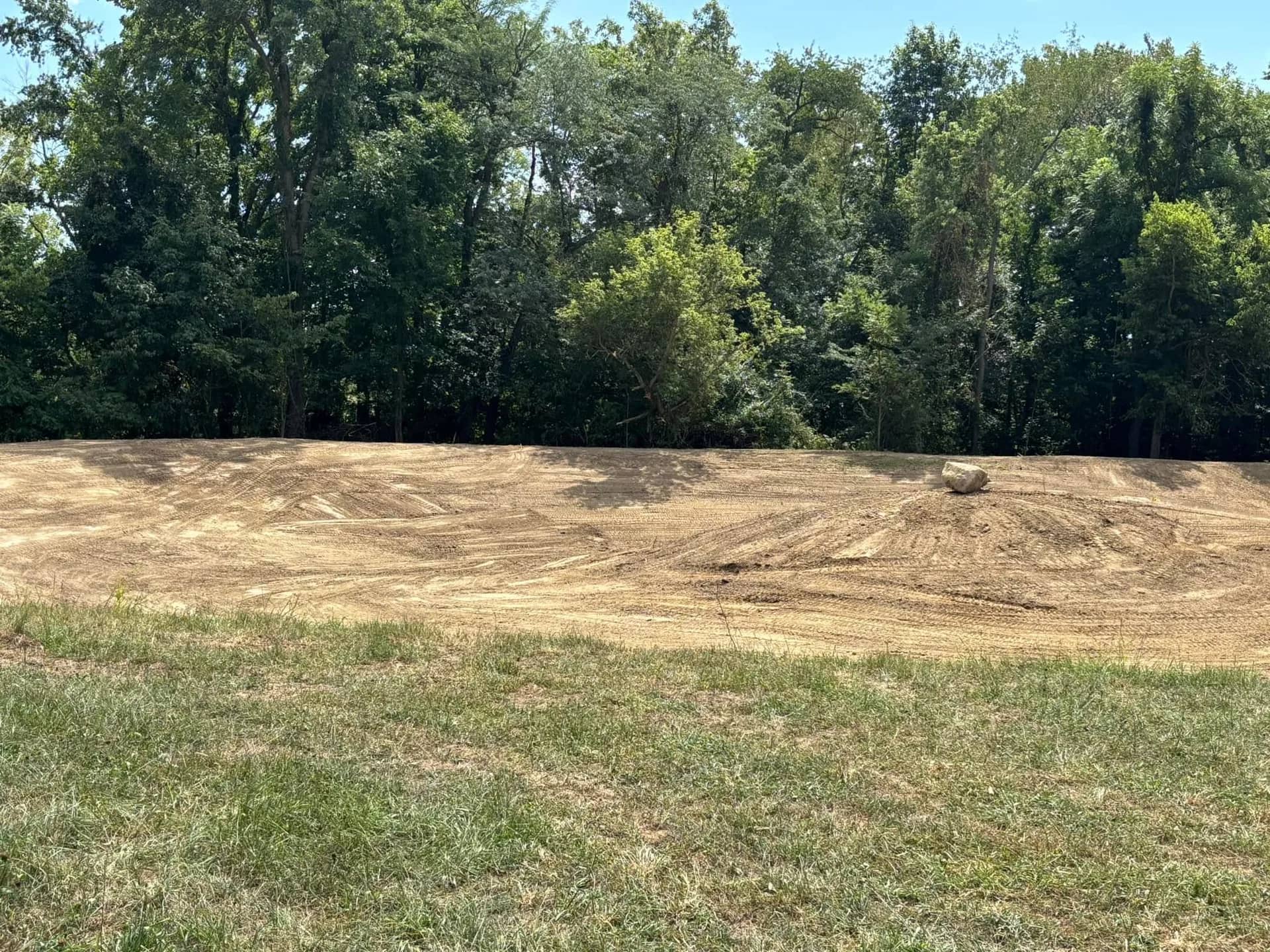
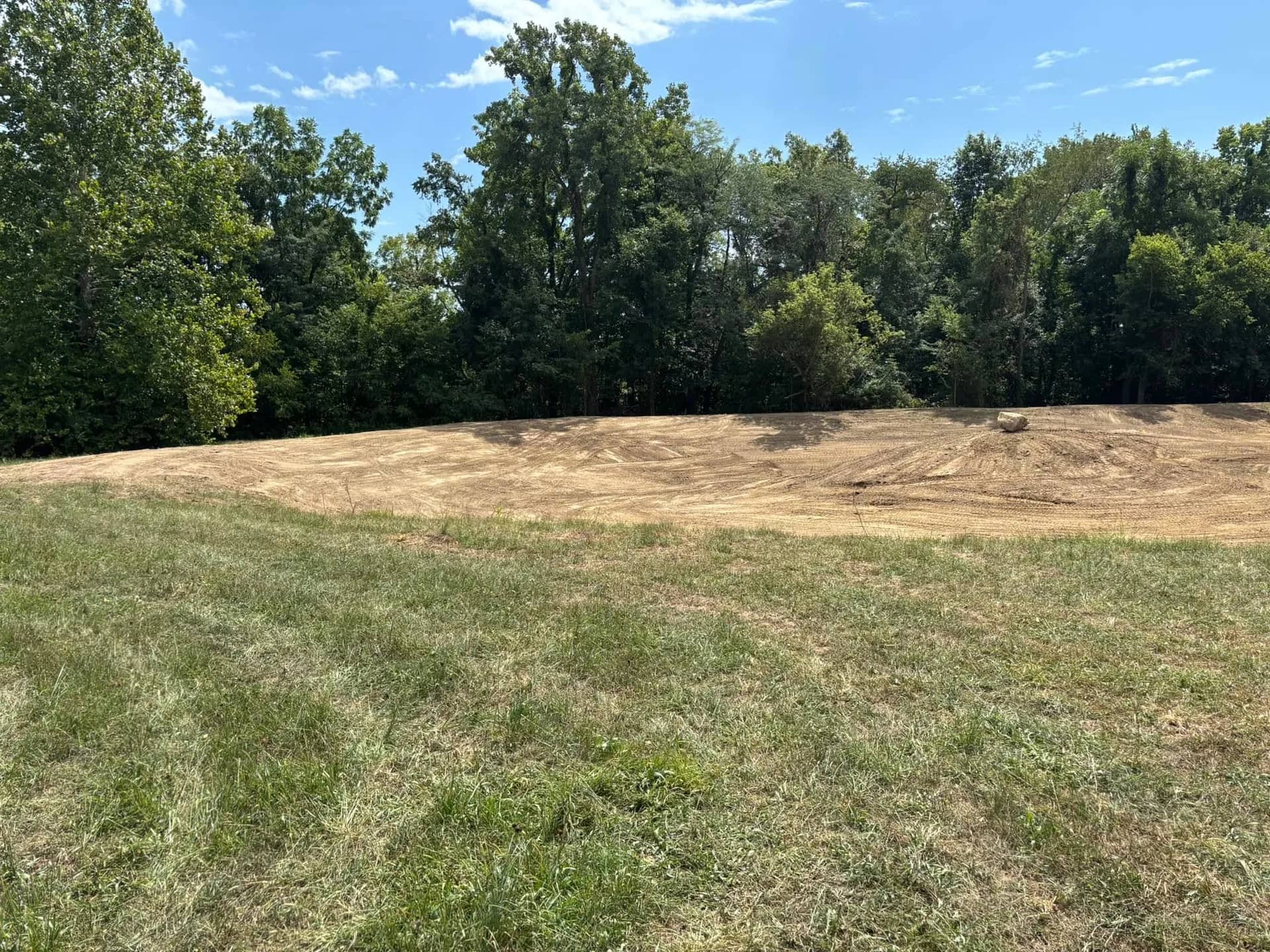
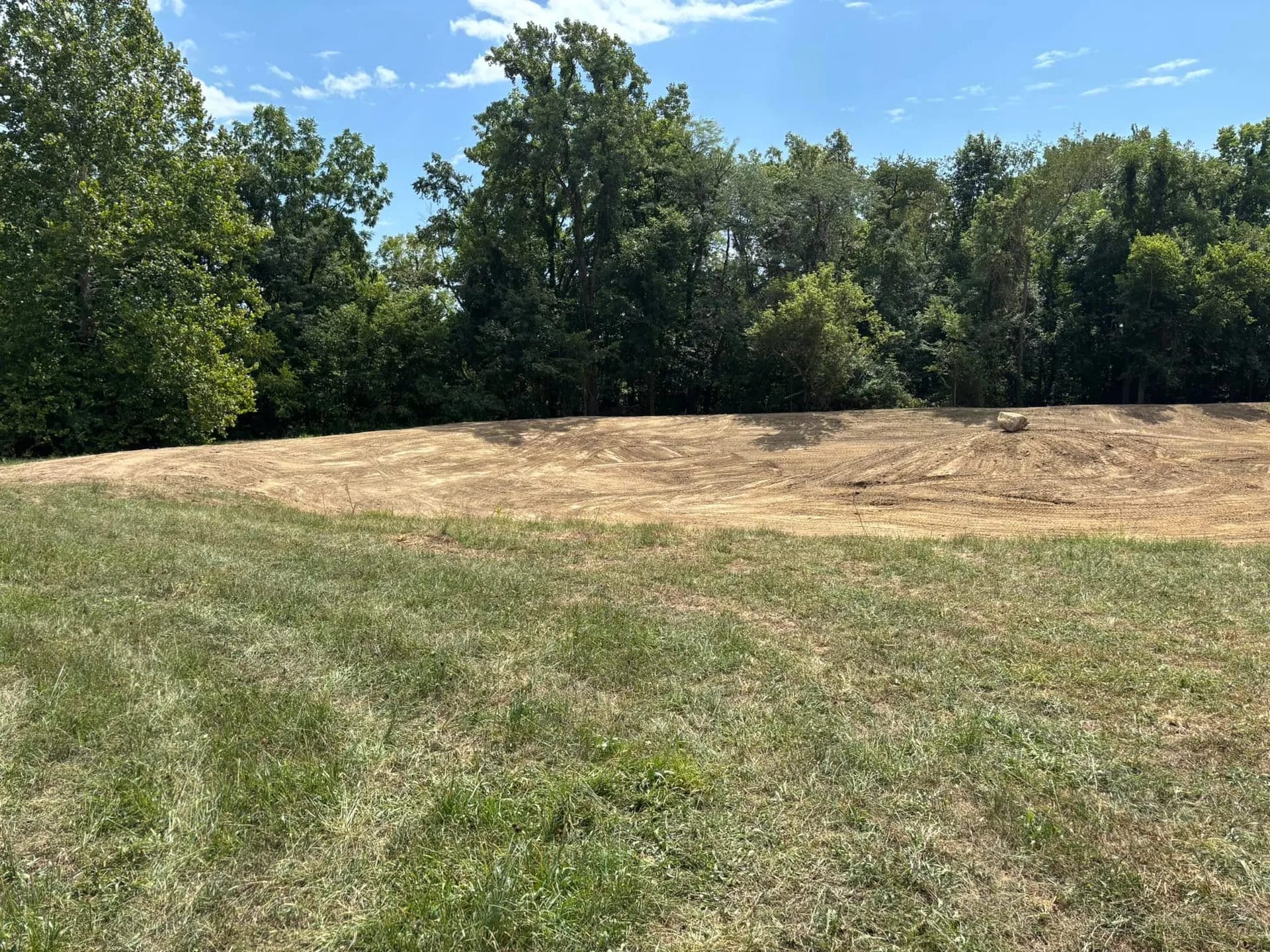
K&H Excavating does site prep for pole barn and post-frame projects on farms and acreage across west central Indiana, with a lean toward the larger buildings: equipment sheds, hay and livestock barns, and shops. We're a Parke County dirt-work and excavation company based in Rosedale, and barn sites are one branch of our site preparation work. Kory Stone clears the building spot, strips the topsoil, cuts and fills to a level working elevation, and leaves a rough grade that sheds water away from the walls. Call or text Kory at (765) 548-3704, and he'll walk the site with you and go over your builder's spec.
When to call
Signs It's Time to Start Preparing Ground for a Pole Barn
Post-frame builders schedule framing dates well ahead and want the site ready before they set posts. A barn site that's still brush or a wet low spot when that date comes can cost you the slot. Ag buildings also tend to go next to the field, where the ground is flattest but often wettest. Getting the site cleared in winter and the dirt work done once the ground dries keeps the framing date on track.
- You've ordered a post-frame building, and the builder sent a site spec with a pad size and floor height.
- Your equipment has outgrown the old shed, and the new one needs a spot cut into a hillside or built up out of a low field.
- The old barn is coming down, and the new one is going on the same ground (see commercial and agricultural demolition).
- Water stands where you want to put the building, or runs across it after every storm.
- The site is in the woods or a grown-up fence row.
- You're adding cattle, hay storage, or a farm shop as you take over the family operation, and you want the site done before the builder's season fills up.
What's included
What Our Pole Barn Site Prep Includes
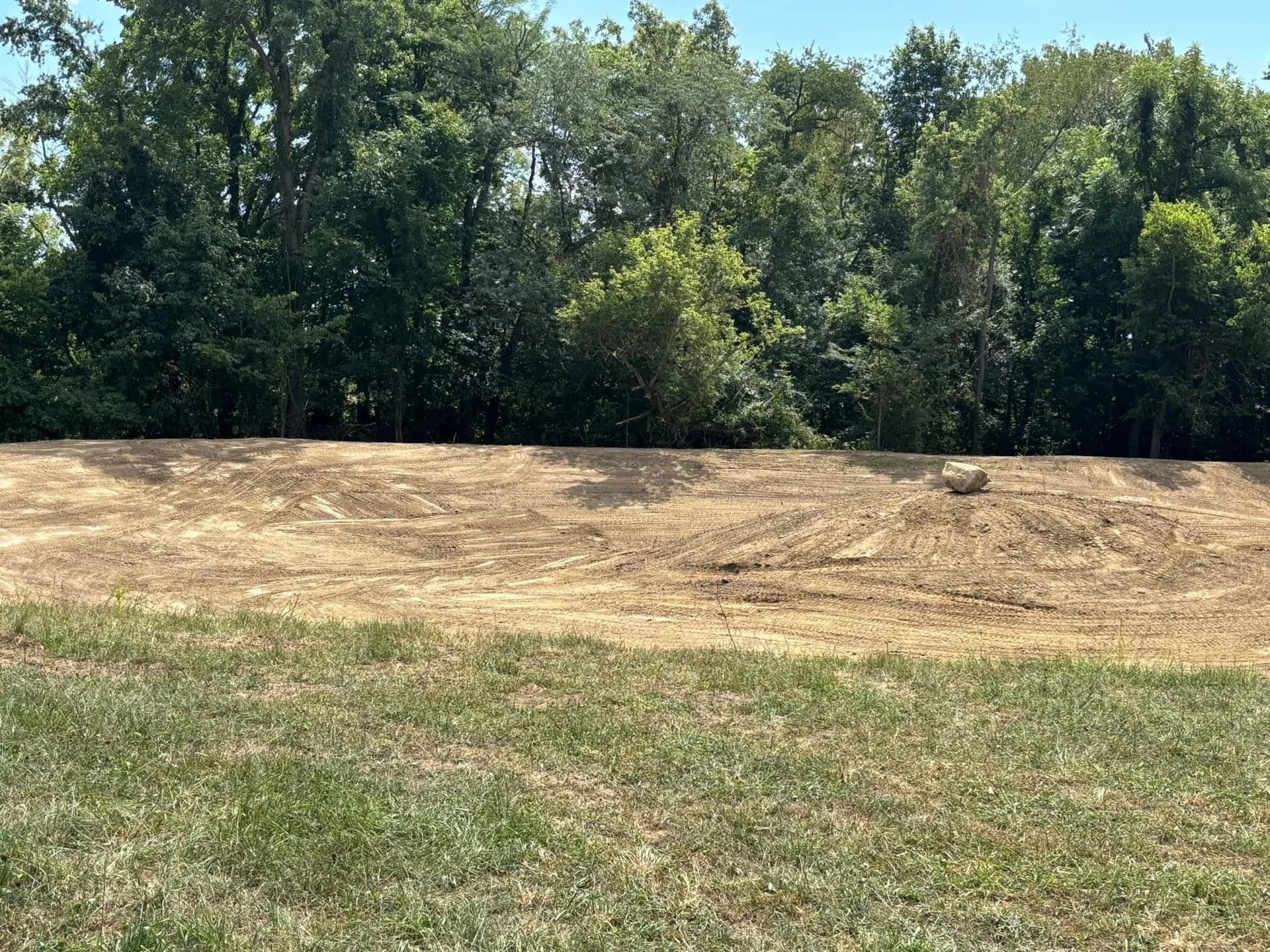
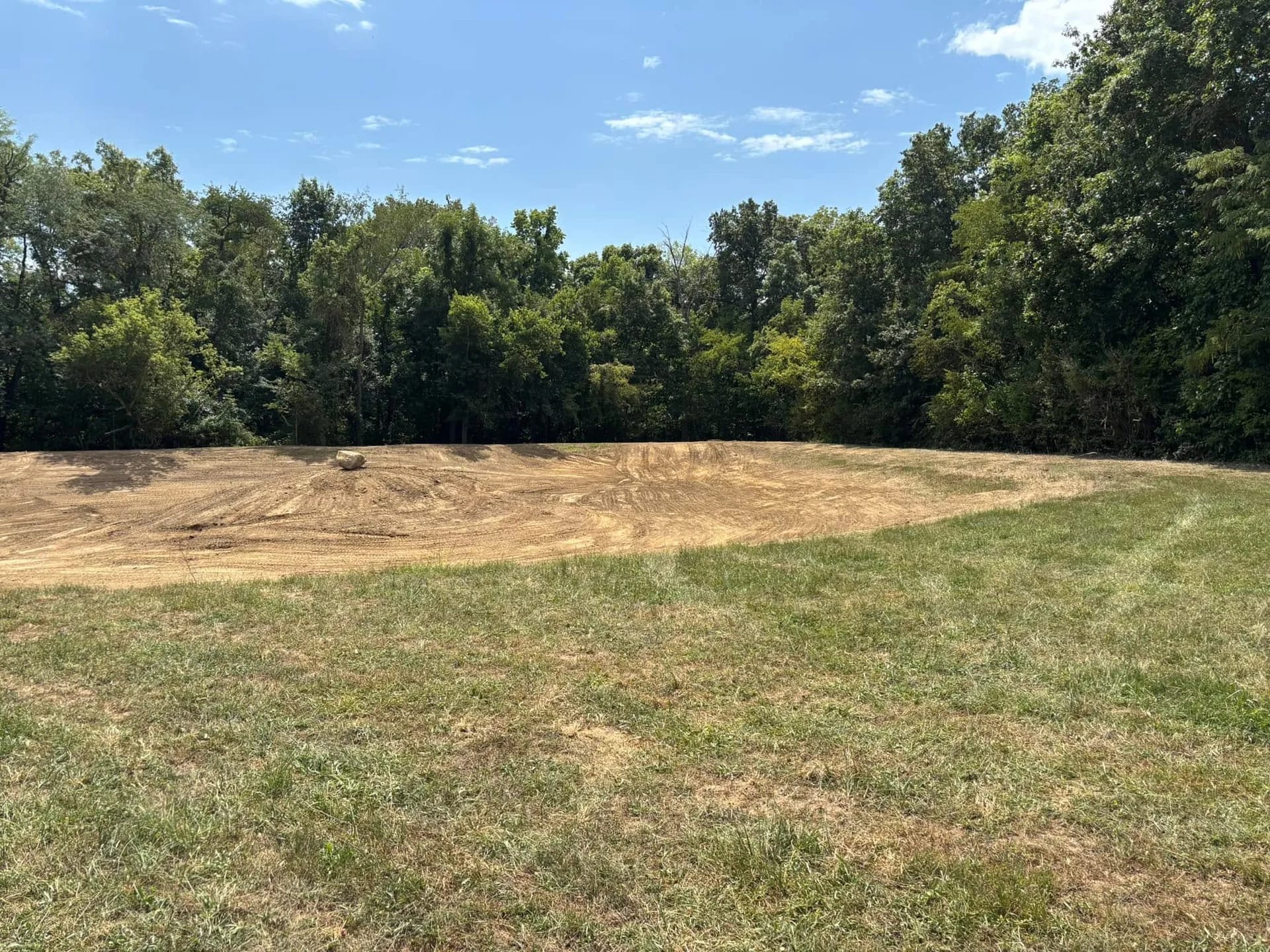
Site prep for a post-frame building is the dirt work under your builder's spec: a cleared, stripped, level, raised area big enough for the building and the working room around it.
K&H clears the footprint, strips the topsoil, cuts and fills, and rough-grades the site. As for the finished stone or pad on top, Kory will tell you on the walk-through whether that's part of his quote or goes to your builder.
Clearing and Stripping the Footprint and the Apron
The prepared area runs past the walls. FBi Buildings, a post-frame builder in Remington, Indiana, recommends a building pad that extends at least 10 feet beyond the walls, and about 20 feet for larger buildings. Hansen Pole Buildings also asks for 10 feet in every direction. Kory clears that whole area with the excavator and dozer, roots and all, then strips the topsoil off and stockpiles it for the ditch banks and the yard around the barn.
Cutting and Filling to a Level, Raised Site
Once the sod and topsoil are gone, dirt from the uphill end is cut by the excavator and carried downhill by the dozer until the building area is level and stands proud of the surrounding field. Hansen's builder guidance calls for fill in layers no deeper than six inches, each compacted to at least 90% Modified Proctor density. How K&H places and compacts fill on a barn site is something Kory will spell out for your job.
Grading the Ground Around the Barn to Shed Water
Water that stands against the walls of a barn works its way under the floor and around the posts. Hansen recommends grading the ground away from the building at a minimum of 5%, about 6 inches of fall in the first 10 feet. Kory shapes the apron so water leaves on the sides away from your main doors, and turns uphill runoff around the building.
The Stone Base: Your Builder's Spec
Most post-frame builders specify crushed stone over the prepared dirt. FBi, for one, recommends about 8 inches of gravel over the building footprint, starting with roughly 6 inches of #2 stone and topped with #53. FBi also notes that the finish floor height sets the grade board and concrete depth, so the dirt has to come up to the right elevation first. Bring that part of the spec to the walk-through so the stone is planned for, whoever ends up placing it.
Local ground
The Pole Barn Site Problems We See Most in West Central Indiana
Putting a new building where an old one stood saves a field, but the old site is full of surprises: foundations, buried concrete, old floors, and decades of soft barnyard soil. That all has to come out before the new site is built up. When the old barn is still standing, commercial and agricultural demolition comes first.
Indiana's stormwater permit doesn't apply to most farming, but IDEM spells out that the agricultural exemption doesn't cover building barns, outbuildings, access roads, or ponds (IDEM CSGP applicability). If the barn site, its apron, and any lane work disturb an acre or more, the current Construction Stormwater General Permit applies.
The flattest ground on many Parke County farms lies along Big Raccoon Creek, Sugar Creek, or the Wabash bottoms. IDNR lists buildings among the activities that need a permit in the floodway of any waterway draining a square mile or more, and it treats unmapped floodways the same as mapped ones (IDNR regulatory programs). Kory will flag a barn site that looks like it may sit in one.
Cutting a level barn site into a slope leaves a bank on the uphill side that gathers every drop running down the hill. With April and May each averaging about 4.7 inches of rain at Terre Haute, that water needs somewhere to go besides the barn floor.
Why K&H
Why Farmers Choose K&H Excavating for Barn Sites
A barn site has to carry trucks, a telehandler, and a building for decades. Here's what's behind the dirt work.
Cutting a bench into a hillside and moving a few hundred yards of fill is excavator and dozer work, not a small-machine job. That's the equipment K&H brings to a barn site, along with its own trucks for the debris.
Kory reads your builder's spec, prices the job, and sits in the dozer seat for it. Questions about the site go straight to the operator.
Farmers don't keep office hours, and neither do builders' schedules. Calls and texts are answered Monday through Saturday, 8 a.m. to 6 p.m., and Kory answers texts after hours too.
Kory comes from a cattle-and-hay family in Parke County, and he knows a barn site needs room to swing a gate, back a trailer, and turn a tractor, not just room for the building. Read about Kory and how K&H works.
How it works
How Our Pole Barn Site Prep Works
Step 1 — Go Over Your Builder's Spec With Kory
Bring the building drawings or the builder's site sheet. Kory walks the spot with you, checks the pad size, finish floor height, door locations, and equipment access, and tells you which parts of the spec he'll handle. The written estimate follows the visit.
Step 2 — Locates, Permits, and Stakes
Kory places the Indiana 811 locate request at least two full working days before any digging; the request has to state the approximate depth of the work. Your builder stakes the building corners and floor height. An acre or more of disturbed ground means stormwater permit coverage has to be filed by the permit holder before work begins, and any county building permit for the barn is between you and your builder.
Step 3 — Clear, Strip, and Stockpile
The excavator takes out trees and stumps across the footprint and apron, brush gets pushed into rows by the dozer, and K&H's trucks carry it out. Topsoil comes off and goes to a stockpile. Kory comes and goes on one path to keep ruts out of your hayfield and keeps clear of the fences, gates, and tile lines you've pointed out.
Step 4 — Cut, Fill, and Raise the Site
The dozer brings the site up level, above the surrounding ground, and shapes the apron to fall away from the walls. Want to see how it's coming? Send Kory a text.
Step 5 — The Final Walk-Around with Kory
With the builder's spec in hand, Kory goes over the finished barn site with you: the size of the prepared area, the elevation, and where water will run. From there it's ready for stone and posts.
How we quote
How Much Does Site Prep for Pole Barns Cost in West Central Indiana?
A barn site on a flat hayfield and one benched into a hillside can differ several times over in dirt moved, so Kory prices each after seeing it. The written estimate names the work K&H will do and what's left for your builder or a stone contractor.
K&H takes cash, check, or credit card for barn site work.
What changes the price
- The building footprint plus the apron your builder asks for, often 10 to 20 feet past the walls on larger buildings.
- How far the site has to be raised above the ground around it, and whether fill has to come in.
- Slope: a cut into a hillside moves far more dirt than a flat field.
- Trees, stumps, fence rows, or an old building site to clean up first.
- Soft ground, springs, or old barnyard soil that has to come out.
- Crushed stone, if the walk-through puts it in K&H's part of the job.
Quoted separately
- Taking down the old barn, slab, or silo (commercial and agricultural demolition)
- Clearing beyond the building site (land clearing services)
- Posts, concrete, and the building itself, which are your builder's work. K&H doesn't build driveways or dig utility trenches.
Related work
Often Paired With Pole Barn Site Prep
Building Site Preparation
A new house on acreage is often followed by a shop or machine shed, and both sites can be cleared and rough-graded while the machines are already on the place. See building site preparation for a new home.
Commercial & Agricultural Demolition
Old barn out, new one in. Tearing down the old building, pulling the foundations, and building the site back up is one job when it's planned that way. See barn and ag building demolition.
Land Clearing Services
If the building is going into the timber or a grown-up fence row, the trees and stumps come out first, and the land around it can be opened for pasture at the same time. See land clearing services for stumps and timber.
More in Site Preparation: Site Preparation · Building Site Preparation
Where we work
Site Prep for Pole Barns Across the Wabash Valley and West Central Indiana
K&H works out of Rosedale in Parke County, takes on barn sites within about 50 miles as everyday work, and goes up to about 75 miles for larger buildings, east Illinois included. This is farm country: Parke County alone has 646 farms averaging 271 acres and about 8,400 head of cattle, per the USDA's 2022 Census of Agriculture. Rockville is about 14 miles north by Coxville Road and US-41. Montezuma and the Wabash crossing are out US-36 west. Lafayette is reached by US-41 north past Rockville, IN-47 east past Turkey Run State Park to Crawfordsville, then US-231 north. Across the Wabash, I-70 runs west from Terre Haute toward Marshall, Illinois.
North and east of Rosedale, through Montgomery and Putnam counties, barn sites mostly sit on flat glacial till plain, where the job is raising the site enough to drain. South toward Clay and Vigo, old strip-mine land is common, and a barn site there needs a closer look at what's underneath.
Need site prep for a pole barn near Terre Haute or Lafayette? We serve Rosedale, Terre Haute, Bloomington, Lafayette, and Indianapolis. See all of K&H's excavation services.
Not sure your farm is in range? Call or text Kory at (765) 548-3704.
Questions
Pole Barn & Shed Site Prep FAQ
Do you build the gravel pad for a pole barn?
What K&H is set up for is the dirt under the pad: clearing, stripping, cutting, filling, and rough grading it. Many post-frame builders spec their own stone base, and some place it themselves. On the site walk, Kory will say whether the stone is part of his quote or your builder's job.
How much room should the site have around a pole barn?
Builders set this, so check your builder's spec first. FBi Buildings recommends a pad at least 10 feet past the walls, about 20 feet for larger buildings, and as little as 4 feet for small residential buildings. Hansen Pole Buildings asks for 10 feet on all sides. Kory preps to whatever your builder's sheet calls for.
Do you do site prep for a shed?
K&H leans toward larger ag and post-frame buildings. Storage shed site preparation for a small backyard shed is usually a better fit for a smaller outfit. Storage shed base preparation, meaning a gravel or block base, isn't something K&H advertises. If the shed is part of a bigger site job, ask Kory.
Does a farm building need a stormwater permit?
It can. IDEM's farming exemption doesn't cover building barns or outbuildings, so a barn site that disturbs an acre or more needs coverage under the current Construction Stormwater General Permit. Smaller sites usually fall under the line unless they're part of a larger plan of development. Kory can rough out the disturbed acreage with you when he looks at the site.
Why does the equipment matter for a barn site?
A barn site often means cutting into a slope, moving a few hundred yards of dirt, and pulling stumps by the roots. K&H uses excavators and dozers — no skid steers — so the dirt moves at a pace your builder's schedule can live with. The dozer also tracks the fill in as it spreads it.
How do I reach Kory during the job?
Call or text (765) 548-3704. Kory is on every job himself, so you're talking to the person running the machine. Calls and texts are answered Monday through Saturday, 8 a.m. to 6 p.m., and texts answered after hours are part of how K&H works.
Can you take down the old barn and prep the site for the new one?
Yes, that's a common pairing. The old building comes down, foundations and buried concrete come out, soft barnyard soil goes, and the site is built back up for the new building. Older farm buildings can carry asbestos siding or roofing, so check with IDEM about whether an inspection is needed before demolition.
When is the best time to prep a barn site?
Winter, when the ground is frozen, is good for clearing a site in the woods. Summer and fall are best for cut and fill, when the dirt is dry enough to compact. Spring rain stops dirt work often, so plan ahead if your builder's date is in May or June.
Ask Kory About My Barn Site
Still have a question about site prep for a pole barn? Call or text Kory at (765) 548-3704.
Call or text
Ask Kory about pole barn & shed site prep
(765) 548-3704Calls and texts answered Monday to Saturday, 8 a.m. to 6 p.m. Text a few photos of the property and Kory can give you a head start before the site walk.
Get a free estimateFree estimate
Let's Get Your Barn Site Ready for the Builder
Send Kory your builder's spec and tell him where the building is going. He'll walk the site, tell you what he'll handle and what your builder will, and give you a straight price. Reach him through our contact page, or call or text directly.