Land and sites
Site Preparation Contractors in Rosedale, IN
Got a house spot in the timber, a hayfield corner meant for a shop, or a sloping lot that has to shed water before anything is built on it? The dirt work comes first, and how it's done decides how everything on top of it holds up.
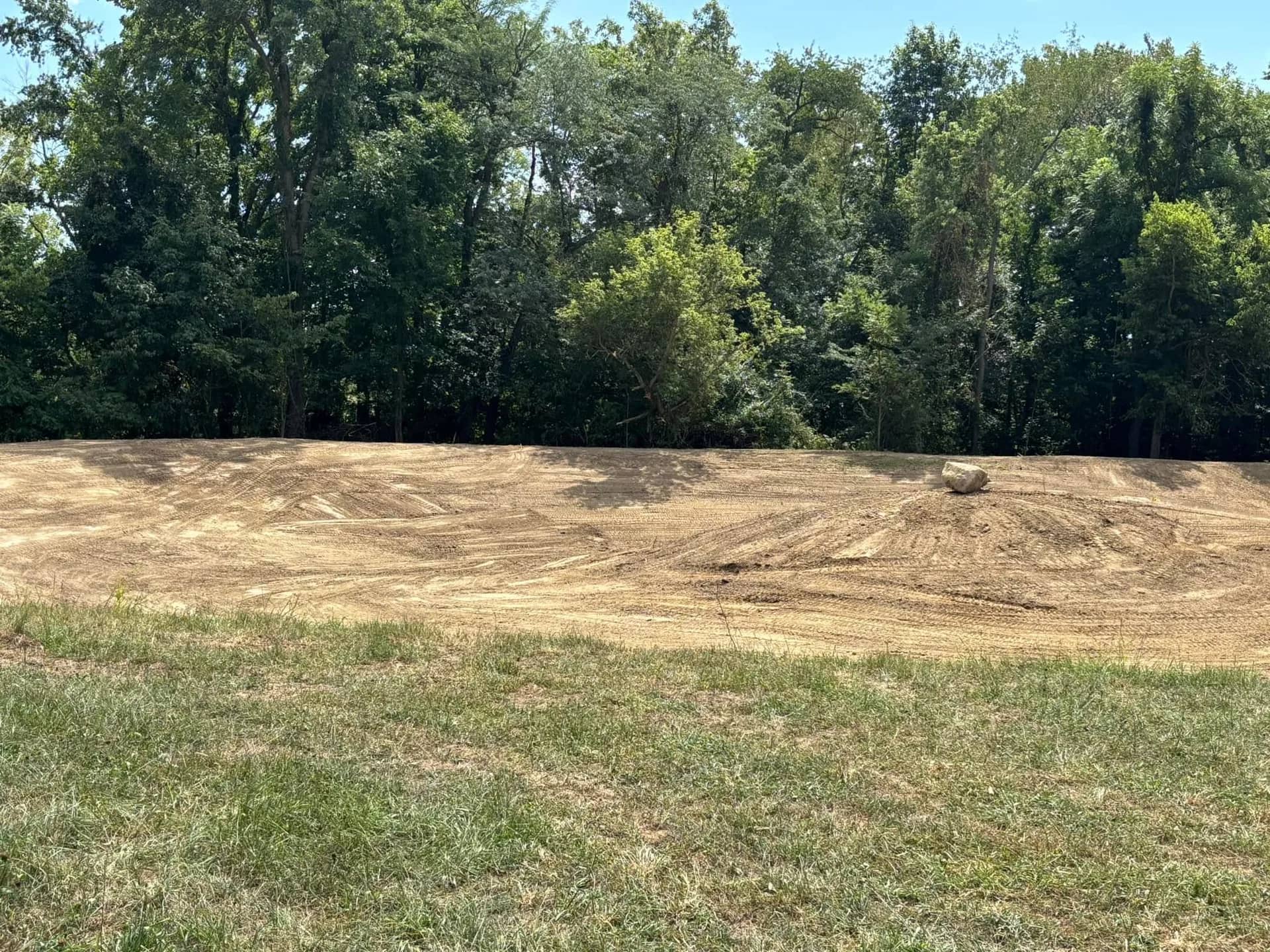
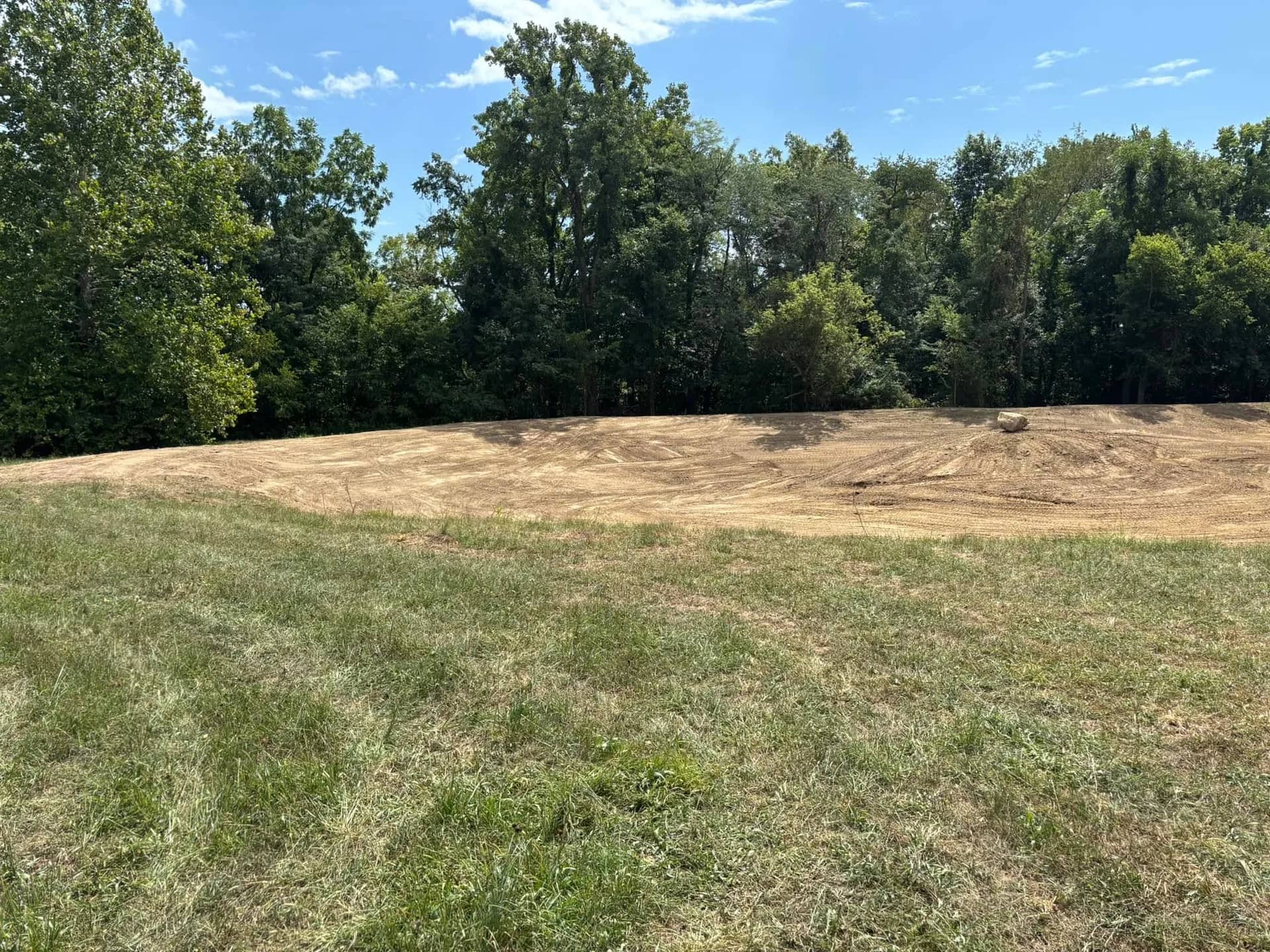
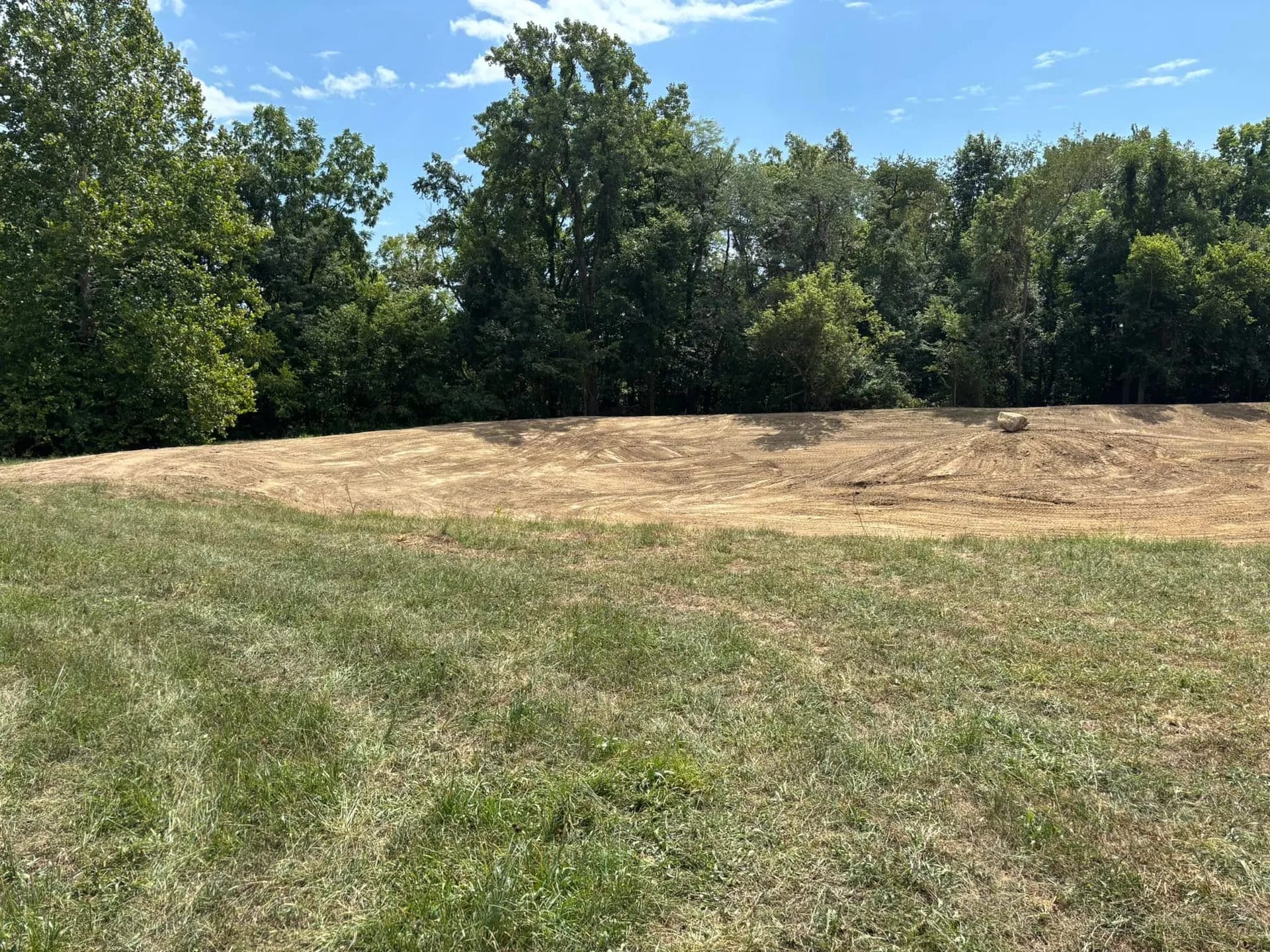
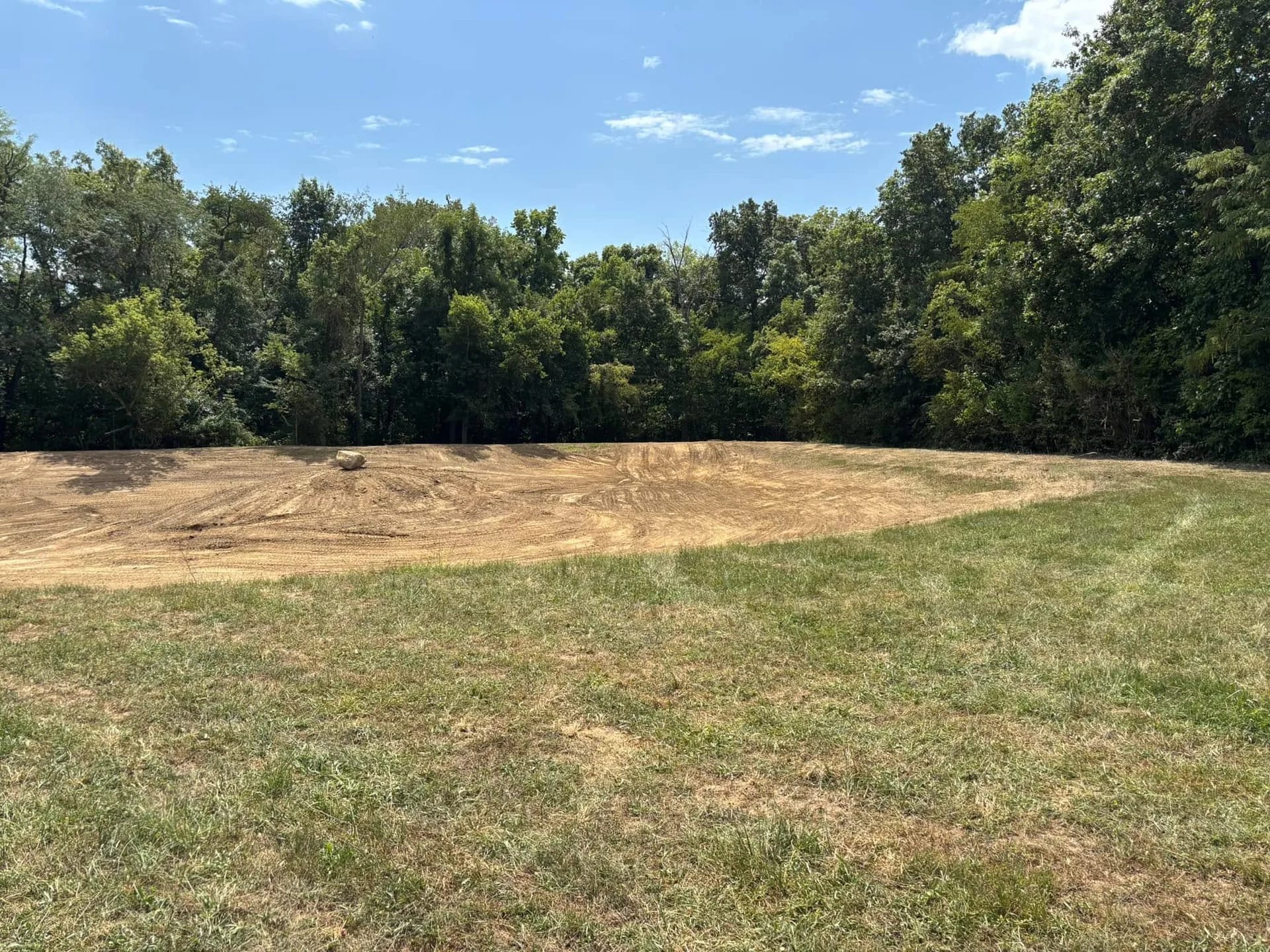
K&H Excavating works as site preparation contractors for landowners, farmers, and commercial owners who need raw ground turned into a workable building site. We're a Parke County excavation company based in Rosedale, and the work we're set up for is the heavy part: pulling trees and stumps, stripping and stockpiling topsoil, cutting the high ground into the low ground, and leaving a rough grade that sends water away from where your building will sit. Kory Stone runs the excavator and the dozer himself. That matters here, where the edge of the last glacier passes within a couple of miles of town and the dirt changes from one field to the next. If you have a house site, a pole barn spot, or a commercial lot that needs clearing and grading, call or text Kory at (765) 548-3704 and he'll come look at it in person.
When to call
Signs Your Ground Needs Site Prep Before Anything Gets Built
Builders and post-frame companies book their slots weeks ahead and expect a cleared, rough-graded site when they arrive. If the dirt work isn't done, the whole schedule slides. April and May are the wettest months of the year, averaging about 4.7 inches each at Terre Haute, so a site that isn't opened up before spring can sit in mud until June. Clearing goes best in winter, when frozen ground carries the machines, and dirt work goes best in summer and fall.
- You've closed on acreage, and the spot you want to build on is still timber, brush, or an old fence row.
- Your builder has handed you a site plan and asked for the ground to be ready by a certain date.
- Water stands where the building is supposed to go after every hard rain.
- The spot slopes enough that one corner of the building would sit a few feet higher than the other.
- You're planning a shop or another commercial site preparation job, and the lot needs cut and fill before anyone can stake it.
- An old barn, house, or slab is in the way and has to come out first (see demolition).
- You're moving back to the home place or building for a parent, and you want the site ready before the builder's slot opens.
What's included
What Our Site Preparation Services Include
Site preparation is everything that happens to the ground between the day you pick a building spot and the day the builder or foundation contractor shows up: clearing, stripping, moving dirt, and shaping it so water leaves. K&H clears the ground, strips the topsoil, cuts and fills, and rough-grades it with excavators and dozers. Finished stone or pad work is a separate question, and Kory will tell you on the walk-through whether it's part of his quote or goes to your builder.
Clearing Trees, Stumps, and Roots
Kory takes trees out with the root ball attached, using the excavator and pushing with the dozer, instead of cutting at ground level and leaving stumps in the dirt. Indiana's own road-building specs (INDOT Section 203) don't allow stumps, roots, or tree parts in embankment fill for the same reason. Brush and logs are piled and hauled off on K&H's trucks, or burned only where IDEM approval allows.
Stripping and Stockpiling Topsoil
Virginia Cooperative Extension notes that bulldozer clearing "nearly always destroys the topsoil," and that in many areas there are only a few inches to begin with. So once the trees are out, Kory strips the dark topsoil off the building area and piles it to the side, out of the haul path. Topsoil is soft and full of organic matter, so it doesn't belong under a building. It belongs back on your yard and slopes at the end, where it grows grass.
Cut, Fill, and Site Prep Excavation
With the topsoil off, the excavator cuts the high side of the site and the dozer carries that dirt into the low side, bringing the building area up to one working elevation. Fill goes down in layers and gets tracked in as it's spread, rather than dumped in one deep pile. If the site doesn't balance, Kory tells you up front whether dirt needs to come in or go out, and roughly how much.
Rough Grading So Water Leaves the Site
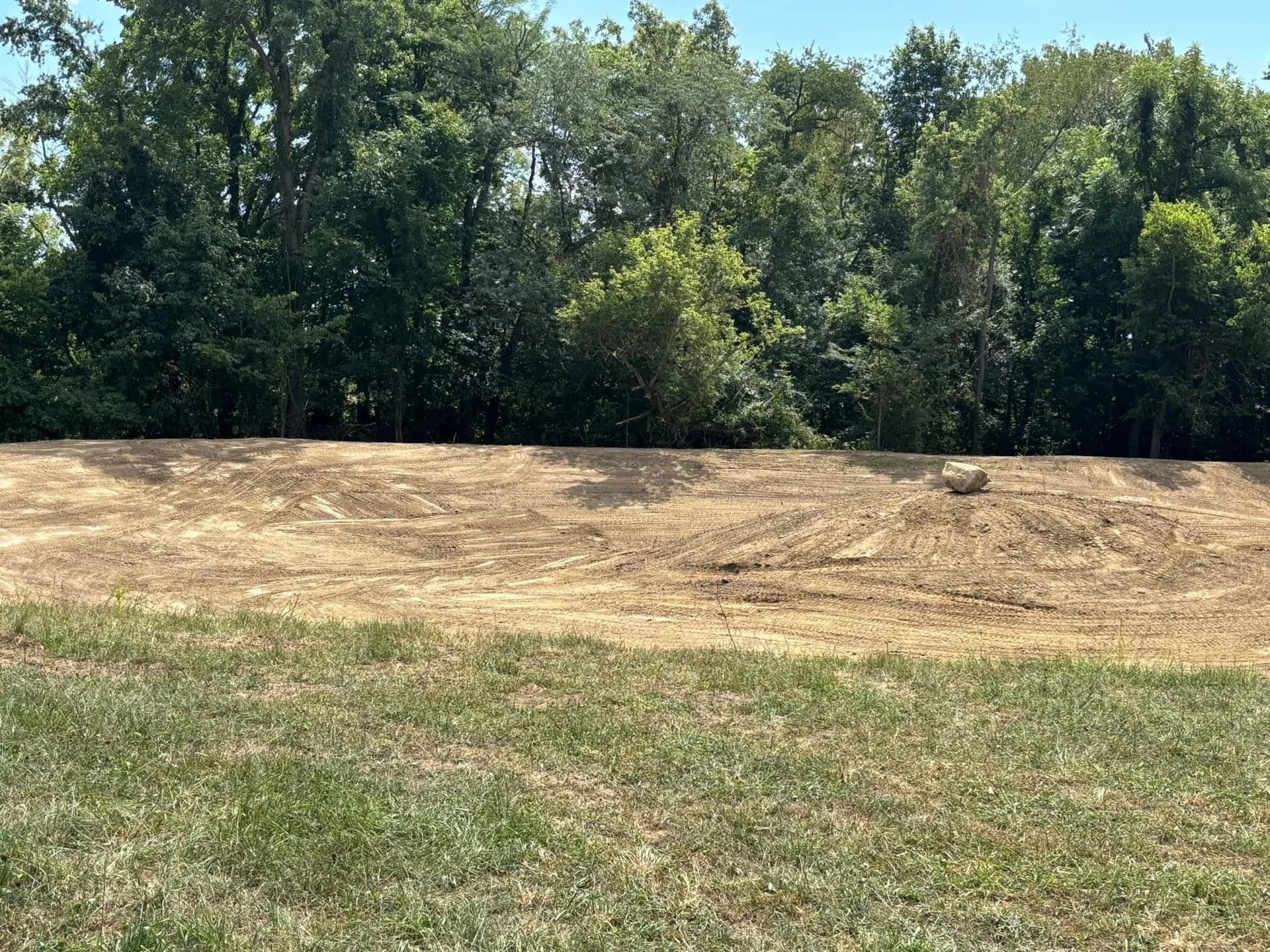
The last passes shape the ground so rain runs away from the building spot. Purdue Extension's advice to pond builders holds for any grading job: runoff should enter and leave your property at the same points it did before construction, to avoid state drainage-law violations. Kory sets the rough grade to the elevation your builder or engineer gives him.
Local ground
The Clearing and Grading Problems We See Most in West Central Indiana
The quickest way to make a site look level is to push dirt over whatever is there. A few years later the stumps have rotted, the topsoil has compressed, and the slab has a dip in it. For bigger wooded tracts, see land clearing with excavators and dozers.
Under IDEM's Construction Stormwater General Permit (CSGP), clearing, grading, excavation, and other land disturbance of one acre or more needs permit coverage. That includes smaller lots that are part of a larger plan of development or sale (IDEM construction stormwater permitting). Coverage under the current permit takes a Notice of Intent, a stormwater pollution prevention plan, and a $175 fee, filed before the dirt moves. Clearing timber to get ready for development doesn't count as an exempt forestry harvest.
Spring is the wettest season here, at more than 12 inches from March through May. Bare, freshly graded dirt left open through April cuts gullies and fills the road ditch, so Kory plans the order of work to keep the site from sitting stripped any longer than it has to.
IDNR has mapped surface coal mines across roughly 10% of Clay County and 7% of Vigo County, and that spoil is looser than native ground. Around Bloomington it's red clay over limestone, with sinkholes. Both call for a careful look before anyone builds. Our building site preparation page covers both for house sites.
Why K&H
Why Landowners Choose K&H Excavating as Their Site Preparation Contractors
A building site is graded once. Here's what you get when K&H does it.
The person who walks your site and writes the estimate is the person in the seat when the trees come out and the grade goes in. When your builder has a question, there's one person to call.
Pulling stumps by the roots and moving hundreds of yards of dirt is excavator and dozer work. K&H runs both, and hauls debris on its own trucks, so the site isn't nibbled at with a small machine for weeks.
Kory's family has farmed cattle and hay in Parke County, and a farmer reads a slope the way water does. He'll point out where runoff crosses your building spot and where it needs to leave.
There's no charge for Kory to come out and put a written number on your site. Calls and texts are answered Monday through Saturday, 8 a.m. to 6 p.m., and texts are welcome after hours. Learn about Kory and how K&H works.
How it works
How Our Site Prep Works
Step 1 — Walk the Site With Kory
Bring your builder's site plan, or just your idea of where the building goes. On the property, Kory looks at the slope, the trees, the wet spots, truck access, and where topsoil and debris can go. A written estimate comes after the visit.
Step 2 — Locates, Permits, and Stakes
Indiana law requires an Indiana 811 locate at least two full working days, and no more than 10 calendar days, before digging, and Kory places that request. Your builder or surveyor stakes the corners and finished elevation. If an acre or more will be disturbed, the permit holder files for CSGP coverage before work starts, and that's worth sorting out before the machines are booked.
Step 3 — Clear and Strip
The excavator takes out trees and stumps, the dozer windrows brush, and the trucks haul it off. Topsoil comes off next and goes to a stockpile. Kory uses one access path in and out to keep ruts out of the rest of the field, and leaves gates, fences, and field tile you've marked alone.
Step 4 — Cut, Fill, and Rough Grade
The excavator cuts, the dozer fills and tracks it in, and the site comes up to the builder's elevation with fall away from the building area. If your builder wants to know how close the grade is, they can text Kory directly.
Step 5 — The Final Walk-Around with Kory
You walk the finished site with Kory, ideally with your builder along, and check the elevation, where water will run, where the topsoil is waiting, and what the next trade needs. Then the site is theirs.
How we quote
How Much Do Site Preparation Services Cost in West Central Indiana?
Kory prices site prep after he walks the ground, because cost follows how many trees come out and how much dirt moves. K&H is set up for acreage and building sites rather than small backyard jobs. Your written estimate spells out where Kory's work stops.
K&H accepts cash, checks, and credit cards.
What changes the price
- Tree cover: an open hayfield clears in a fraction of the time a stand of mature hardwoods takes.
- How far the dirt moves, and whether the site balances or needs fill hauled in or out.
- Topsoil depth and how far it has to go to a stockpile.
- Soil and water: springs, wet bottoms, mine spoil, or rock that slows the machines.
- Access: distance from the road, gate widths, and soft field crossings.
- Debris: hauling it off versus burning where IDEM approval allows.
Quoted separately
- Basement and foundation digging (basement excavation)
- Tearing down an old building or slab on the site (demolition)
- Finished stone or pad work, when it's in Kory's quote rather than your builder's. K&H doesn't build driveways or dig utility or septic trenches.
- Surveying, engineering, and permit fees
Related work
Often Paired With Site Preparation
Most site prep calls turn into one of these.
Building Site Preparation
A house on acreage adds the builder's calendar and the basement dig to the order of work, and the grade around a foundation matters more than around a shed. See building site preparation for rural home sites.
Pole Barn & Shed Site Prep
Post-frame builders hand you a site spec: how far the prepared area runs past the walls, and how high the floor sits. Getting the ground level and raised so water runs off is the dirt work under that spec. See site prep for pole barns and ag buildings.
Land Clearing
If the building spot sits inside a bigger wooded tract you also want opened for pasture, clearing it all at once saves a second move-in. January through March is clearing season. See land clearing for large acreage.
More in Site Preparation: Building Site Preparation · Pole Barn & Shed Site Prep
Where we work
Site Preparation Contractors Across the Wabash Valley and West Central Indiana
K&H works out of Rosedale in southern Parke County, takes on site work within about 50 miles as everyday jobs, and travels up to about 75 miles for larger projects, including into eastern Illinois. That core takes in Parke, Vigo, Clay, Vermillion, and Putnam counties. Terre Haute is about 16 miles down US-41 South. Indianapolis is roughly 73 driving miles, by US-41 north to Rockville and then US-36 east through Bainbridge and Danville. Lafayette is a run up US-41 to I-74 east and IN-25 north.
The ground shifts across that map. Parke, Putnam, and the counties toward Indianapolis are mostly glacial till, a dense, clay-rich soil. Vigo and Clay carry a lot of wind-blown silt plus old strip-mine ground. Around Bloomington, Monroe County is mostly unglaciated, with red clay over limestone and mapped sinkhole areas across parts of the county.
Looking for site prep contractors near Terre Haute or Indianapolis? We serve Rosedale, Terre Haute, Bloomington, Lafayette, and Indianapolis. See all of K&H's excavation services.
Not sure your site is in range? Call or text Kory at (765) 548-3704.
Questions
Site Preparation FAQ
How do I choose between site prep contractors?
Ask whether they pull stumps by the roots or cut them at the ground, and whether they strip and save the topsoil before they fill. Ask what machines they'll bring and who will run them. At K&H it's Kory on every job, on excavators and dozers. Ask them to tell you plainly where their work stops, so you know what your builder still has to do.
Do I need a stormwater permit for site preparation in Indiana?
If the job disturbs one acre or more, IDEM's Construction Stormwater General Permit applies, whether the site is for a home, a farm building, or a business. Smaller sites can be covered if they're part of a larger development. Kory will tell you on the walk-through whether your site is likely over the line.
Do you build finished pads and stone bases?
K&H's focus is clearing, topsoil stripping, cut and fill, and rough grading. On the walk-through, Kory will tell you whether finished pad or stone work belongs in his quote or with your builder, and the estimate spells out the handoff so nothing falls through the gap.
Why does it matter what equipment a site prep contractor uses?
A small machine can scrape a site, but it can't pull a mature stump by the roots or move a few hundred yards of fill in a reasonable time. That's why K&H runs excavators and dozers — no skid steers. The excavator handles trees, stumps, and cuts, and the dozer spreads, tracks in, and shapes the grade.
Do you do commercial site preparation?
Yes, for commercial lots, shops, and ag sites where the work is clearing, cut and fill, and rough grade. These sites usually come with an engineer's grading and stormwater plans, and Kory works to those elevations. Utility trenching and driveways are outside K&H's scope.
How much do site prep contractors charge?
It depends on trees, dirt moved, access, and debris, so every job is priced after a site visit. K&H offers free on-site estimates, and Kory puts the scope and price in writing. A wooded site with heavy cut and fill costs more than an open field that needs light shaping.
Do I need to call 811 before site prep?
Yes. Indiana law requires a locate request at least two full working days, and no more than 10 calendar days, before digging, not counting weekends and holidays (Indiana 811 requirement, IURC). Kory places the request before the machines arrive. Private lines, like a buried line to a barn, aren't always marked, so point those out.
Ask Kory About My Building Site
Still have a question about site preparation? Call or text Kory at (765) 548-3704.
Call or text
Ask Kory about site preparation
(765) 548-3704Calls and texts answered Monday to Saturday, 8 a.m. to 6 p.m. Text a few photos of the property and Kory can give you a head start before the site walk.
Get a free estimateFree estimate
Let's Get Your Ground Ready for What Comes Next
Tell Kory where the building is going and who's building it, and he'll walk the site, explain where his work ends and your builder's begins, and give you a straight price. Reach him through our contact page, or call or text directly.